
Heating installation in laurel, va: Top 5 Expert Comfort
Your Guide to a Warm and Comfortable Laurel Home
Heating installation in laurel, va is a critical decision for homeowners who want reliable warmth during Virginia’s unpredictable winters. When your heating system reaches the end of its lifespan or struggles to keep up with your comfort needs, professional installation ensures your home stays safe, efficient, and comfortable for years to come.
Quick Answer: Finding Heating Installation Services in Laurel, VA
- Look for NATE-certified technicians with experience in multiple system types
- Expect a home assessment to determine proper system sizing and efficiency needs
- Plan for a 1-day installation for most residential heating systems
- Verify licensing and insurance before choosing your contractor
- Ask about warranties on both equipment and labor
- Consider energy efficiency ratings like AFUE to maximize long-term savings
For comprehensive HVAC solutions, explore our residential services, or schedule a consultation to discuss your heating needs today.
Most homeowners in Laurel face similar challenges when their heating systems fail. Strange noises, rising energy bills, and inconsistent temperatures are common signs that your system is nearing the end of its useful life, which typically ranges from 10 to 15 years. Whether you’re experiencing frequent breakdowns or simply want to upgrade to a more efficient model, understanding your options helps you make an informed decision that fits your home’s unique needs and your family’s comfort expectations.
Is It Time for a New Heating System? Key Warning Signs
Nobody enjoys a chilly home when the temperatures drop. As responsible homeowners in Laurel, VA, we understand the importance of a reliable heating system. But how do we know when it’s time to replace our trusty furnace or heat pump rather than just repairing it? The average lifespan of a residential HVAC system is 10-15 years. If your system is approaching or has exceeded this age, it’s wise to start thinking about a new heating installation in Laurel, VA.
Here are the key warning signs that indicate your heating system might be waving a white flag:
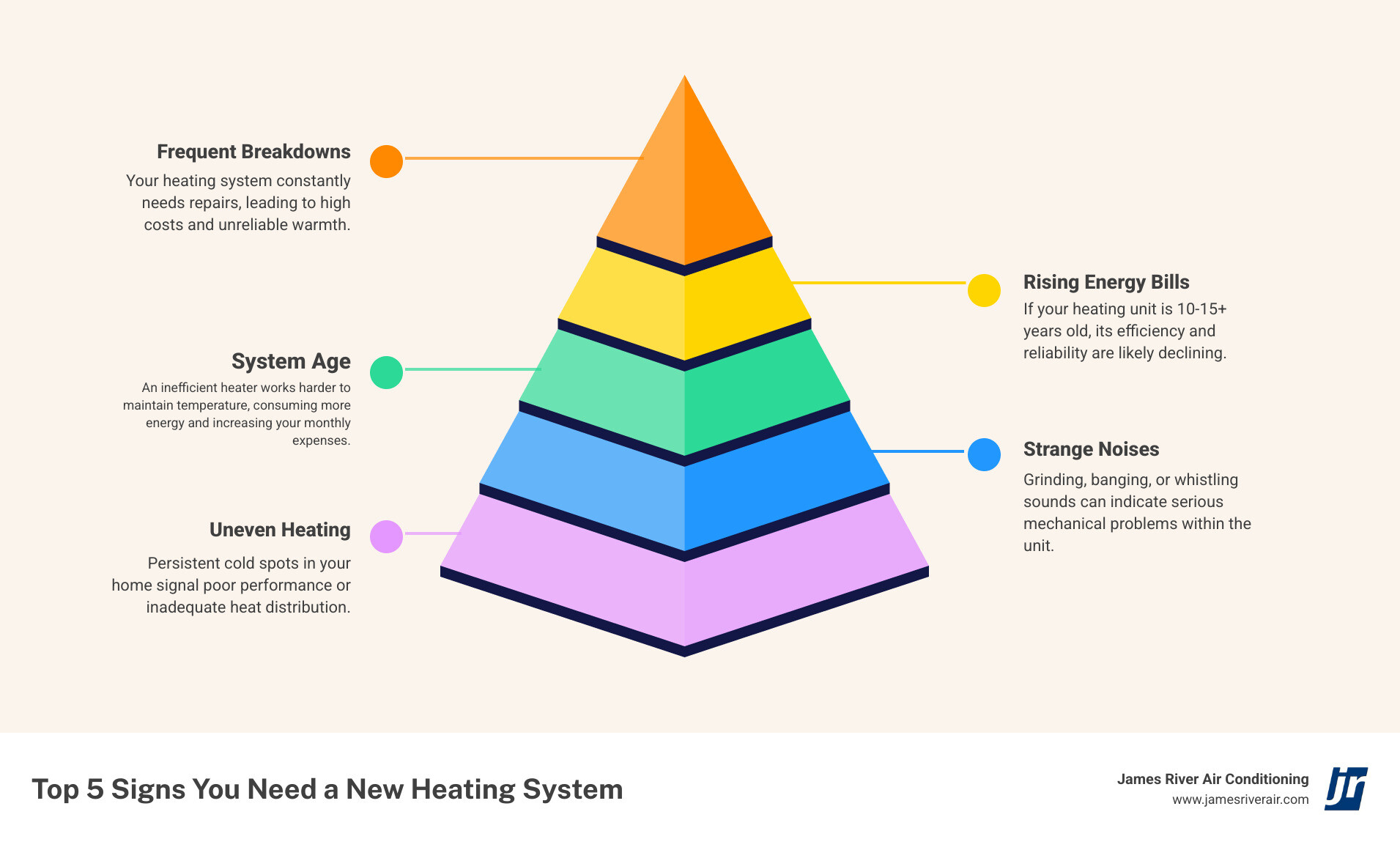
- Aging System: If your furnace or heat pump is 10 to 15 years old, it’s nearing the end of its functional life. While it might still produce heat, its efficiency likely isn’t what it used to be.
- Frequent Breakdowns: Are you calling for repairs more often than you’d like? Frequent breakdowns, especially on an older unit, are a strong indicator that replacement is a more cost-effective solution in the long run.
- Rising Energy Costs: Have your heating bills been creeping up even though your usage habits haven’t changed? An inefficient system has to work harder to maintain your desired temperature, consuming more energy in the process. We have some great High Energy Bill Tips that can help you identify potential issues.
- Strange Noises: Heating systems are designed to operate quietly. If you start hearing persistent bad odors, strange sounds like banging, squealing, rattling, or grinding, it’s often a sign of internal problems or worn-out components. A banging noise from the AC unit, for instance, typically indicates a major compressor issue.
- Uneven Heating: Do some rooms feel like a sauna while others are like an icebox? Uneven heating suggests your system isn’t distributing warmth effectively, which can be due to a variety of issues, including an improperly sized system or failing components.
- Poor Indoor Air Quality: An aging system can contribute to a decline in indoor air quality. If you notice an increase in dust, dry air, or worsening allergy symptoms, your heating system might be part of the problem.
Recognizing Inefficiency and Discomfort
Sometimes, the signs aren’t as dramatic as a complete breakdown but are instead subtle hints that your system is struggling. These indicators of inefficiency and discomfort can significantly impact your daily life:
- Persistent Cold Spots: Despite the thermostat being set to a comfortable temperature, you might find certain areas or rooms in your home remain consistently colder. This points to inadequate heat distribution or an underperforming system.
- System Runs Constantly: Does your heating system seem to run nonstop, struggling to reach or maintain the set temperature? If it takes too long to turn on or if it runs continuously for longer than normal, it’s working overtime, which means higher energy consumption and increased wear and tear. You can learn more about how your home’s climate control works with Your Guide to HVAC Home Comfort Terms.
- Thermostat Issues: If the temperature on your thermostat doesn’t match the actual room temperature, or if the system cycles on and off more frequently than usual (short-cycling), it could indicate a failing thermostat or a deeper issue with the heating unit itself.
- Dust and Air Quality Decline: Older systems are less effective at filtering air, leading to an increase in dust and allergens circulating through your home. This can negatively impact indoor air quality and the health of your family.
When Repair Isn’t Enough
We’ve all been there: weighing the cost of repairing an old appliance against buying a new one. With heating systems, this decision is particularly crucial.
- Cost of Repairs vs. Replacement: While a single repair might seem cheaper upfront, if your system is old and experiencing frequent breakdowns, the cumulative cost of repairs can quickly exceed the investment in a new, more efficient unit. Many older systems simply aren’t worth the continuous expense.
- Old Age of Unit: As mentioned, HVAC units typically provide 10 to 15 years of reliable operation. Once past this threshold, components wear out, and efficiency plummets. You may not want to run your system until it completely fails because it becomes increasingly inefficient in its old age.
- Obsolete Parts: For very old systems, finding replacement parts can become difficult or even impossible, making repairs impractical.
- Safety Concerns: Safety is paramount. Issues like persistent bad odors, especially a sulfur odor, could indicate a dangerous gas leak and require immediate professional attention. Similarly, a burning smell could signal frayed wires or burnt-out components, posing an electrical hazard. If you ever suspect a gas leak or electrical issue, turn off your system immediately and call for emergency service. For urgent needs, our 24 Hour Heating Service Richmond, VA Guide can provide helpful information.
Types of Heating Systems for Laurel, VA Homes
When considering a new heating installation in Laurel, VA, we have a fantastic array of options, each with its own charm and benefits. The choice often depends on your home’s structure, your budget, and what kind of comfort you prioritize. We typically categorize heating systems into forced air systems (like furnaces and heat pumps), hydronic systems (like boilers and radiant heat), and specialized systems (like geothermal).
Furnaces: The Traditional Powerhouse
Furnaces are one of the most common and traditional types of central heating systems, especially popular in our region. They work by heating air and then distributing it throughout your home via a system of ducts and vents.
- Gas Furnaces: Natural gas furnaces are widely used due to their efficiency and relatively lower fuel costs where natural gas lines are available. They offer quick heat distribution. Explore our Gas Furnaces options.
- Electric Furnaces: These are a good alternative if natural gas isn’t available or if you prefer an all-electric home. They’re generally less expensive to install but can have higher operating costs depending on electricity prices.
- Oil Furnaces: Less common now, but still found in some areas without natural gas access. They require an oil storage tank and can be efficient, though fuel prices can fluctuate.
Pros of Furnaces:
- Quick Heat Distribution: Furnaces heat up quickly and distribute warmth throughout your home efficiently.
- Air Filtration: Many furnace systems can incorporate air filters and humidifiers, which can improve indoor air quality.
Cons of Furnaces:
- Ductwork Required: Furnaces rely on ductwork, which needs to be properly installed and maintained.
- Dust/Allergens: If not properly maintained, ductwork can sometimes distribute dust or allergens.
Heat Pumps: Efficient Heating and Cooling
Heat pumps are a versatile and increasingly popular choice for heating installation in Laurel, VA, because they offer both heating and cooling in one unit. They work by transferring heat rather than generating it, making them highly energy-efficient.
- Air-Source Heat Pumps: These are the most common type, extracting heat from the outside air in winter and expelling heat from inside your home in summer. Our Heat Pumps are a fantastic option for many homes.
- Dual-Fuel Systems: These combine an electric heat pump with a gas furnace. The heat pump handles most of the heating, but when temperatures drop significantly (and heat pump efficiency decreases), the gas furnace kicks in, providing a powerful and efficient hybrid solution.
- Suitability for Virginia’s Climate: While heat pumps can be less effective in extremely cold climates, Virginia’s moderate winters make them an excellent choice. They are efficient for much of the heating season, only requiring supplemental heat during the coldest snaps. We pride ourselves on being the Best Heat Pump Company in Bon Air, VA, and we extend that expertise to Laurel.
Pros of Heat Pumps:
- Dual Functionality: Provides both heating and cooling, eliminating the need for separate systems.
- High Efficiency: Transfers heat rather than creating it, leading to lower energy consumption.
- Environmentally Friendly: Reduces carbon footprint compared to traditional fossil fuel systems.
Cons of Heat Pumps:
- Installation Cost: Can have a higher upfront installation cost than some traditional systems.
- Performance in Extreme Cold: May require supplemental heating (like a dual-fuel system) in very cold weather to maintain optimal efficiency.
Boilers and Geothermal Systems
Beyond forced-air systems, we also offer specialized solutions that provide unique benefits for homeowners in Laurel.
- Boilers: Also known as hydronic heating systems, boilers heat water and distribute it through pipes to radiators, baseboard heaters, or radiant floor systems. They provide a very even and comfortable heat. See our Boilers page for more information.
- Radiant Heating Benefits: Radiant floor systems, in particular, offer exceptional comfort by warming surfaces directly, resulting in consistent, draft-free heat. They are invisible once installed.
- Combi Boilers: These space-saving units provide both central heating and instant hot water without the need for a separate hot water tank. However, they may struggle to supply hot water to multiple points simultaneously.
- Steam Boilers: Compatible with older homes that lack ductwork, steam boilers heat up quickly but can be noisy and their radiators can get extremely hot.
- Conventional (Open Vent) vs. Pressurized (Sealed) Systems: Conventional systems operate under low pressure and are common in older buildings, often with an expansion tank in the loft. Pressurized systems operate under high pressure, provide instant hot water, and require less space.
- Geothermal Heat Pump Systems: These are among the most energy-efficient and environmentally friendly heating and cooling systems available. They use the stable underground temperatures to exchange heat with your home. Our Geothermal Heat Pump Systems are a fantastic investment.
Pros of Boilers:
- Even Heat: Provides consistent, comfortable heat without circulating dust.
- Quiet Operation: Generally quieter than forced-air systems.
- Zoning Potential: Easy to zone for individual room temperature control.
Cons of Boilers:
- Installation Cost: Can be more expensive to install, especially radiant floor systems.
- Slower Heating: Takes longer to heat rooms compared to forced-air systems.
Pros of Geothermal Systems:
- Exceptional Efficiency: Extremely low operating costs due as they harness the earth’s natural, stable temperature.
- Long Lifespan: Ground loops can last 50+ years, and indoor components 20-25 years.
- Environmentally Friendly: Significantly reduces carbon emissions.
- Consistent Comfort: Provides stable temperatures year-round.
Cons of Geothermal Systems:
- High Upfront Cost: Requires a significant initial investment due to ground loop installation.
- Space Requirements: Ground loop installation may require substantial yard space.
The Professional Heating Installation Process in Laurel, VA
A successful heating installation in Laurel, VA, isn’t just about picking the right system; it’s about ensuring it’s installed correctly and efficiently. Our process is designed to be seamless, from the initial conversation to the moment your home is filled with reliable warmth.
Key Factors for Your Laurel, VA Heating Installation
When we approach a new heating installation in Laurel, VA, we consider several factors to ensure we recommend and install the perfect system for your home:
- Home Size and Layout: The square footage, number of rooms, and overall layout of your home directly influence the capacity (BTUs for heating) your new system needs. An improperly sized system, whether too big or too small, can lead to inefficiencies, uneven heating, and premature wear.
- Insulation Levels: A well-insulated home retains heat more effectively, meaning a slightly smaller or less powerful system might suffice. We consider your home’s insulation, windows, and air sealing to accurately calculate load requirements.
- Local Climate Considerations: Laurel, VA, experiences a range of temperatures throughout the year. Our climate, with its chilly winters and warm summers, makes heat pumps a viable and efficient option for much of the year, often supplemented by a furnace for the coldest days. Factors like humidity also play a role in overall home comfort.
- Energy Efficiency Ratings: We always recommend looking for systems with high energy efficiency ratings.
- AFUE (Annual Fuel Utilization Efficiency): This rating measures the efficiency of furnaces. An AFUE of 85% means 85% of the fuel’s energy is converted into heat for your home, with the remainder lost through the flue. The higher the AFUE, the more efficient the furnace.
- SEER (Seasonal Energy Efficiency Ratio): While primarily for cooling, many heating systems are part of an HVAC package. A higher SEER rating indicates greater cooling efficiency.
- HSPF (Heating Seasonal Performance Factor): This rating is specific to heat pumps, measuring their overall heating efficiency. A higher HSPF means more heat is delivered per unit of electricity consumed.
We offer comprehensive Residential Installation Services custom to these considerations.
What to Expect During Your Heating Installation in Laurel, VA
Our typical heating installation in Laurel, VA, follows a structured process to minimize disruption and ensure a smooth transition to your new system:
- Initial Consultation and Home Assessment: Our Comfort Consultants will visit your home to discuss your needs, assess your current system, examine your floor plan, and evaluate factors like insulation and ductwork. We’ll provide custom recommendations with various options, explaining the differences, benefits, and long-term savings of each.
- System Sizing and Selection: Based on our assessment, we’ll perform a precise load calculation to determine the exact heating capacity your home requires. This ensures your new system is perfectly sized for optimal comfort and efficiency.
- Scheduling the Installation: Once you’ve selected your ideal system, we’ll schedule a convenient installation date. Most residential heating installations can be completed within a single day.
- Protecting Your Home: On installation day, our professional team will take great care to protect your home. We lay down drop cloths, wear shoe covers, and ensure our work area is kept clean and tidy.
- System Removal: We’ll carefully disconnect and remove your old heating unit and any associated components, ensuring proper disposal.
- New Unit Placement: Your new furnace, heat pump, or boiler will be expertly positioned and securely installed according to manufacturer specifications and local codes.
- Ductwork Connection and Testing: If applicable, we’ll connect the new unit to your existing ductwork, making any necessary modifications or repairs to ensure optimal airflow. We’ll then test the system thoroughly to verify proper operation, including airflow, temperature output, and safety controls.
- Electrical and Fuel Connections: Our certified technicians will safely connect all electrical wiring and, if applicable, natural gas or oil lines, adhering to all safety standards.
- Thermostat Installation and Configuration: We’ll install your new thermostat (including smart thermostats if chosen) and configure it for optimal performance with your new system.
- Final Inspection and Walkthrough: Before we leave, we’ll conduct a final inspection to ensure everything is perfect. We’ll walk you through your new system’s operation, explain any features, and answer all your questions. We’ll also provide guidance on basic maintenance and warranty information.
Maximizing Comfort and Efficiency After Installation
Getting a new heating installation in Laurel, VA, is like getting a brand-new car – you want to ensure it runs smoothly and efficiently for years to come! The journey to ultimate home comfort doesn’t end with installation; in fact, that’s just the beginning of maximizing your system’s potential. Newer heating and cooling systems often come with advanced technologies that help them operate more efficiently, leading to more comfortable living spaces, reduced energy use, and longer part lifespans.
- Smart Thermostats: These clever devices learn your preferences, optimize energy use, and can be controlled remotely via your smartphone. They can significantly improve comfort and efficiency by precisely managing your home’s temperature.
- Zoning Systems: If your new system supports it, a zoning system allows you to control the temperature in different areas or “zones” of your home independently. No more heating unused rooms!
- Indoor Air Quality Improvements: Many modern heating systems integrate seamlessly with indoor air quality solutions like advanced filtration systems, humidifiers, dehumidifiers, and UV air purifiers. A new system can dramatically impact your indoor air quality, reducing dust, allergens, and other airborne irritants, leading to a healthier and more comfortable living environment.
- System Testing: After installation, we perform thorough testing to ensure every component is working in harmony, delivering the comfort and efficiency you expect.
The Importance of Regular Maintenance
Think of regular maintenance as your heating system’s spa day – it keeps everything running smoothly and prevents unexpected meltdowns!
- Preventing Breakdowns: Annual maintenance for heating systems can prevent breakdowns, catching small issues before they become major, costly repairs. It ensures your system is working safely and reliably.
- Improving Efficiency: Regular tune-ups, which involve cleaning and lubricating internal components and tightening wires, help your system operate at peak efficiency. This can potentially save homeowners up to 10-15% on energy bills annually.
- Extending System Lifespan: A well-maintained system simply lasts longer. By keeping all parts in good working order, you can significantly extend the useful life of your investment.
- Warranty Requirements: Many manufacturers require proof of regular professional maintenance to keep your warranty valid. This protects your investment in the long term.
- Our Benefits of Regular HVAC Maintenance page offers even more insights, and our Residential HVAC Service ensures your system stays in top shape. We recommend maintenance twice a year: once in late fall for heating and once in late spring for cooling.
Tips for Your New System
To get the most out of your new heating installation in Laurel, VA, here are a few simple tips:
- Optimal Thermostat Settings: Experiment with your thermostat to find the most comfortable and energy-efficient settings for your family. Consider programming it to lower temperatures when you’re away or asleep.
- Filter Changes: Regularly check and change your air filters. This is one of the easiest and most effective ways to maintain efficiency and indoor air quality. We often recommend changing them every 1-3 months, depending on usage and household factors (like pets).
- Keeping Outdoor Units Clear: If you have a heat pump, ensure the outdoor unit is clear of debris, snow, and ice. Good airflow around the unit is crucial for its efficient operation.
- Recognizing Minor Issues Early: Pay attention to any unusual sounds, smells, or performance changes. Addressing minor issues promptly can prevent them from escalating into major problems. For more insights on how to care for your system, check out our 5 Tips to Show Your HVAC System Love.
Your Partner for Reliable Heating in Laurel and Beyond
When it comes to heating installation in Laurel, VA, we are more than just a service provider; we are your dedicated partners in ensuring your home remains a haven of warmth and comfort, no matter how chilly Virginia winters get. With decades of experience serving the greater Richmond area, including communities like Henrico and Chesterfield, we bring world-class service and an entrepreneurial spirit to every project.
We understand that choosing a new heating system is a significant investment in your home’s comfort and value. That’s why we are committed to providing professional expertise, transparent processes, and reliable solutions that stand the test of time. Our goal is to make your heating installation experience as smooth and stress-free as possible, leaving you with a system you can depend on for years to come.
For expert guidance on your next heating project, explore our heating installation services or reach out to us today. We are always ready to help you find the perfect heating solution for your Laurel home.
