

Residential heat pump installation in glen allen, va1
Why Glen Allen Homeowners Are Choosing Heat Pumps for Year-Round Comfort
Residential heat pump installation in glen allen, va is becoming the go-to solution for homeowners who want efficient heating and cooling without the hassle of managing separate systems. If you’re tired of juggling a furnace and an air conditioner, or if your energy bills keep climbing, a heat pump offers a smarter way to keep your home comfortable all year long.
What You Need to Know:
- One System, Two Jobs – Heat pumps provide both heating in winter and cooling in summer
- Lower Energy Bills – They transfer heat instead of generating it, using significantly less energy
- Environmentally Friendly – Reduced emissions compared to fossil fuel systems
- Longer Lifespan – Generally outlast traditional HVAC systems with less maintenance
- Perfect for Glen Allen’s Climate – Handles Virginia’s mild winters and humid summers efficiently
If your current system is over 10 years old, constantly breaking down, or driving up your utility bills, it might be time to consider a heat pump replacement. At James River Air Conditioning, our NATE-certified technicians have been helping Glen Allen, Laurel, and Short Pump homeowners upgrade to efficient heat pump systems since 1967. We’ll evaluate your home’s specific needs and recommend the right solution to maximize your comfort and savings.
Learn more about our heat pump options or schedule your free estimate today.
Why a Heat Pump is the Smart Choice for Your Glen Allen Home
For homeowners in Glen Allen, Laurel, and Short Pump, choosing a heat pump for your home’s comfort system offers a wealth of benefits that go far beyond just keeping you warm or cool. Heat pumps are truly versatile, providing both cooling and heating from a single, integrated unit. This means you can enjoy consistent comfort throughout the year without needing separate systems for different seasons.
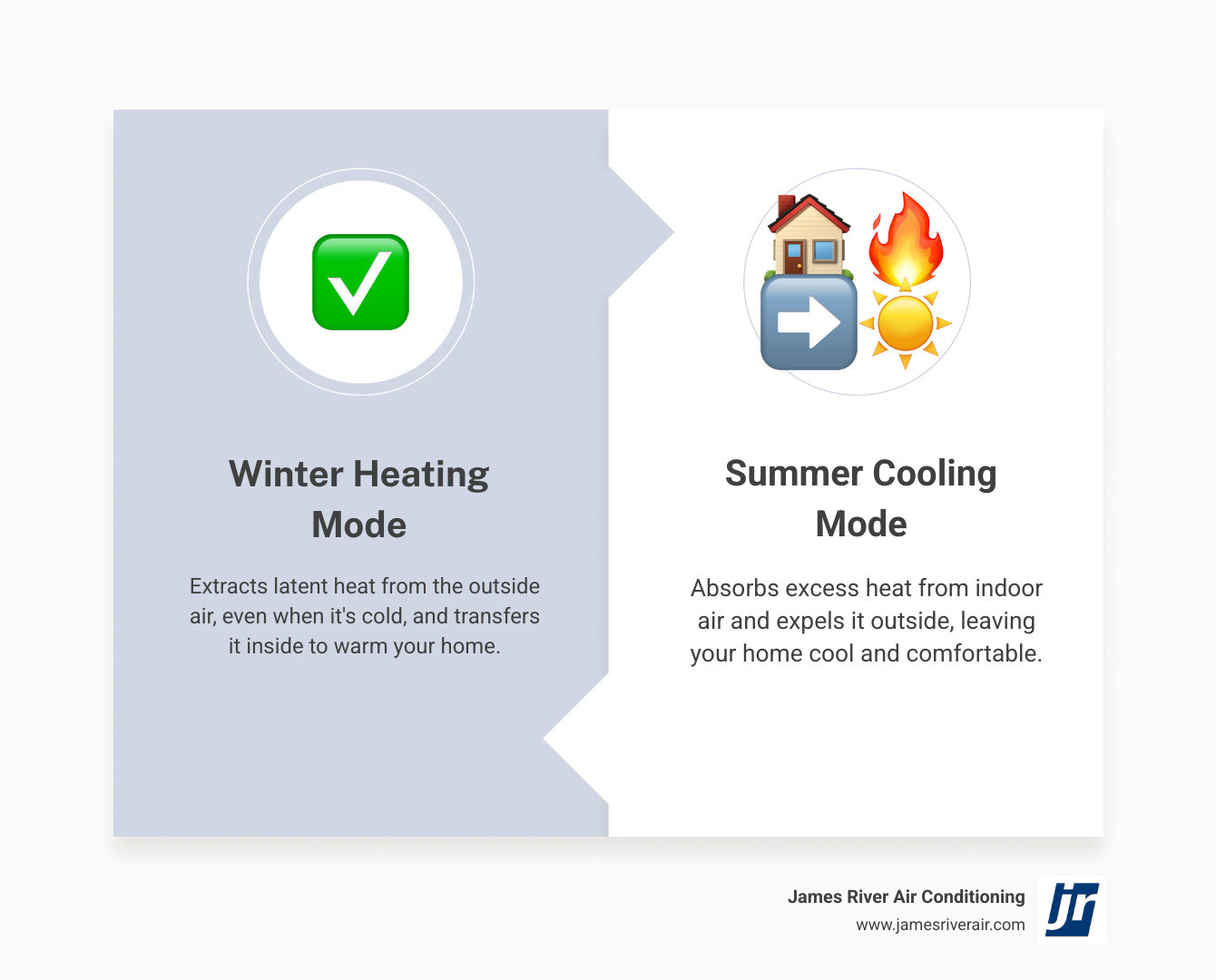
The primary advantage, and often the biggest draw, is their incredible energy efficiency. Unlike traditional furnaces that generate heat by burning fossil fuels or electric resistance, heat pumps simply transfer heat. In the colder months, they extract ambient heat from the outside air (yes, even cold air contains heat!) and move it indoors. When summer arrives, the process reverses, pulling heat from inside your home and releasing it outdoors. This heat transfer method requires significantly less energy than heat generation, leading to noticeable savings on your utility bills.
Beyond the energy savings, heat pumps are also a fantastic option for those concerned about their environmental impact. By using electricity to move heat rather than burning fossil fuels, they contribute to a reduced carbon footprint. As the electrical grid increasingly relies on renewable sources, the environmental benefits of heat pumps will only grow.
Furthermore, heat pumps generally boast a longer lifespan than many traditional HVAC systems, making them a more cost-effective investment over time. They also typically require less maintenance than combustion heating systems or air conditioners, further reducing your operating costs and simplifying your home comfort routine. And let’s not forget the improved indoor air quality; by moving air rather than burning fuel, they avoid introducing combustion byproducts into your home, contributing to a healthier living environment.
More info about our heat pump options
How Heat Pumps Compare to Traditional HVAC
Understanding how heat pumps stack up against traditional furnaces and air conditioners can help you appreciate their unique advantages, especially for our climate in Glen Allen, VA.
| Feature | Heat Pump | |
|---|---|---|
| Efficiency | Heat pumps are typically much more energy efficient than traditional heating and cooling systems because they transfer heat rather than generating it. They can be particularly effective in warmer climates like Glen Allen, VA. | Furnaces and ACs are generally less energy efficient as they generate heat or cool air by burning fuel (furnace) or directly cooling/heating (AC). |
| Versatility | Provides both heating and cooling in a single unit. | Requires separate units (furnace for heating, AC for cooling). |
| Environmental Impact | Reduces carbon footprint by using electricity to transfer heat instead of burning fossil fuels. | |
| Efficiency | Transfers heat, requiring significantly less energy than traditional systems. Benefits from renewable electric power sources. | Oper Generates heat via combustion (furnace) or directly cools/heats via refrigerant cycle (AC). Less efficient than heat pumps. |
| Versatility | Provides both heating and cooling from a single unit for year-round comfort. | Requires a separate furnace for heating and an air conditioner for cooling. |
| Environmental Impact | Reduces carbon footprint by using electricity instead of fossil fuels, leading to lower emissions. | |
| Cost-effectiveness | Generally offers long-term savings due to higher energy efficiency and lower maintenance requirements. | Can have lower initial installation costs, but higher operating costs over time due to lower energy efficiency. |
| Lifespan | Heat pumps generally last longer than traditional AC units (around 15-20 years with proper maintenance). | Furnaces typically last 15-20 years, while AC units last 10-15 years. |
| Cost | The initial investment is usually higher, but due to their efficiency and reduced maintenance needs, heat pumps typically offer significant long-term savings. | Initial installation can be less expensive, but operational costs are generally higher due to lower efficiency. |
| Maintenance | Generally requires less maintenance than combustion heating systems or air conditioners, reducing operating costs. | Requires regular maintenance for both systems, including furnace tune-ups and AC checks. |
| Lifespan | Heat pumps generally last longer than HVAC systems, making them a more cost-effective investment. They can last 10-15 years, often even longer with proper care. | Furnaces and AC units typically have slightly shorter lifespans, around 10-15 years for ACs and 15-20 years for furnaces. |
By choosing a heat pump, you’re not just getting a heating and cooling system; you’re investing in a comprehensive, efficient, and environmentally conscious home comfort solution that is perfectly suited for the variable weather patterns we experience in Glen Allen, VA.
Selecting the Right System for Your Home
Choosing the ideal heat pump for your home in Glen Allen, Laurel, or Short Pump isn’t a one-size-fits-all decision. Several crucial factors come into play to ensure your new system operates at peak efficiency and provides maximum comfort. These include the size of your home, its insulation levels, and the condition of your existing ductwork.
One of the most critical steps in selecting the right system is performing a thorough load calculation. This isn’t just a fancy term; it’s a precise assessment that considers various aspects of your home, such as square footage, window efficiency, ceiling height, and even the number of occupants. A proper load calculation helps us determine the exact heating and cooling capacity (often measured in tons) your home needs. An improperly sized system, whether too large or too small, can lead to inefficiencies, uneven temperatures, and a shorter lifespan for your unit. We pride ourselves on carefully assessing your home to ensure precise system sizing for optimal performance.
More info about our installation process
Key Features for Your Residential Heat Pump Installation in Glen Allen, VA
Modern heat pumps come packed with advanced features designed to improve efficiency, comfort, and control. When considering a residential heat pump installation in glen allen, va, here are some key features to look for:
- SEER2 Ratings: The Seasonal Energy Efficiency Ratio 2 (SEER2) measures a heat pump’s cooling efficiency. Higher SEER2 ratings indicate greater energy savings during the warmer months.
- HSPF2 Ratings: The Heating Seasonal Performance Factor 2 (HSPF2) measures a heat pump’s heating efficiency. A higher HSPF2 rating means your system will be more efficient at heating your home in winter. We always recommend looking for systems with robust SEER2 and HSPF2 ratings to maximize your long-term energy savings.
- ENERGY STAR® Certification: This label signifies that a product meets strict energy efficiency guidelines set by the EPA. ENERGY STAR® certified heat pumps use less energy, save money, and help protect the environment.
- Variable-Speed Technology: Unlike older single-speed systems that are either “on” or “off,” variable-speed heat pumps can adjust their output to precisely match your home’s heating and cooling demands. This leads to more consistent temperatures, quieter operation, and even greater energy efficiency.
- Noise Reduction Features: Modern heat pumps are engineered to operate quietly, both indoors and outdoors. Look for features like sound-dampening insulation and advanced fan designs for a peaceful home environment.
- Smart Thermostat Compatibility: Many heat pumps integrate seamlessly with smart thermostats, allowing you to control your home’s comfort from anywhere, optimize energy usage based on your schedule, and even learn your preferences over time.
These features not only ensure a comfortable home but also contribute to significant energy savings and a reduced environmental impact, making your residential heat pump installation in glen allen, va a truly smart investment.
What to Expect During Your Residential Heat Pump Installation in Glen Allen, VA
We understand that a new HVAC installation can feel like a significant undertaking. That’s why we prioritize professionalism, transparency, and respect for your home throughout the entire process. From the moment our team arrives, you’ll see our commitment to quality in action. Our technicians are not just skilled; they are NATE-certified, meaning they have proven their knowledge and expertise in the HVACR industry through specialized tests and continuous education. This ensures that your residential heat pump installation in glen allen, va is handled by the best in the business, adhering to industry best practices.
We also take great care to protect your home during the installation. Our team will wear protective shoe covers and lay down drop cloths to ensure that your living spaces remain clean and undisturbed. We treat your home as if it were our own, minimizing disruption and leaving the work area spotless. Our goal is to make the installation experience as smooth and stress-free as possible for you.
The Step-by-Step Process for a Residential Heat Pump Installation in Glen Allen, VA
When you choose us for your residential heat pump installation in glen allen, va, here’s a general overview of what you can expect:
- Initial Consultation and Site Assessment: It all starts with a conversation. We’ll discuss your specific heating and cooling needs, assess your current system, and perform a detailed load calculation to determine the perfect heat pump size and type for your home.
- System Design and Quote: Based on our assessment, we’ll recommend suitable heat pump options, explaining their features and benefits. You’ll receive a transparent quote that outlines all aspects of the installation.
- Scheduling and Preparation: Once you approve the quote, we’ll schedule your installation at a time that’s convenient for you. We’ll provide you with all the necessary information to prepare your home for our arrival.
- Old System Removal: Our team will carefully remove your old furnace, air conditioner, or existing heat pump, ensuring proper disposal according to local regulations.
- Indoor Unit Installation: The new indoor air handler or furnace (if it’s a dual-fuel system) will be installed in your attic, basement, or utility closet, connecting to your existing ductwork.
- Outdoor Unit Placement: The outdoor heat pump unit will be strategically placed on a level pad, typically outside your home, ensuring optimal airflow and quiet operation.
- Connection and Testing: We’ll connect the refrigerant lines, electrical wiring, and condensate drainage, then carefully test the entire system to ensure everything is functioning perfectly. We’ll check for leaks, verify proper airflow, and calibrate the thermostat.
- Final Walkthrough and Education: Before we leave, we’ll walk you through your new system, explain its features, and show you how to operate your thermostat. We’ll answer any questions you have and ensure you’re completely comfortable with your new heat pump.
The typical timeline for a standard residential heat pump installation in glen allen, va can vary depending on the complexity of the job, but generally, we aim to complete the installation within a few days once the system is selected and ready. Our efficient teams work diligently to minimize any inconvenience, ensuring your home’s comfort is restored swiftly.
Book your free consultation today
Post-Installation Care and Knowing When to Upgrade
Once your new heat pump is installed, the journey to optimal home comfort doesn’t end there. Just like a car, your heat pump needs regular attention to perform its best and last as long as possible. The importance of maintenance cannot be overstated. Regular seasonal check-ups by qualified technicians are crucial for ensuring your system runs efficiently, prevents unexpected breakdowns, and maintains its long lifespan. These check-ups typically involve cleaning coils, checking refrigerant levels, inspecting electrical connections, and ensuring all components are working harmoniously.
Beyond professional tune-ups, simple tasks like regularly changing your air filters are vital. Dirty filters restrict airflow, forcing your heat pump to work harder, which wastes energy and can lead to system strain. By staying on top of maintenance, you’re not just ensuring longevity; you’re also safeguarding your energy efficiency and avoiding costly repairs down the line. It’s an investment in continuous comfort and peace of mind.
Signs Your Current System Needs Replacing
Even with the best maintenance, all HVAC systems eventually reach the end of their useful life. For homeowners in Glen Allen, Laurel, and Short Pump, knowing the signs that your existing heat pump might need replacing can save you from unexpected discomfort and expense.
- System Age: Heat pumps generally last between 10-15 years. If your system is approaching or has exceeded this age, it’s worth considering an upgrade. Older systems lose efficiency over time, and modern units offer significant technological advancements.
- Rising Energy Bills: Are your utility bills steadily climbing without a corresponding increase in usage? This is a strong indicator that your heat pump is losing efficiency and struggling to maintain desired temperatures, costing you more money each month.
- Frequent Repairs: If you find yourself calling for repairs more and more often, or if the cost of repairs is starting to add up, it might be more economical to invest in a new, reliable system rather than continuously patching up an old one.
- Inconsistent Temperatures: Are some rooms too hot while others are too cold? An aging or failing heat pump may struggle to distribute conditioned air evenly throughout your home, leading to uncomfortable hot and cold spots.
- Strange Noises: While some operational sounds are normal, grinding, squealing, banging, or persistent rattling noises are red flags. These sounds often indicate worn-out parts or mechanical issues that could lead to a complete system breakdown.
Ignoring these signs can lead to a sudden system failure, leaving you without heating or cooling when you need it most. Proactively addressing these issues with a new residential heat pump installation in glen allen, va can ensure uninterrupted comfort and better long-term value.
Available Rebates and Incentives for Glen Allen Residents
Investing in a new residential heat pump installation in glen allen, va can be made even more appealing thanks to various rebates and incentives designed to encourage energy efficiency. These programs can significantly reduce your upfront costs, making the upgrade more accessible and accelerating your return on investment.
Here’s a list of potential sources for rebates and incentives:
- Federal Tax Credits: The federal government often offers tax credits for homeowners who install high-efficiency heat pumps. These credits can provide a direct reduction in your tax liability, making advanced systems more affordable.
- Local Utility Rebates: Utility providers in Virginia, including those serving Glen Allen, Laurel, and Short Pump, frequently offer their own rebate programs for customers who upgrade to energy-efficient heating and cooling systems. These can be cash rebates or credits on your energy bill.
- Manufacturer Rebates: Heat pump manufacturers sometimes offer their own rebates on specific high-efficiency models. These can often be combined with other incentives for maximum savings.
- High-Efficiency System Qualifications: To qualify for many of these rebates, your new heat pump will typically need to meet certain energy efficiency standards, such as specific SEER2 and HSPF2 ratings, or carry an ENERGY STAR® certification. We can help you steer these requirements and identify systems that qualify for available incentives.
Our team stays informed about current federal, state, and local programs to help our customers maximize their savings. We’ll work with you to identify eligible systems and assist with the necessary paperwork to ensure you take full advantage of any available incentives.
Conclusion
Choosing a residential heat pump installation in glen allen, va is a smart decision for modern homeowners seeking an efficient, reliable, and environmentally friendly solution for year-round comfort. We’ve seen how heat pumps excel in energy efficiency by transferring heat rather than generating it, leading to significant energy savings. Their versatility as an all-in-one heating and cooling system, combined with their longer lifespan and lower maintenance requirements compared to traditional HVAC, makes them an excellent long-term investment.
At James River Air Conditioning, we are dedicated to providing expert heat pump services to the communities of Glen Allen, Laurel, and Short Pump. Our NATE-certified experts bring decades of experience and a commitment to world-class service to every installation. We understand the unique climate challenges of our region and are here to help you select and install a heat pump system that perfectly meets your home’s needs.
From the initial consultation and precise load calculation to professional installation and post-care guidance, we ensure a seamless and satisfying experience. Your comfort is our priority, and we stand by our commitment to quality, ensuring your new heat pump provides efficient, consistent comfort for years to come.
