
Why Crawl Space Services and Why They Matter for Your Home Should Be on Every Richmond Homeowner’s Radar
Crawl space services and why they matter for your home comes down to one simple truth: what happens beneath your floors directly affects the air you breathe, the energy you use, and the structure you live in.
Here is a quick summary of what crawl space services cover and why they are important:
- Moisture control – prevents mold, wood rot, and structural damage
- Encapsulation – seals the space from outside air, humidity, and pests
- Vapor barriers – block ground moisture from rising into your home
- Insulation – keeps floors warmer and energy bills lower
- Ventilation – manages airflow to reduce condensation
- Inspections – catch problems early before they become costly repairs
- Structural repairs – address sagging joists, rotted beams, and shifting piers
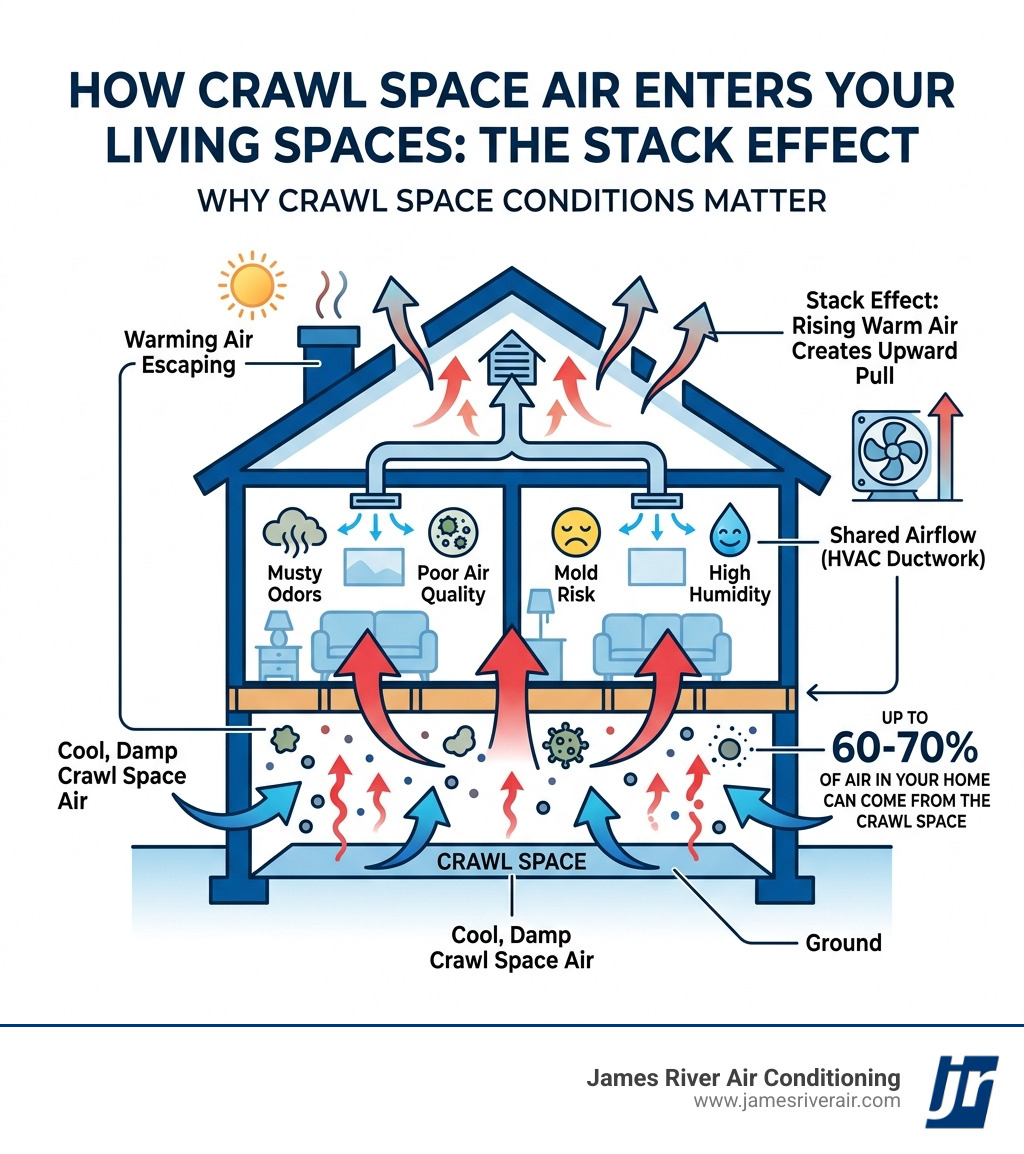
Studies suggest that up to 60 to 70 percent of the air inside your home travels up from the crawl space. That means any moisture, mold, or pest activity happening below your floors is also happening in your living areas. In Richmond, Virginia, where humidity levels can stay high for months at a time, that risk is very real.
Most homeowners never think about their crawl space until something goes wrong. A musty smell in the hallway. A soft spot in the floor. An energy bill that keeps climbing. By then, the damage may already be significant.
The good news is that professional crawl space services can prevent most of these problems before they start.
I’m noticing musty smells in my Richmond home. What is a crawl space and why does it exist?
If you’ve ever noticed a faint, earthy odor lingering in your laundry room or hallway, your home might be trying to tell you something about its foundation. In many parts of Virginia, particularly in areas like Midlothian, Henrico, and Chesterfield, homes are built on crawl spaces rather than concrete slabs or full basements.
A crawl space is a shallow, unfinished area located between the ground and the first floor of your home. Typically ranging from one to three feet in height—just enough room for a technician to “crawl” through—this space serves several critical purposes:
- Utility Access: It houses the “veins and arteries” of your home. Your plumbing pipes, electrical wiring, and HVAC ductwork are often tucked away here, making them easier to access for repairs without having to demolish a concrete floor.
- Elevation and Flood Protection: By raising the living area off the ground, a crawl space protects the wooden structure of your home from groundwater and potential local flooding.
- Cost-Effectiveness: Especially on the uneven terrain often found in the Piedmont region of Virginia, crawl spaces are more economical to build than full basements while providing better moisture protection than a slab.
For more details on how these spaces function specifically in our region, you can explore our guide on Residential Crawl Spaces.
Understanding the different types of foundations
Not all crawl spaces are created equal. As we move through April 2026, building science has evolved significantly, leading to three main categories of crawl space design:
- Vented Crawl Spaces: These are the traditional “old school” spaces. They feature vents in the foundation walls intended to allow outside air to circulate and “dry out” the area. However, in our humid Virginia climate, these vents often do the opposite—they let in moist, heavy air that condenses on cool pipes and wooden joists.
- Unvented/Conditioned Spaces: These are sealed from the outside but may not have a full heavy-duty liner. They rely on the home’s HVAC system to maintain a stable environment.
- Encapsulated Systems: This is the modern gold standard. The entire floor and walls are covered in a heavy-duty, reinforced polyethylene liner. Combined with a dedicated dehumidifier, this creates a completely controlled environment that stays dry year-round, regardless of the Richmond humidity.
Common Issues Requiring Crawl Space Services and Why They Matter for Your Home
When we ignore the area beneath our feet, nature tends to move in. Because crawl spaces are dark, often damp, and undisturbed, they become breeding grounds for issues that can eventually compromise your entire property.
| Feature | Vented Crawl Space | Encapsulated Crawl Space |
|---|---|---|
| Humidity Levels | High (Fluctuates with weather) | Low (Controlled at <55%) |
| Mold Risk | Significant | Minimal to None |
| Pest Attraction | High (Open vents) | Very Low (Sealed entry) |
| Energy Efficiency | Poor (Air leaks) | Excellent (Insulated & Sealed) |
| Floor Temperature | Cold in Winter | Consistent/Warm |
The most common problems we encounter during inspections include:
- Moisture and Mold: Excessive humidity leads to condensation. This moisture feeds mold spores that colonize wooden floor joists and insulation.
- Wood Rot: When wooden supports stay damp for too long, they lose their structural integrity. This leads to the “spongy” or sagging floors many homeowners report.
- Pests and Rodents: Open vents are an open invitation. Rats can squeeze through gaps as small as half an inch, while mice only need a quarter-inch. Once inside, they shred insulation for nesting and may even chew through electrical wiring.
- Termites: Damp wood is a primary attractant for termites, which can cause thousands of dollars in damage before they are even detected.
If you suspect your foundation area is struggling, it is helpful to review these Warning Signs Your Crawl Space is Impaired to see if your home matches the symptoms of a failing system.
How do crawl space services and why they matter for your home improve air quality?
It might be hard to believe, but your crawl space is essentially the “lungs” of your home. This is due to a phenomenon called the Stack Effect.
Warm air in your home rises and escapes through the attic. As it rises, it creates a vacuum effect that pulls air from the lowest point of the house—the crawl space—upward into your living rooms, bedrooms, and kitchen. Industry data shows that up to 60% of the air you breathe on the first floor originated in the crawl space.
If that space is filled with mold spores, dust mite droppings, or odors from pest activity, those pollutants are being circulated through your home 24/7. Professional crawl space services and why they matter for your home focus on cleaning and sealing this area to ensure the air being pulled into your living space is clean, dry, and healthy for your family.
Why professional crawl space services and why they matter for your home protect structural integrity?
Your home is likely your biggest investment. That investment sits on a wooden frame supported by the crawl space. When moisture goes unchecked, the wood absorbs it, swells, and eventually begins to decay.
Professional services like encapsulation and the installation of high-quality vapor barriers stop this cycle. By keeping the wood moisture content low, we prevent the “softening” of floor joists and the rot of sill plates (the wooden board that sits directly on the foundation wall). A dry crawl space means a stable foundation that won’t shift or sag over time.
How do I know if I need professional crawl space services in Richmond?
You don’t always need to crawl into the mud to know there’s a problem. Your home provides several clues if the foundation environment is out of balance.
Watch for these red flags:
- Musty Odors: That “old basement” smell is usually a sign of active mold or mildew.
- Soft or Uneven Floors: If you feel a “dip” when walking across a room or if your furniture seems to tilt, the supports below may be compromised.
- High Energy Bills: If your HVAC system is working overtime but your floors still feel freezing in the winter, you’re likely losing conditioned air through an unsealed crawl space.
- Condensation on Windows: High indoor humidity often starts with moisture evaporating from the dirt floor beneath your house.
- Pest Sightings: Seeing silverfish, camel crickets (spider crickets), or rodents inside the home often indicates they have established a colony in the crawl space first.
Accessing your space safely
If you decide to take a look yourself, safety is paramount. Most homes in the Richmond area have an exterior hatch, though some older homes in places like the Fan or Museum District might have an interior utility door located in a closet or under a rug.
Before entering, ensure you have proper safety gear, including a respirator (to avoid breathing in mold or dust), knee pads, and a high-powered flashlight. However, because these spaces can house hidden electrical hazards, structural shifts, or aggressive pests, we always recommend a professional evaluation. Our technicians are trained to spot “tide marks” on walls that indicate past flooding and use moisture meters to detect hidden rot that isn’t visible to the naked eye.
What solutions are available for homeowners looking to protect their property?
The days of simply throwing a thin piece of plastic over the dirt are over. Today’s crawl space services and why they matter for your home involve comprehensive engineering solutions.
- Full Encapsulation: This involves sealing all vents, installing a heavy 20-mil vapor barrier that covers the floor and wraps up the walls, and adding a dedicated dehumidifier.
- Vapor Barriers: Even if you aren’t ready for full encapsulation, a professional-grade vapor barrier (much thicker than the DIY versions) can significantly reduce ground moisture.
- Waterproofing and Sump Pumps: If your crawl space prone to standing water after a heavy Virginia thunderstorm, we install interior drainage systems and sump pumps to whisk water away before it can soak into your home’s bones.
- Structural Repairs: This includes “sistering” damaged joists (bolting new wood to the old) or installing adjustable steel support jacks to level out sagging floors.
- Insulation Upgrades: Replacing old, soggy fiberglass “pink” insulation with moisture-resistant foam board on the foundation walls helps keep your home’s temperature stable.
The benefits of encapsulation over traditional venting
In April 2026, the consensus among building scientists is clear: in humid climates like ours, venting is a liability. Encapsulation transforms your crawl space from a damp “cave” into a clean, conditioned part of your home’s envelope.
The benefits are immediate:
- Energy Savings: You’re no longer heating or cooling the “great outdoors” through floor leaks.
- Pest Deterrence: A sealed space is much harder for bugs and rodents to penetrate.
- Home Value: A clean, dry, encapsulated crawl space is a major selling point for future buyers, as it proves the home has been meticulously maintained.
Frequently Asked Questions about Crawl Space Care
How can I tell if my home has a crawl space foundation?
The easiest way is to look at the exterior of your home. If the house is elevated a few feet off the ground and you see small rectangular vents or a wooden access hatch near the ground level, you have a crawl space. If the walls of your home go straight into the grass with no elevation, you likely have a slab foundation.
Is encapsulation better than traditional venting in Virginia?
Yes. Because Virginia experiences high humidity and four distinct seasons, traditional vents often allow humid summer air to condense on cold surfaces in the crawl space, leading to mold. Encapsulation removes the “weather” factor entirely, keeping the space at a constant, safe humidity level year-round.
How often should I have my crawl space inspected?
We recommend at least a bi-annual check. Ideally, you should have it looked at in the spring (after the wet winter months) and again in the fall. Regular inspections allow you to catch a small plumbing leak or a minor pest entry before it turns into a major structural repair.
Conclusion
Your home’s foundation is literally the base upon which your family’s safety and comfort are built. While it’s easy to ignore what’s happening in the dark corners beneath your floorboards, the reality is that your crawl space is a dynamic environment that dictates your indoor air quality and structural longevity.
At James River Air Conditioning, we’ve spent over 57 years serving our neighbors across Richmond, Midlothian, Glen Allen, and beyond. We understand the unique challenges that Virginia’s soil and climate present to local homeowners. From Ashland to Petersburg, we are here to ensure your home remains a healthy, efficient, and stable place to live.
Don’t wait for a musty smell or a sagging floor to take action. Schedule your professional crawl space evaluation today and give your home the solid foundation it deserves.
