

How to Prevent Pipe Freeze Damage From Freeze Thaw Cycles
Why Freeze-Thaw Cycles Are One of the Biggest Threats to Your Plumbing
Understanding how freeze thaw cycles affect your plumbing could save you from a very expensive repair bill this winter. When temperatures drop below freezing at night and rise again during the day, water inside your pipes expands and contracts repeatedly. That stress adds up fast — and in Richmond, Virginia, where winters bring exactly this kind of back-and-forth weather, your plumbing is under more strain than most homeowners realize.
Here’s a quick summary of the key ways freeze-thaw cycles damage your plumbing:
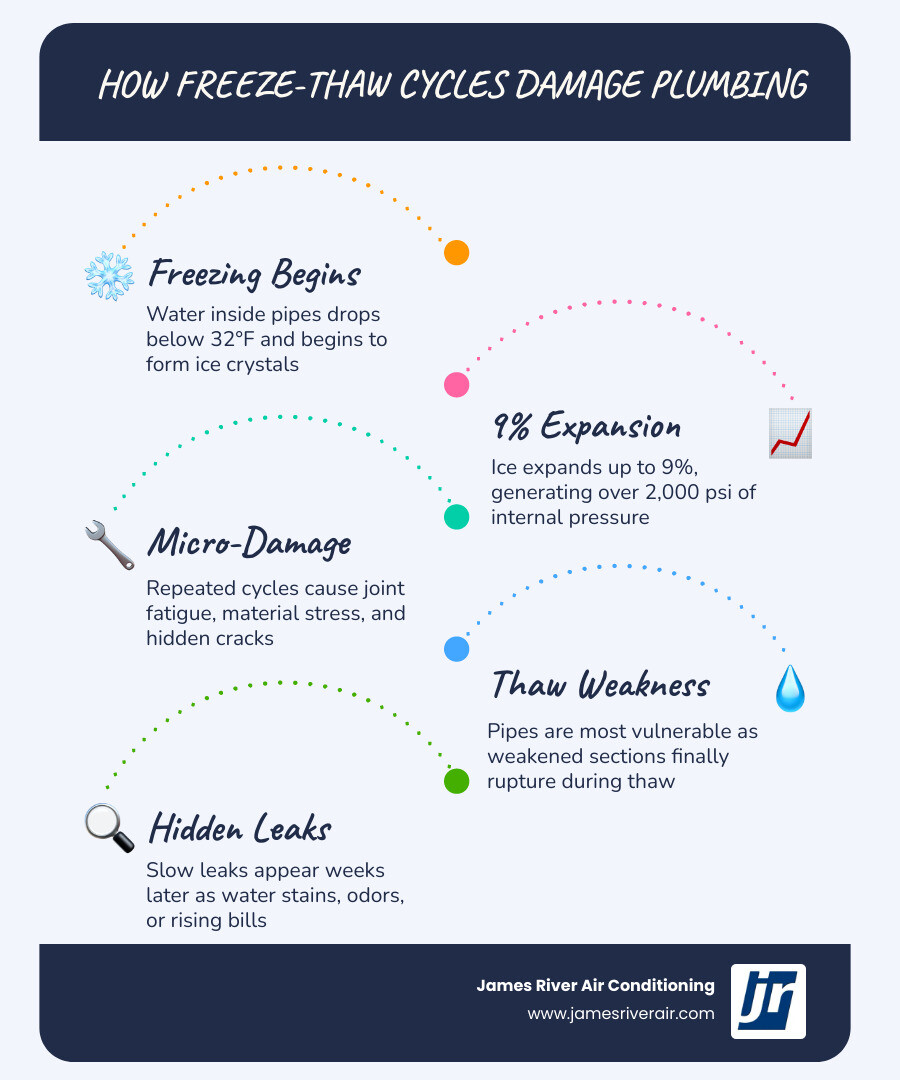
- Water expands up to 9% when it freezes, creating internal pressure that can exceed 2,000 psi inside pipes
- Repeated cycles cause more damage than one hard freeze by weakening joints, fittings, and pipe walls over time
- Damage often stays hidden behind walls, under floors, or underground until a slow leak becomes a big problem
- The thaw phase is often the most dangerous — that’s when weakened pipes finally crack and water escapes
- All pipe materials are affected, though copper, PVC, and PEX each respond differently to repeated freezing
Most failures don’t announce themselves with a sudden burst. They build quietly through the winter and show up as water stains, musty odors, or a spike in your water bill weeks later.
Understanding How Freeze Thaw Cycles Affect Your Plumbing
To understand why freeze-thaw cycles are so destructive, we have to look at the basic physics of water. Most liquids contract when they cool down, but water is a strange and beautiful exception. When water drops below 32°F (0°C), its molecules arrange themselves into a crystalline structure that actually takes up more space.
Specifically, water expands by approximately 9% in volume when it freezes. When this expansion happens inside the tight, sealed confines of a copper or plastic pipe, it has nowhere to go. The expanding ice acts like a hydraulic ram, generating internal pressures that can easily exceed 2,000 psi. To put that in perspective, a standard residential plumbing system is designed to operate at around 40 to 80 psi. No residential pipe is built to withstand thousands of pounds of pressure.
As ice begins to form inside a pipe, it rarely freezes all at once. Instead, it forms an ice plug in the coldest section of the line. As the ice plug grows, it pushes the remaining liquid water down the pipe toward the closed faucet. The water becomes trapped between the growing ice blockage and the closed valve. The pressure builds up dramatically in this trapped pocket of water, not necessarily at the spot where the ice itself is located. Eventually, the pressure becomes too great, causing the pipe wall to stretch, fatigue, and ultimately rupture.
In Central Virginia, our winter weather is notorious for hovering right around the freezing mark. We often experience mild, sunny afternoons followed by sharp, sub-freezing drops overnight. This constant oscillation means your home’s pipes are repeatedly subjected to these extreme pressure spikes and subsequent thaws. For more details on how our unique local weather impacts your property, check out our guide on Surviving the Seasons: How Virginia’s Climate Impacts Your Home Systems.
Why Repeated Temperature Swings Cause the Most Damage
You might think that a single, prolonged deep freeze is the worst-case scenario for your plumbing system. In reality, repeated freeze-thaw cycles are far more damaging. A single deep freeze will freeze the water in your pipes once. If the pipes survive that initial expansion, they may remain intact until they thaw. However, when temperatures constantly swing above and below freezing, your plumbing experiences a phenomenon known as cumulative mechanical fatigue.
During each individual freeze event, the pipe material undergoes micro-expansion. The metal or plastic stretches slightly to accommodate the expanding ice. When the temperature rises and the ice melts, the pipe contracts. Over several weeks of these rapid temperature swings, this repeated stretching and shrinking weakens the molecular structure of the pipe.
Furthermore, this mechanical stress is not distributed evenly. It concentrates at the weakest points of your plumbing system: the joints, elbow fittings, tees, and couplings. Solder joints in copper pipes can develop microscopic fractures, while threaded fittings can gradually back out or warp. By the time the third or fourth freeze-thaw cycle of the season rolls around, a pipe that successfully withstood the first cold snap may finally fail under a fraction of the pressure.
Understanding this cumulative stress is key to protecting your property. You can learn more about how our regional weather patterns test your home’s structure in our article on The Commonwealth Climate vs. Your House: What You Need to Know.
How Freeze Thaw Cycles Affect Your Plumbing Materials Differently
Not all plumbing pipes handle the stress of freezing and thawing in the same way. The material your pipes are made of plays a massive role in how they respond to temperature fluctuations.
| Pipe Material | Flexibility / Elasticity | Common Failure Mode | Freeze-Thaw Risk Level |
|---|---|---|---|
| Copper | Low elasticity; rigid | Longitudinal splitting along the pipe wall; burst solder joints | High |
| PVC / CPVC | Very low; becomes brittle in cold | Hairline fractures; shattering; joint separation | High |
| PEX | High elasticity; excellent material memory | Fitting failures (crimp rings/expansion joints) | Low to Medium |
- Copper: While copper is incredibly durable and has been the gold standard of plumbing for decades, it is rigid. When water freezes inside a copper pipe, the metal can only stretch a tiny amount before it reaches its limit. Repeated cycles cause the copper to experience “work hardening,” making it increasingly brittle until it splits longitudinally (down the length of the pipe) or blows out a soldered elbow.
- PVC and CPVC: Rigid plastic pipes like PVC are highly susceptible to cold temperatures. As the thermometer drops, PVC loses its limited flexibility and becomes incredibly brittle. Even a minor ice expansion can cause the plastic to shatter or develop hairline cracks.
- PEX (Crosslinked Polyethylene): PEX is the modern champion of freeze resistance. Thanks to its unique crosslinked molecular structure, PEX possesses incredible elasticity. It can expand up to several times its original diameter when water freezes inside it, and—crucially—its “material memory” allows it to shrink back to its original size once the ice thaws. However, PEX is not completely invincible. While the tubing itself rarely bursts, the metal fittings, crimp rings, and expansion joints connecting the PEX lines do not expand, making them the primary point of failure during freeze-thaw cycles.
High-Risk Areas Vulnerable to How Freeze Thaw Cycles Affect Your Plumbing
To effectively protect your home, you need to know where the danger zones are. Pipes located in the warm, conditioned living spaces of your home rarely freeze. Instead, the freeze-thaw threat targets unheated, exposed, or poorly insulated areas:
- Exterior Walls: Pipes routed through exterior walls—especially those facing north or east, which receive the least winter sunlight—are highly vulnerable. If the insulation inside the wall cavity has settled or is missing, cold air can seep in and freeze the pipes.
- Crawl Spaces and Basements: Many homes in Richmond, Chesterfield, and Henrico are built over crawl spaces. If your crawl space vents are left open during the winter, freezing winds can sweep underneath your home, rapidly stripping heat from exposed water lines.
- Unheated Garages: Homeowners often forget that unheated garages can drop below freezing overnight. Water lines supplying laundry basins or running to outdoor fixtures through garage walls are prime targets for freeze-thaw damage.
- Outdoor Hose Bibs: If you leave a garden hose attached to an outdoor faucet over the winter, water remains trapped inside the faucet assembly. When it freezes, the ice expands backward into the house, splitting the pipe just inside the exterior wall.

The Hidden Threat: Soil Movement and Underground Water Lines
When we talk about how freeze thaw cycles affect your plumbing, we cannot ignore what happens beneath the surface of your yard. Underground water and sewer lines are subjected to massive physical forces driven by soil movement.
When the moisture in the ground freezes, it creates a phenomenon known as “frost heave.” The freezing water causes the soil to expand and push upward. When the temperature warms up, the ice melts, and the soil contracts and settles. This continuous rising and falling of the earth puts immense structural stress on buried pipes.
This issue is particularly severe in areas around Richmond, Midlothian, and Glen Allen, where clay-heavy soils are common. Clay soil retains a high volume of water, meaning it expands and contracts far more violently than sandy or loamy soils. Additionally, our region receives significant winter precipitation, saturating the ground. When this saturated clay soil undergoes repeated freeze-thaw cycles, it can shift buried lines, pull joints apart, or crack older, rigid sewer pipes.
Over time, this ground shifting can lead to:
- Misaligned pipe joints that allow root intrusion
- Cracked or collapsed sewer lines
- Sagging sections of pipe (bellies) that collect debris and cause chronic clogs
If you suspect that underground shifting has damaged your main lines, you can learn more about how we diagnose and repair these subterranean issues by visiting our Water & Sewer Lines service page.
Early Warning Signs of Freeze-Thaw Plumbing Damage
Because freeze-thaw damage often starts as microscopic cracks or occurs in hidden areas, you need to keep a close eye out for the early warning signs of a leak before it turns into a catastrophic flood.
- Unexplained Water Bill Spikes: If your water usage suddenly jumps but your household habits haven’t changed, you likely have a hidden leak. A tiny hairline fracture caused by a freeze-thaw cycle can quietly waste hundreds of gallons of water a day.
- Reduced Water Pressure: If you turn on a faucet and notice a sudden drop in water pressure, it could indicate an ice blockage is still present, or worse, that water is actively escaping through a ruptured pipe behind your walls.
- Damp Drywall, Peeling Paint, or Water Stains: Keep a close watch on your ceilings and walls. A small, slow drip from a cracked joint will eventually saturate the drywall, leading to unsightly yellow or brown stains, bubbling paint, or sagging plaster.
- Musty Odors or Mold Growth: Water leaking into crawl spaces, basements, or wall cavities creates the perfect breeding ground for mold and mildew. If you notice a persistent, musty smell in a particular room, it’s time to investigate.
- Strange Noises: If you hear faint whistling, dripping, or rushing water sounds when all your faucets are turned off, water is likely escaping from your plumbing system.
Step-by-Step Preventive Maintenance for Homeowners
The best way to handle freeze-thaw damage is to prevent it from happening in the first place. By taking a few proactive steps before the coldest winter months arrive, you can safeguard your home’s plumbing system.
- Insulate Exposed Pipes: Wrap all water lines located in unheated areas—such as your crawl space, basement, attic, and garage—with high-quality foam pipe insulation. For extremely vulnerable runs, consider installing UL-listed heat tape before wrapping them.
- Seal Air Leaks: Inspect your crawl space, basement, and exterior walls for gaps, cracks, or holes where cold air could enter. Use outdoor-rated caulk or expanding foam to seal these openings, especially around outdoor hose bibs and cable entry points.
- Disconnect and Drain Outdoor Hoses: Before the first freeze, disconnect all garden hoses from their outdoor faucets. Drain the hoses and store them away. If you have interior shutoff valves for your outdoor faucets, turn them off and open the outdoor taps to drain any remaining water.
- Install Frost-Proof Hose Bibs: If you have older, standard outdoor faucets, consider upgrading them to modern frost-proof hose bibs. These fixtures place the actual shutoff valve deep inside the warm insulation of your home’s wall cavity.
- Let Faucets Drip: During periods of extreme cold or rapid temperature drops, open your indoor faucets (both hot and cold) to a very slow drip. Keeping the water moving prevents ice plugs from forming and relieves the pressure buildup inside the lines.
- Maintain Consistent Indoor Heat: Never turn your thermostat off when traveling during the winter. Keep your home’s heating system set to at least 55°F day and night to ensure warm air continues to circulate through your wall cavities.
To help keep your home running smoothly all year long, read our guide on Why Your Home Maintenance Schedule Changes with the Seasons.
What to Do When a Pipe Freezes or Bursts
If you turn on your tap on a freezing winter morning and only get a few miserable drips, you likely have a frozen pipe. If you act quickly and safely, you may be able to thaw it before it ruptures.
If You Suspect a Frozen Pipe:
- Keep the Faucet Open: As you thaw the pipe, the melting ice will turn to water and steam. Keeping the faucet open allows this pressure to escape safely.
- Locate the Frozen Section: Look for pipes in unheated areas or along exterior walls. A frozen pipe might have visible frost on the outside or look slightly bulged.
- Apply Gentle Heat: Wrap the frozen section in towels soaked in hot water, or use a handheld hair dryer on a low setting. Always start warming the pipe closest to the faucet and work your way back toward the frozen blockage.
- NEVER Use an Open Flame: Never attempt to thaw a pipe with a blowtorch, propane heater, or any open flame. Not only can this easily melt plastic pipes and boil water inside metal pipes (causing an explosive rupture), but it is also a major home fire hazard.
If a Pipe Bursts:
- Shut Off the Main Water Immediately: Locate your home’s main water shutoff valve (usually found near the water meter, where the main line enters the house, or in the crawl space) and turn it clockwise to stop the flow of water.
- Turn Off the Power: If escaping water is pooling near electrical outlets, appliances, or your breaker panel, safely turn off the electricity to those areas of the home.
- Call for Professional Help: A burst pipe requires immediate, professional repair to minimize structural water damage and restore your home’s water supply. If you are located in Glen Allen, Henrico, or the surrounding Richmond metro area, reach out to our team for fast, Affordable Plumbing Repair in Glen Allen VA.
Frequently Asked Questions
Why do pipes burst during the spring thaw instead of the freeze?
Many homeowners are surprised to find that their plumbing fails on a relatively warm, sunny afternoon rather than during the freezing night. The reason is simple: when water freezes, it turns into solid ice, which acts as its own temporary plug. The structural damage—the crack or split in the pipe wall—actually happens during the freeze phase due to the high pressure. However, because the water is solid ice, it cannot leak. It is only when the temperature rises and the ice melts that the water returns to its liquid state and rushes out of the newly formed crack, creating an immediate flood.
Can PEX pipes survive repeated freeze-thaw cycles without breaking?
Yes, PEX is highly resilient and can often expand and contract during freezing cycles without cracking. However, PEX is not completely immune to freeze-thaw damage. The weak points in a PEX system are almost always the metal fittings, elbow joints, and crimp rings that connect the flexible tubing. These metal components do not expand when water freezes, meaning repeated freeze-thaw cycles can loosen connections, damage seals, and cause leaks at the joints.
When should I call a professional plumber for freeze damage?
You should call a professional plumber immediately if:
- A pipe has burst and is actively leaking or flooding your home.
- You cannot locate the frozen section of your pipe.
- The frozen pipe is located behind a drywall ceiling or inside an inaccessible wall cavity.
- You have attempted to thaw the pipe yourself but have been unsuccessful.
- You notice any of the warning signs of a hidden leak, such as an unexplained water bill spike or water stains on your drywall.
Conclusion
The constant temperature swings of our local winters put an incredible amount of stress on residential plumbing. Understanding how freeze thaw cycles affect your plumbing is the first step in protecting your home from costly water damage. By taking simple, proactive steps—such as insulating exposed pipes, sealing air leaks, and winterizing your outdoor fixtures—you can keep your plumbing system safe through every winter cold snap.
At James River Air Conditioning, we have been serving homeowners throughout Richmond, Henrico, Chesterfield, Hanover, and the surrounding communities for over 57 years. Our team of highly trained, licensed plumbers is ready to assist you with everything from seasonal maintenance and inspections to emergency burst pipe repairs.
Don’t wait for a slow leak to turn into a major headache. If you want to make sure your home’s water lines are fully prepared to handle the seasons, contact us today to schedule an inspection or learn more about our comprehensive Residential Plumbing Services.
