

Why Your Home Maintenance Schedule Changes with the Seasons
Why Four Season Weather Creates More Home Maintenance Demands Than Most Homeowners Expect
How four season weather creates maintenance demands is straightforward: each season puts different stress on your home’s systems, surfaces, and structure. Here’s a quick breakdown:
| Season | Primary Maintenance Demands |
|---|---|
| Spring | Drainage, roof inspection, foundation checks, mold prevention |
| Summer | AC strain, UV damage to roofing and paint, humidity control |
| Fall | Furnace prep, sealing gaps, gutter clearing, pipe protection |
| Winter | Ice dams, frozen pipes, heating system stress, poor airflow |
Your home doesn’t get a break when the calendar turns. In Richmond, Virginia, temperatures can swing dramatically from one week to the next — and those swings quietly pile stress onto your roof, siding, HVAC system, plumbing, and foundation all year long.
Most homeowners notice the damage only after it’s already expensive. A small roof crack ignored in fall becomes a leak by February. A furnace that wasn’t serviced before the first cold snap fails on the coldest night of the year. These aren’t bad luck — they’re predictable outcomes of skipping seasonal maintenance.
The good news is that most of these problems are preventable. Understanding what each season does to your home is the first step toward staying ahead of it.
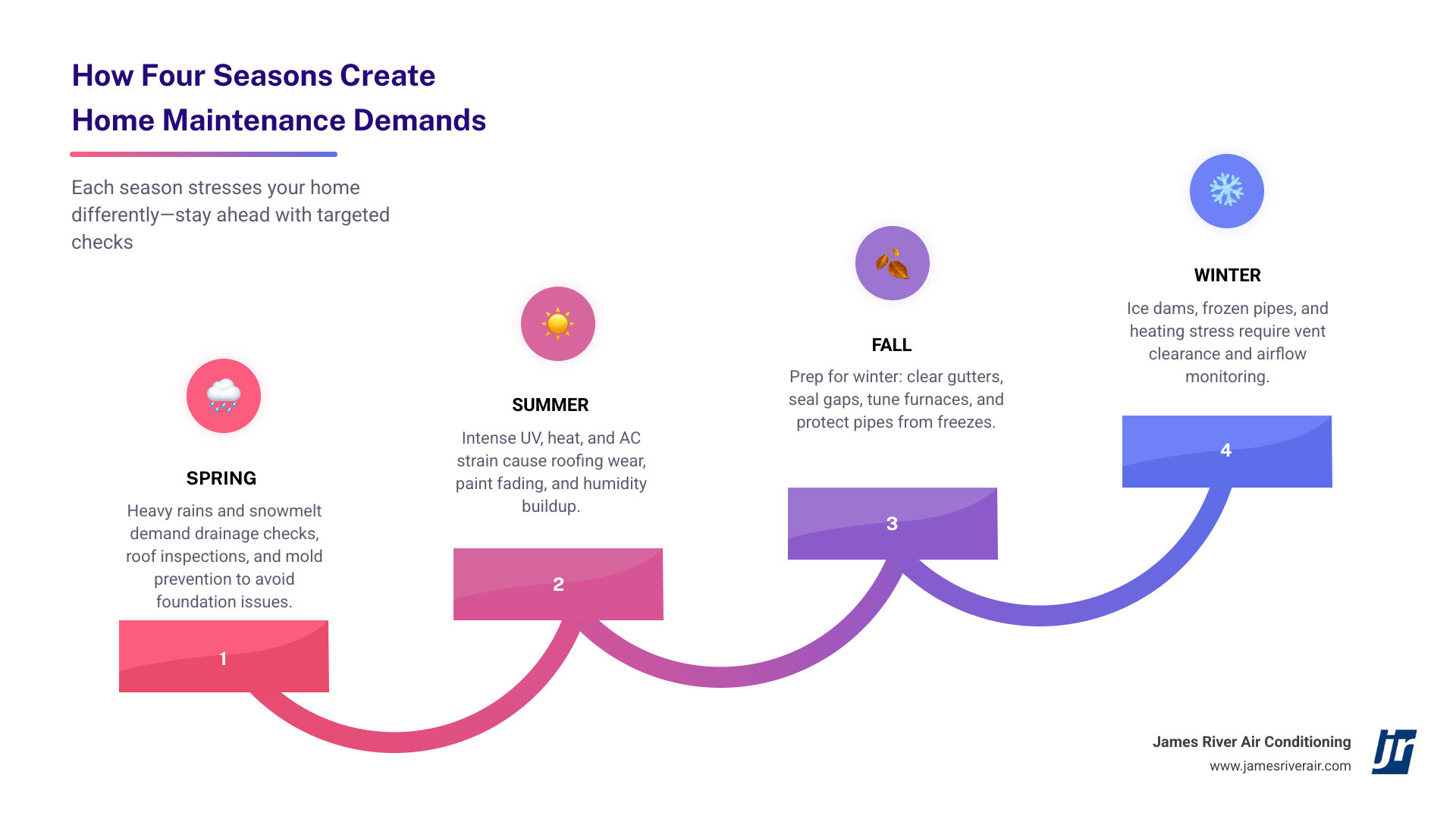
How Four Season Weather Creates Maintenance Demands for Virginia Homes
In Central Virginia, we deal with true four-season conditions: humid summers, winter freezes, spring rain, and leaf-heavy falls. That means maintenance is never really “done.” It just changes form.
Homes in Richmond and nearby communities are exposed to a steady cycle of heat, moisture, expansion, contraction, pollen, storms, and falling debris. Exterior materials wear down, indoor systems work harder, and small weak points get tested over and over. If your home could talk, it would probably ask for a calendar and a nap.
Why how four season weather creates maintenance demands is different in Central Virginia
Central Virginia sits in a Mid-Atlantic pattern where seasons can change quickly. A mild afternoon can be followed by a freezing night. A dry spell can flip into heavy rain. We also see mixed precipitation in winter and plenty of humidity in warmer months.
That combination matters because it affects more than comfort:
- Soil expands and contracts with moisture and temperature changes, which can stress foundations.
- Roofs and gutters take a beating from rain, leaves, wind, and occasional snow or ice.
- HVAC systems have to switch from heating to cooling and back again without much downtime.
- Crawl spaces, attics, and basements become prime spots for condensation and mold if ventilation or drainage is weak.
The hidden damage happens during seasonal transitions
The biggest problems often show up between seasons, not during the most obvious weather extremes.
Freeze-thaw cycles can widen tiny cracks in masonry, concrete, or flashing. Warm indoor air meeting cool surfaces can create condensation in attics, windows, or crawl spaces. Sudden temperature jumps cause materials to expand and contract, which loosens caulk, stresses seals, and opens paths for water intrusion.

Those transition periods are also when homes reveal air leaks, drainage problems, and insulation gaps. Spring and fall may feel pleasant outside, but for your house, they can be the most revealing stress tests of the year.
What Each Season Does to Your Home Systems
A smart home maintenance plan follows the seasons instead of fighting them. Each part of the year has its own priorities.
Spring: moisture, drainage, and post-winter inspection priorities
After winter, the first job is checking what cold weather left behind. Spring rain and leftover moisture can expose damage fast.
Focus on these tasks:
- Clean gutters and downspouts so water moves away from the house.
- Inspect the roof for missing shingles, lifted flashing, or soft spots.
- Check foundation walls, walkways, and masonry for new cracks.
- Look for damp insulation, musty smells, or mold spots in attics, basements, and crawl spaces.
- Test sump systems if your home has them.
- Start irrigation carefully and check for leaks before regular use.
Spring is also a key HVAC transition. Before cooling season hits full force, inspect filters, thermostats, drain lines, and system performance. Regular service helps catch wear before summer demand spikes. Our guide on the benefits of regular HVAC maintenance explains why a little attention now can prevent major headaches later.
Summer: UV, heat, and peak cooling strain
Summer does not just make your AC work harder. It also ages exterior materials faster than many homeowners realize.
Ultraviolet exposure breaks down paint, dries out sealants, and accelerates wear on roofing materials and weatherstripping. Heat buildup in attics can make shingles age faster and can push cooling systems to run longer. Window seals and frames also take a hit from repeated expansion under high temperatures.
Summer priorities include:
- Checking AC performance, airflow, and humidity control
- Replacing air filters more often if needed
- Looking for fading paint, brittle caulk, or cracked weatherstripping
- Inspecting attic ventilation to reduce trapped heat
- Watching for duct leakage or hot spots indoors
In periods of high heat, systems that seemed “fine” in spring may suddenly struggle. That is because extreme weather acts like a stress test, exposing weak components that were already close to failure.
Fall: the best season to prepare for winter breakdowns
If we had to pick one season for the most important preventive work, fall would be hard to beat.
This is the time to prepare your heating system, close up air leaks, protect plumbing, and clear away debris before winter weather locks problems in place. Leaves are not decorative once they clog your gutters.
Key fall tasks:
- Schedule a furnace or heat pump tune-up
- Change filters and test the thermostat
- Inspect attic insulation and seal air leaks around doors, windows, and penetrations
- Clear gutters, roof valleys, and downspouts
- Protect exposed pipes and disconnect hoses
- Check the dryer vent for buildup and poor airflow
For a more detailed cold-weather prep list, see The Ultimate HVAC Maintenance Checklist for Mid Atlantic Homeowners.
Winter: ice, snow, and cold-weather system stress
Virginia winters are not always severe, but they are unpredictable enough to demand preparation. A single hard freeze can damage pipes, stress heating equipment, and create roof problems.
Winter watch items include:
- Ice dams caused by snowmelt refreezing at cold roof edges
- Frozen or burst pipes in uninsulated areas
- Blocked HVAC airflow from snow or debris around outdoor equipment
- Exhaust vent obstructions that affect safe system operation
- Indoor air that becomes too dry during heavy heating use
If you have outdoor HVAC equipment, keeping it properly protected matters. Our article on protecting HVAC equipment from snow covers the basics.
How Temperature Swings and Moisture Damage Roofs, Siding, Foundations, and Indoor Air
Seasonal damage is usually not caused by one dramatic event. More often, it builds slowly through repeated weather exposure.
How freeze-thaw cycles crack surfaces and widen small defects
Water expands when it freezes. That simple fact causes a surprising amount of home damage.
If water seeps into tiny openings in shingles, flashing joints, brick mortar, concrete, or caulked seams, freezing temperatures can make those openings larger. Repeated cycles of freezing at night and thawing during the day gradually turn hairline defects into real leaks or visible cracks.
This is why a small issue in one season often becomes a big repair in the next. It is also why prompt repairs matter so much in four-season climates.
Why transitional seasons bring more leaks, ice dams, and mold
Spring and fall are moisture seasons in more ways than one.
During transitional weather, warm and cool surfaces meet more often. That creates condensation risk in attics, ductwork, crawl spaces, and around windows. Add clogged gutters, wet insulation, or poor ventilation, and moisture can linger where it should not.
Ice dams become more likely when heat escapes through the roof deck, melts snow above, and sends water down to colder eaves where it refreezes. Mold becomes more likely when mild outdoor temperatures tempt homeowners to ignore humidity issues indoors.
Common causes include:
- Warm attic air from insulation gaps
- Blocked gutters and poor roof drainage
- Wet basements or crawl spaces
- Bathroom or kitchen exhaust that is not venting properly
- Air leaks around windows, doors, and attic access points
How summer sun accelerates aging in paint, roofing, and windows
Heat gets the headlines, but UV exposure is often the quiet villain.
Strong summer sun can fade paint, dry out sealants, weaken roofing components, and contribute to failed window seals. Over time, that means less protection from water and air infiltration. Attic heat can make the problem worse by cooking materials from the underside too.
Good ventilation, proper sealing, and timely exterior touch-ups all help slow this process.
Build a Seasonal Maintenance Calendar That Prevents Surprises
A maintenance calendar works because it turns “I should probably do that” into “it is already scheduled.”
A practical seasonal checklist for busy homeowners
Here is a simple framework we recommend:
Monthly
- Check HVAC filters
- Look for visible leaks under sinks and around water heaters
- Test smoke and carbon monoxide alarms
- Walk around the home for obvious cracks, pooling water, or damaged caulk
Spring
- Clean gutters and downspouts
- Inspect roof, flashing, and siding
- Check drainage and grading
- Inspect crawl spaces, basement walls, and sump equipment
- Service cooling equipment before peak heat
Summer
- Monitor AC performance and humidity
- Inspect attic ventilation
- Check exterior paint, trim, and weatherstripping
- Clean around outdoor equipment
- Watch for plumbing issues caused by heavy irrigation or saturated soil
Fall
- Service the furnace or heat pump
- Seal leaks around windows and doors
- Winterize exposed plumbing and hose bibs
- Clear leaves from gutters and roof areas
- Check insulation levels
Winter
- Monitor for ice dams and drafts
- Keep vents clear
- Watch indoor humidity
- Inspect for pipe freezing risk during cold snaps
- Check backup power or sump alarms if applicable
What to inspect before winter and before peak summer
The two most important pre-season windows are late spring and early fall.
Before winter, inspect:
- Heating system operation
- Thermostat accuracy
- Pipe insulation in crawl spaces, garages, and exterior walls
- Hose bibs and shutoffs
- Attic insulation and air leaks
- Exterior vent terminations and intake areas
Before peak summer, inspect:
- AC cooling performance
- Condensate drain function
- Outdoor unit clearance
- Attic ventilation
- Window and door seals
- Drainage around the home after storms
If your system is making odd noises, short cycling, or just “doesn’t seem right,” do not wait for a full breakdown. Read Don’t Wait for the Smoke to Schedule Your HVAC Tune-Up.
Tools and professional services that make year-round maintenance easier
A few tools can make seasonal maintenance much easier:
- Smart thermostats that help track comfort and performance changes
- Leak sensors near water heaters, sinks, and appliances
- Sump alarms for homes with basements or lower-level water risk
- Digital reminders or home maintenance apps
- Preventive maintenance plans for regular inspections
Professional support also matters. Homes are complex systems, and many seasonal issues cross over HVAC, plumbing, electrical, and appliance performance. Ongoing service plans can help homeowners stay ahead of problems instead of reacting to them. Learn more about why maintenance contracts help AC systems last longer and perform better.
| Task | DIY Check | Professional Inspection |
|---|---|---|
| Filter replacement | Yes | Not usually needed |
| Gutter debris check | Yes | If access is unsafe |
| Thermostat testing | Yes | If readings seem inaccurate |
| HVAC tune-up | Basic observation only | Yes |
| Electrical panel check | Visual only | Yes |
| Plumbing leak detection | Basic visible checks | Yes for hidden or recurring issues |
| Attic ventilation evaluation | Limited | Yes |
The Best Upgrades for Four-Season Climates and the Mistakes to Avoid
Some homes need more than maintenance. They need upgrades that better match local weather demands.
Which materials and upgrades hold up best in four-season weather
In Central Virginia, useful upgrades often include:
- Durable roofing materials designed for weather swings
- Proper attic ventilation to reduce heat and moisture buildup
- Energy-efficient windows with low-E coatings
- Fiber cement or other durable siding options
- Improved drainage and grading around the foundation
- Sealed ductwork and better insulation
- Moisture barriers in crawl spaces
The best upgrade is the one that solves a real weakness in your home. Fancy is optional. Dry, efficient, and reliable is the goal.
Common homeowner mistakes in four-season climates
We see the same issues come up again and again:
- Skipping HVAC tune-ups until a system fails
- Letting gutters stay clogged through fall and winter
- Ignoring minor cracks in masonry, caulk, or foundation surfaces
- Overwatering near the foundation
- Leaving air leaks unsealed
- Forgetting to protect exposed plumbing before freezing weather
- Blocking vents or outdoor equipment with storage, leaves, or snow
One more mistake: assuming last year’s setup is good enough for this year. Weather does not care about tradition.
How regional climate and changing weather patterns affect maintenance priorities
Not every climate has the same demands. Desert homes deal more with dust, intense UV, and rapid drying. Snowier regions deal with heavier ice and longer freeze periods. Here in Central Virginia, our mix of humidity, rain, heat, and winter cold means homeowners need balanced, flexible planning.
That is becoming even more important as weather grows less predictable. More intense storms, sudden cold snaps, and longer heat waves can expose weaknesses faster. Static maintenance routines are less effective than weather-aware ones. In other words, how four season weather creates maintenance demands is no longer just about average seasons. It is also about preparing for more abrupt shifts within them.
Frequently Asked Questions About Seasonal Home Maintenance
What are the most important preventive tasks before winter in Virginia?
The most important tasks are:
- Schedule heating service
- Replace filters
- Seal drafts and insulation gaps
- Protect exposed pipes and hose bibs
- Clear gutters and roof drainage paths
- Make sure vents and outdoor equipment stay unobstructed
- Test the thermostat before cold weather arrives
If you want more practical heating-season advice, you may also like 5 Tips to Show Your HVAC System Love and 7 Signs Your HVAC System Is Having a Mid Life Crisis.
Why do homes develop more moisture problems in spring and fall?
Because spring and fall create ideal conditions for condensation and trapped humidity. Outdoor temperatures may be mild, but surfaces inside attics, crawl spaces, ducts, and windows can still be cooler or warmer than surrounding air. That mismatch creates moisture.
Add spring rain, wet materials, reduced HVAC runtime, or poor ventilation, and moisture hangs around longer. That raises the risk of mildew, mold, musty odors, and hidden material damage.
How does proactive seasonal maintenance protect long-term home value?
It protects value by reducing visible wear, preventing breakdowns, and helping systems last longer. A home that drains properly, heats and cools reliably, and shows fewer signs of neglect is easier to live in and easier to maintain over time.
Documented upkeep also helps homeowners stay organized. Instead of discovering problems during emergencies, you catch them early, plan repairs more intelligently, and avoid the domino effect where one neglected issue damages something else.
Conclusion
Seasonal maintenance is really about timing. The work itself is not always complicated, but doing the right task in the right season makes all the difference.
For homeowners in Richmond and surrounding Central Virginia communities, year-round weather means year-round attention. Heat, humidity, freezing temperatures, rain, leaves, and temperature swings all affect your home in different ways. Staying ahead of those changes is the best way to reduce surprises and protect comfort.
If you want a more structured approach, explore our residential preventive maintenance services and learn more about Protect Your Castle With The Bow Tie Service Plan. If your system is already showing signs of trouble, our guide on whether to repair or replace your furnace or AC right now can help with that next step too.
When the seasons change, your maintenance plan should too. That is the simplest way to stay comfortable, avoid preventable damage, and keep your home ready for whatever Virginia weather decides to do next.
