
A Practical Guide to Annual HVAC Maintenance: Is It Worth It?
Is Annual HVAC Maintenance Worth It? Here’s What Richmond Homeowners Need to Know
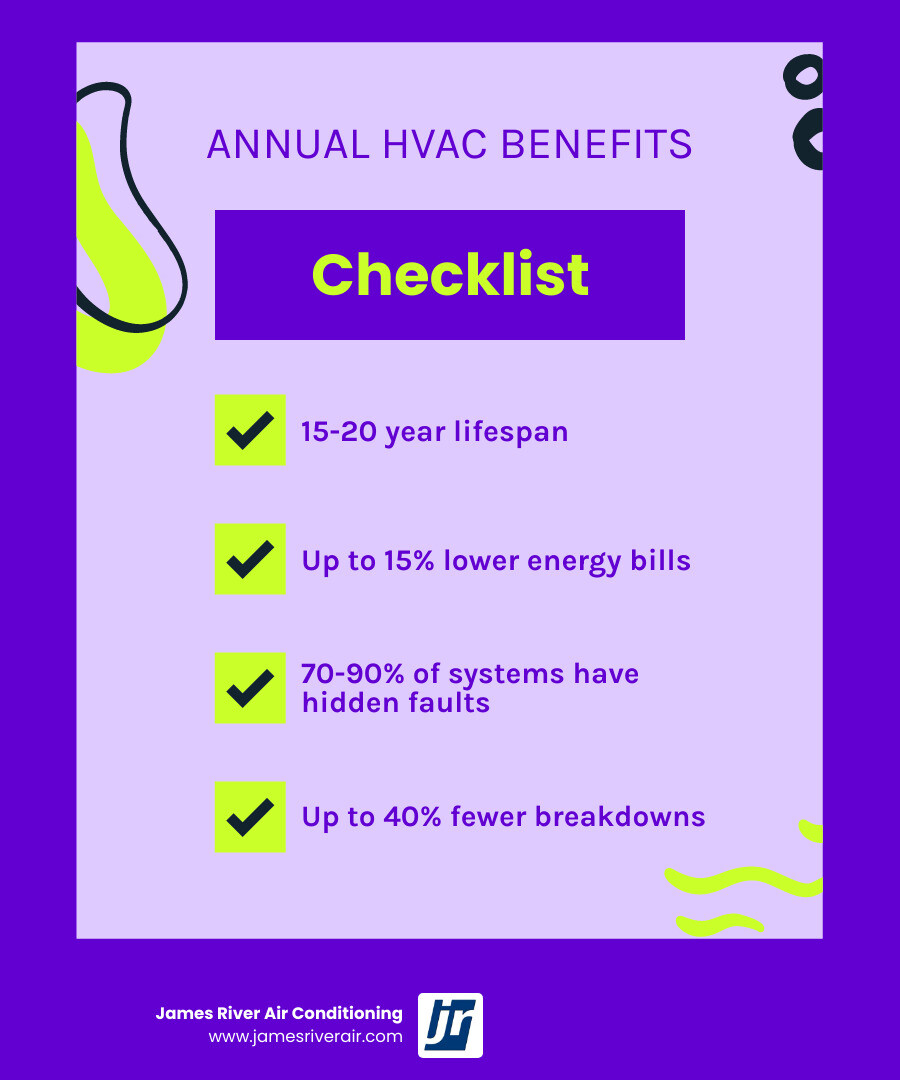
Annual HVAC maintenance is it worth it for most Richmond, Virginia homeowners — and the short answer is yes. A well-maintained system runs more efficiently, lasts longer, and is far less likely to break down on the hottest day in July or the coldest night in January.
Here’s a quick look at why it matters:
| Factor | With Annual Maintenance | Without Annual Maintenance |
|---|---|---|
| System lifespan | 15-20 years | 8-12 years |
| Energy efficiency | Up to 15% lower bills | 5-25% efficiency loss over time |
| Breakdown risk | Significantly lower | Up to 40% higher chance of major failure |
| Manufacturer warranty | Protected | Potentially voided |
| Emergency repair exposure | Reduced | Higher likelihood and cost |
Think of it like oil changes for your car. Skip them long enough, and you’re not saving money — you’re borrowing trouble. The same logic applies to your home’s heating and cooling system.
Research from the U.S. Department of Energy suggests that 70 to 90 percent of home HVAC systems have at least one performance-reducing fault at any given time. Many of those faults go undetected without a professional eye. A small refrigerant leak, for example, can quietly strain your compressor for months until it fails completely — turning a routine service call into a major repair bill.
In the sections below, we’ll break down exactly what a professional tune-up includes, what you can do yourself, and how to decide whether a maintenance plan makes financial sense for your situation.
What Does a Professional HVAC Tune-Up Include?
When we visit a home in Glen Allen or Midlothian for a tune-up, we aren’t just glancing at the unit. A professional service is a deep dive into the “health” of your system. It’s a comprehensive process designed to catch the small things before they become big, expensive things.
According to The Ultimate HVAC Maintenance Checklist for Mid-Atlantic Homeowners, a standard professional visit involves several technical steps that go beyond the capabilities of most homeowners.

Our professional tune-up typically includes:
- Cleaning the Condenser and Evaporator Coils: Dust and debris on your coils act like a winter coat on your AC. It forces the system to work harder to move heat, which spikes your utility bills.
- Checking Refrigerant Levels: Even a tiny leak can reduce efficiency by 10% to 25%. We verify levels to ensure your system isn’t straining to keep you cool.
- Inspecting Electrical Connections: We tighten all wiring and measure voltage and current on motors. Loose connections are a common cause of system failure and can even pose safety risks.
- Thermostat Calibration: We ensure your thermostat is communicating correctly with your unit so you aren’t paying for cooling or heating you aren’t actually receiving.
- Cleaning the Condensate Drain: In the humid Virginia summers, these lines can clog with algae or debris. If they overflow, you could be looking at water damage in your ceiling or floors.
- Lubricating Moving Parts: Friction is the enemy of machinery. We lubricate the motors and bearings to reduce wear and tear.
- Safety Control Testing: We test the system’s starting capabilities and safety controls to ensure everything operates exactly as the manufacturer intended.
- Blower Motor Inspection: We check the blower assembly to ensure proper airflow, which is critical for both comfort and system health.
The Long-Term Value: Why Annual HVAC Maintenance Is It Worth It
Many homeowners in Chesterfield or Henrico ask if the recurring investment in maintenance actually pays off. When you look at the “big picture,” the return on investment (ROI) is significant. It’s less about the immediate cost and more about “loss prevention.”
Consider the difference between a proactive and a reactive approach:
| Feature | Maintenance Plan Member | As-Needed/Reactive Service |
|---|---|---|
| Scheduling | Priority “front-of-the-line” service | Standard wait times (can be days in a heatwave) |
| Repair Costs | Often includes 10-15% discounts | Full retail pricing |
| Lifespan | Maximized (up to 20 years) | Shortened (often failing by year 10) |
| Peace of Mind | High—system is pre-checked for seasons | Low—hoping it doesn’t break on a holiday |
As we discuss in our guide on the Benefits of Regular HVAC Maintenance, staying ahead of repairs is almost always cheaper than reacting to a total system failure. Furthermore, Why Your AC Wants You to Sign a Maintenance Contract explains that these agreements often pay for themselves through waived diagnostic fees and repair discounts.
Beyond just the mechanical side, there is a financial benefit to your home’s value. If you ever decide to sell your home in Mechanicsville or Short Pump, having a documented history of professional maintenance can be a major selling point. Heating Up Your Resale Price with a New HVAC highlights how a well-cared-for system reassures buyers that they won’t face a massive replacement cost immediately after moving in.
Is annual hvac maintenance worth it for energy efficiency?
Dust is the silent killer of efficiency. A system that isn’t maintained can lose 5% of its efficiency every single year. Simple dust and debris buildup on the coils and internal components forces the motor to run longer and harder to achieve the same temperature.
By optimizing airflow and ensuring every component is clean, maintenance can lower your monthly utility bills by up to 15%. We recommend following our 5 Tips to Show Your HVAC System Love to keep things running smoothly between our visits.
Is annual hvac maintenance worth it for system longevity?
The average HVAC system is designed to last 15 to 20 years. However, without maintenance, that lifespan often drops to just 10 to 12 years. By the time a neglected system reaches its ninth or tenth year, it’s often in the middle of what we call a “mid-life crisis.”
You can learn about the 7 Signs Your HVAC System Is Having a Mid-Life Crisis to see if your unit is struggling. Regular maintenance reduces the cumulative strain on the compressor and motors, allowing the system to reach its full potential age rather than heading to the scrap yard early.
DIY Maintenance vs. Professional Service
We often see homeowners in Richmond who want to take care of their systems themselves. While we love a proactive homeowner, it’s important to know where the DIY line should be drawn.
What you SHOULD do:
- Filter Replacement: This is the single most important task for a homeowner. You should Stop Guessing and Start Changing Your HVAC Filter on Time. In most Virginia homes, this should happen every 30 to 90 days.
- Debris Clearance: Keep the area around your outdoor unit clear. Trim back shrubs and remove leaves or grass clippings. Aim for at least two feet of “breathing room” around the unit.
- Vent Obstruction: Make sure furniture or curtains aren’t blocking your supply or return vents.
What requires a PROFESSIONAL:
- Technical Inspections: Checking electrical components and “amp draws” on motors requires specialized meters and the knowledge to interpret the data.
- Refrigerant Handling: Checking and adding refrigerant requires EPA certification. It is illegal and dangerous for an unlicensed person to handle these chemicals.
- Safety Risks: High-voltage electricity and gas lines are not for amateurs. One wrong move can lead to a fire or carbon monoxide leak.
Professional technicians use specialized tools to see things the naked eye can’t, such as microscopic cracks in a heat exchanger or a capacitor that is about to fail.
Protecting Your Warranty and Home Safety
One of the most overlooked reasons to schedule maintenance is the fine print in your manufacturer’s warranty. Most major brands require documented annual professional service to keep their 10-year parts warranties valid. If your compressor fails in year seven, and you can’t provide proof of maintenance, the manufacturer may deny your claim, leaving you with a bill for thousands of dollars.
Safety is the other major factor. A furnace tune-up isn’t just about heat; it’s about making sure your home is safe from carbon monoxide (CO). Don’t Wait for the Smoke to Schedule Your HVAC Tune-Up because by then, the damage is done. We check for cracked heat exchangers and ensure the flue is venting properly.
To make this easy, many of our neighbors in Richmond choose to Protect Your Castle with the Bow Tie Service Plan. This ensures that the maintenance happens on schedule without you having to remember to call us.
Is annual hvac maintenance worth it for manufacturer warranty compliance?
Absolutely. Think of your warranty as a contract. The manufacturer agrees to provide parts if something breaks, but you agree to keep the machine in good working order. Without a documented service history, that contract is often considered void. Annual maintenance protects your right to those free replacement parts, which can save you a fortune over the life of the system.
Conclusion
At James River Air Conditioning, we’ve spent over 57 years serving our neighbors across Richmond, Chesterfield, Henrico, and beyond. We’ve seen that annual hvac maintenance is it worth it—not just for the energy savings, but for the peace of mind that comes with knowing your family will stay comfortable no matter what the Virginia weather throws at us.
Whether you are in Ashland, Midlothian, or Sandston, investing in your HVAC system today is the best way to avoid a “crossroads” moment where you have to choose between an expensive repair and a premature replacement.
Protect your home with professional HVAC service and ensure your system is ready for the seasons ahead.
How often should I schedule HVAC maintenance?
We recommend bi-annual service: once in the spring for your air conditioning and once in the fall for your heating system. If you have a heat pump, which works hard all year round in our climate, this twice-a-year schedule is even more critical to manage the wear and tear on the reversing valve and defrost controls.
What are the signs my system is overdue for a tune-up?
If you notice any of the following, don’t wait for your scheduled visit:
- Strange Noises: Squealing, banging, or grinding sounds often indicate a failing belt or motor.
- Uneven Temperatures: If the master bedroom is sweltering while the living room is freezing, your system is struggling.
- Rising Bills: A sudden spike in energy costs without a change in weather usually means efficiency has plummeted.
- Frequent Cycling: If your unit turns on and off every few minutes, it’s working too hard.
When these signs appear, you may be at The HVAC Crossroads: How to Decide Between Repair and Replacement.
Can I skip maintenance on a brand-new system?
It’s tempting to think a new system doesn’t need help, but maintenance in the first few years is vital. It establishes a baseline for performance, ensures the installation is settled correctly, and—most importantly—activates and protects your manufacturer warranty from day one. Keeping a new system clean ensures it stays “factory fresh” for as long as possible.
