
Best HVAC and Plumbing Setup for Mid Atlantic Weather: Ultimate Guide
What Is the Best HVAC and Plumbing Setup for Mid-Atlantic Weather?
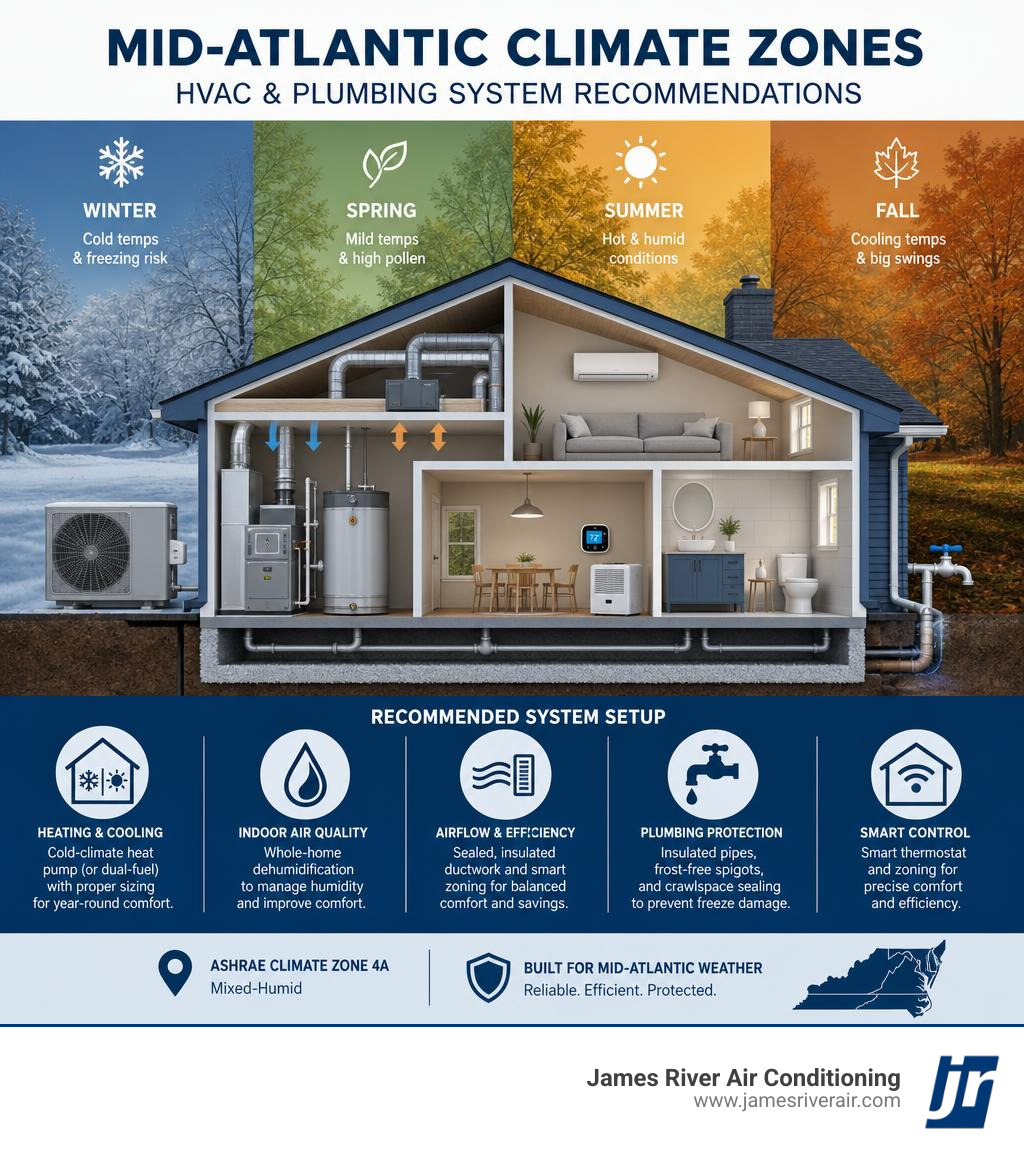
The best HVAC and plumbing setup for mid-Atlantic weather combines a cold-climate heat pump (or dual-fuel system) with whole-home dehumidification, properly sealed ductwork, and freeze-protected plumbing — all sized and configured for the region’s wide seasonal swings.
Quick-reference setup recommendations by need:
| Home Situation | Recommended Setup |
|---|---|
| Existing ductwork, gas available | Dual-fuel heat pump + gas furnace backup |
| No ductwork or older home | Ductless mini-split heat pump system |
| High humidity concern | Central heat pump + whole-home dehumidifier |
| Freeze-prone plumbing | Insulated pipes, frost-free spigots, crawlspace sealing |
| New construction | Variable-speed heat pump + ERV ventilation + smart zoning |
Living in Richmond and the broader Mid-Atlantic means your home systems face serious stress. You get cold winters that dip into the single digits, summers with humidity above 70%, and shoulder seasons where temperatures swing 20 to 40 degrees in a single day.
That’s not a moderate climate. It’s four seasons compressed into an unpredictable loop — and standard HVAC and plumbing advice written for milder regions often falls short here.
The Mid-Atlantic sits in ASHRAE Climate Zone 4A, a mixed-humid classification that demands equipment capable of handling both heavy latent cooling loads in summer and reliable low-temperature heating in winter. Get the setup wrong and you’re looking at short-cycling equipment, frozen pipes, mold risk, and energy bills that climb far higher than they should.
This guide walks through exactly what works — and why — for homes in Richmond and the surrounding region.
Best hvac and plumbing setup for mid atlantic weather vocab to learn:
- how central virginia climate affects your home systems
- how four season weather creates maintenance demands
Why Mid-Atlantic Climate Demands a Specialized Home System Setup
The Mid-Atlantic region is famous for its beautiful seasonal transitions, but those same shifts represent a mechanical identity crisis for your home. We aren’t quite the frozen North, and we aren’t the tropical South. Instead, we straddle the line, which means our heating and cooling systems must be world-class athletes in both directions.
This unique positioning places us squarely within IECC and ASHRAE Climate Zone 4A (mixed-humid). The “A” suffix is critical—it denotes a highly humid environment. In our region, summer dew points frequently climb above 65°F, creating a massive latent cooling load. Latent load is the energy required to remove moisture from the air, whereas sensible load is the energy required to lower the actual temperature. If your HVAC system is poorly configured, it will cool your home too quickly without removing the moisture, leaving you with clammy, sticky indoor air.
Conversely, our winters are far from mild. We regularly experience rapid temperature drops down to 5°F or 10°F, driven by polar vortex events. These extreme cold snaps are punctuated by frequent freeze-thaw cycles. One day it is 55°F and raining; the next night it is 18°F and freezing.
This constant back-and-forth places immense thermal stress on building materials, causes soil shifting that can disrupt outdoor plumbing lines, and forces HVAC systems to cycle rapidly. To understand how these intense swings affect your property, you can explore Surviving the Seasons: How Virginia’s Climate Impacts Your Home Systems as well as our deep dive into The Commonwealth Climate vs. Your House: What You Need to Know.
Designing the Best HVAC and Plumbing Setup for Mid Atlantic Weather
Achieving true year-round comfort requires an integrated approach. Your heating, cooling, ventilation, and plumbing systems shouldn’t operate in isolated silos. For example, a high-efficiency heating system is only as good as the ductwork distributing its air, and your plumbing systems require stable indoor thermal conditions to prevent catastrophic winter failures.
When designing the best hvac and plumbing setup for mid atlantic weather, we look at how these elements support one another. To help you visualize your options, here is how the primary heating and cooling configurations stack up in our region:
| System Type | Winter Performance | Summer Dehumidification | Infrastructure Requirements | Ideal Virginia Home Profile |
|---|---|---|---|---|
| Air-Source Heat Pump (ASHP) | Excellent (with modern cold-climate models down to -15°F) | Great (when paired with variable-speed compressors) | Standard ductwork, 200-amp electrical panel | All-electric homes, modern subdivisions, and townhomes |
| Dual-Fuel / Hybrid System | Outstanding (automatically switches to gas below 35°F) | Excellent (runs on highly efficient heat pump mode) | Ductwork, natural gas/propane line, standard electrical | Homes in established neighborhoods with existing gas infrastructure |
| Traditional Gas Furnace + AC | Very Strong (rapid heat recovery, high supply air temps) | Good (standard single or two-stage cooling) | Ductwork, gas line access, standard electrical | Older, poorly insulated historic homes requiring high-temperature heat |
| Ductless Mini-Split System | Excellent (highly targeted zone heating) | Superior (exceptional localized moisture removal) | No ductwork required; small wall penetrations and outdoor space | Historic homes, home additions, finished basements, and zone-specific retrofits |
“I’m looking to upgrade my home’s heating. What is the best hvac and plumbing setup for mid atlantic weather in Richmond?”
If you are planning a heating upgrade in the Richmond area, the choice usually comes down to three main paths: an air-source heat pump, a traditional gas furnace, or a hybrid dual-fuel system.
Historically, older heat pumps struggled when temperatures dropped below freezing, forcing homeowners to rely heavily on expensive electric auxiliary heat strips. However, modern cold-climate heat pumps have changed the game. They can extract heat from outdoor air at temperatures well below zero, making them incredibly viable for our winters.
For many local properties, a dual-fuel setup represents the ultimate gold standard. This system pairs an electric air-source heat pump with a high-efficiency gas furnace. During the cool shoulder seasons, the heat pump handles the heating duties with incredible efficiency, delivering comfortable warmth. When a severe winter cold snap hits and the temperature drops below a set balance point (typically around 35°F), the system automatically shuts off the heat pump and fires up the gas furnace. This provides rapid heat recovery and high supply air temperatures (typically 120°F to 140°F) exactly when your home needs it most.
For homes without natural gas access, a high-performance variable-speed heat pump is an exceptional alternative. If you are currently debating whether to repair your aging system or make the jump to a new configuration, check out our guide on The HVAC Crossroads: How to Decide Between Repair and Replacement to help you make an informed decision.
“How do I protect my pipes from freezing during sudden Virginia cold snaps?”
No HVAC upgrade is complete without addressing the plumbing infrastructure that shares your home’s thermal envelope. When the temperature drops rapidly during a Virginia cold snap, uninsulated pipes in unconditioned spaces like crawlspaces, attics, and exterior walls are highly vulnerable to freezing and bursting.
To protect your plumbing from freezing, implement these best practices:
- Install High-Quality Pipe Insulation: Wrap all exposed water lines in crawlspaces, basements, and attics with molded fiberglass or closed-cell polyethylene foam pipe insulation. Ensure all joints are tightly sealed.
- Seal Crawlspace Vents and Rim Joists: Cold winter winds blowing through crawlspace vents can create localized freezing zones. Seal foundation cracks, insulate rim joists, and close crawlspace vents before the first hard freeze.
- Upgrade to Frost-Free Outdoor Spigots: Standard outdoor spigots hold water close to the exterior wall where it can easily freeze. Replace them with frost-free sillcocks, which place the shutoff valve deep inside the warm insulation envelope of your home. Always disconnect garden hoses before winter.
- Maintain Stable Indoor Temperatures: During extreme cold snaps, keep your thermostat set to a consistent temperature, even when you are away. If you have plumbing running through exterior walls, open under-sink cabinet doors to allow warm indoor air to circulate around the pipes.
Integrating High-Efficiency Heat Pumps and Smart Climate Controls
Modern comfort is driven by smart, adaptive technology. Gone are the days of simple on-and-off systems that blast your home with hot or cold air before shutting down completely. Today’s high-efficiency setups rely on variable-speed technology and advanced controls to maintain a perfectly stable indoor environment.

Variable-speed compressors are particularly effective in the Mid-Atlantic. Instead of running at either 0% or 100% capacity, a variable-speed system can modulate its output anywhere from 25% to 100%. During a mild spring or autumn day, the system will run continuously at a low, highly efficient capacity. This prevents the frequent starting and stopping—known as short-cycling—that causes premature component wear and spikes your energy usage.
However, upgrading to these high-efficiency systems often requires addressing your home’s existing infrastructure. Two critical areas that frequently impact the success of a heat pump retrofit are your electrical panel and your ductwork:
- Electrical Panel Capacity: High-efficiency heat pumps, especially those with auxiliary electric backup strips, have substantial power requirements. Many older homes in our historic neighborhoods still operate on 100-amp electrical panels. Upgrading to a 200-amp panel is often necessary to safely support a modern all-electric heat pump system, adding an average of $2,400 to the installation process.
- Ductwork Compatibility and Integrity: A high-efficiency heat pump requires precise airflow to function correctly. If your existing ductwork is leaky, undersized, or poorly designed, it can severely restrict your new system’s performance. In fact, leaky ducts can lose up to 30 percent of your treated air to unconditioned spaces like attics or crawlspaces. Modifying, repairing, or replacing insufficient ductwork during a heat pump installation adds an average of $4,500 in material and labor costs, but it is an investment that pays off rapidly in restored efficiency and comfort.
“Can anyone recommend the best hvac and plumbing setup for mid atlantic weather to lower energy bills in Henrico?”
If you are looking to lower your monthly utility bills in Henrico, the winning combination is a variable-speed heat pump paired with a smart thermostat and a multi-zone control system.
Smart thermostats do far more than allow you to adjust the temperature from your phone. They analyze your household patterns, monitor outdoor weather conditions, and adjust your HVAC system’s output accordingly. During the winter, the U.S. Department of Energy recommends setting your thermostat to 68°F while you are home and awake, and lowering it slightly when you are asleep or away to maximize your energy savings.
By adding zoning controls, you can divide your home into distinct thermal areas (such as upstairs bedrooms and downstairs living spaces). Instead of heating or cooling the entire house to a single temperature, motorized dampers inside your ductwork direct the conditioned air precisely where it is needed. This prevents you from wasting energy on empty rooms and can save up to 15% on your annual energy bills.
To ensure your system is running at peak efficiency, professional installation and regular maintenance are absolutely essential. If you live in the Henrico area, you can learn more about our targeted local services by visiting our page on Why Choose Professional Heat Pump Service in Tuckahoe Virginia or exploring our comprehensive Residential HVAC Service.
How do I manage indoor humidity and air quality during humid Virginia summers?
Managing summer humidity in the Mid-Atlantic is not just a matter of comfort—it is a matter of home preservation and health. When indoor relative humidity levels consistently rise above 60%, your home becomes a breeding ground for mold, mildew, and dust mites.
To combat this, the best setup includes a whole-home dehumidifier integrated directly into your central HVAC system. While your air conditioner naturally removes some moisture during its cooling cycle, it is designed primarily to control temperature (sensible cooling). On a humid, 78-degree day, your AC may not run long enough to adequately lower the humidity. A whole-home dehumidifier works in tandem with your system, pulling moisture from the air even when the air conditioner isn’t actively running.
Proper humidity management also prevents a common regional issue known as “Dirty Sock Syndrome.” This occurs when dust, organic matter, and moisture accumulate on your indoor evaporator coils, leading to biological growth that emits a musty, gym-locker odor when the system starts up. Maintaining clean coils, utilizing high-efficiency MERV 8 or higher air filters, and keeping indoor humidity levels below 50% in the summer will keep your air smelling clean and fresh.
Essential Plumbing Configurations for Regional Weather Resilience
Just as your HVAC system must adapt to our changing climate, your home’s plumbing requires smart configurations to remain resilient against heavy summer rainstorms and freezing winter temperatures.
When selecting a water heater for our region, tankless water heaters are an incredibly popular choice. Unlike traditional tank heaters that constantly consume energy to keep 50 gallons of water hot, tankless models heat water on demand. This provides an endless supply of hot water—perfect for those cold winter mornings when everyone in the household is getting ready at the same time.
However, tankless systems in our region must be sized correctly to account for winter groundwater temperatures, which can drop below 40°F. This requires a higher temperature rise to reach your desired shower temperature compared to southern states. Additionally, tankless units installed on exterior walls must feature built-in freeze protection to prevent damage during sudden cold snaps.
Another critical piece of plumbing infrastructure is your sump pump and drainage system. The Mid-Atlantic is prone to sudden, heavy downpours and tropical storm remnants that can saturate the soil around your foundation. A high-quality sump pump with a battery backup system is essential to protect your basement or crawlspace from flooding during power outages caused by summer storms. Ensure your discharge lines extend at least 10 feet away from your foundation and are sloped properly to prevent water from freezing inside the pipe during winter.
“In need of urgent plumbing repairs. Who are the top-rated local plumbers in Richmond?”
Plumbing emergencies rarely happen at convenient times. A burst pipe in the middle of a January freeze or a backed-up sewer line during a summer storm requires immediate, professional attention to prevent extensive water damage to your home.
When you need reliable support, our team is ready to help. We provide comprehensive leak detection, water heater repair, pipe winterization, and emergency plumbing services across the Richmond metro area. To learn more about how we can protect your home’s water systems, visit our Residential Plumbing Services page.
Frequently Asked Questions about Mid-Atlantic Home Systems
When is the best time to schedule seasonal HVAC and plumbing maintenance?
The best time to schedule heating maintenance is in the early fall (September or October) before the first cold snap hits, while cooling maintenance should be scheduled in the early spring (March or April).
Scheduling your service during these shoulder seasons ensures your systems are fully prepared for the extreme temperatures ahead. It also allows our technicians to identify and resolve minor issues before they turn into costly emergency breakdowns during peak winter or summer demands. For a complete guide to keeping your systems running smoothly, check out The Ultimate HVAC Maintenance Checklist for Mid-Atlantic Homeowners.
How does leaky ductwork affect my home’s heating and cooling efficiency?
Leaky ductwork is one of the leading causes of energy waste in Mid-Atlantic homes. When ducts run through unconditioned spaces like attics, crawlspaces, or unfinished basements, any leaks allow conditioned air to escape directly outside.
This forces your heating or cooling system to work up to 30% harder to maintain your desired indoor temperature, leading to higher utility bills, uneven room temperatures, and poor indoor air quality as dusty crawlspace or attic air is pulled into the system. Properly sealing your ducts with professional mastic or foil tape is one of the most cost-effective ways to boost your home’s efficiency.
Do modern cold-climate heat pumps work efficiently in freezing Mid-Atlantic winters?
Yes! Modern cold-climate heat pumps are engineered to perform exceptionally well in freezing temperatures. Unlike older models that lost efficiency rapidly below 35°F, today’s advanced systems utilize variable-speed inverter compressors and specialized refrigerant cycles to deliver 100% heating capacity down to 5°F, and they can continue operating efficiently at temperatures as low as -15°F. This drastically reduces your reliance on expensive auxiliary electric heat strips, making them a highly efficient and reliable choice for our local winters.
Conclusion
Creating the best hvac and plumbing setup for mid atlantic weather requires a thoughtful balance of high-efficiency technology, robust freeze protection, and active humidity control. By investing in a system that is specifically tailored to the unique demands of ASHRAE Climate Zone 4A, you can enjoy exceptional comfort, lower energy bills, and peace of mind through every seasonal transition.
At James River Air Conditioning, we have spent over 57 years helping homeowners throughout Richmond, Henrico, Midlothian, Glen Allen, and the surrounding communities navigate our region’s unpredictable weather. As a premier multi-trade company, we deliver world-class HVAC, plumbing, and electrical services with an entrepreneurial spirit and a commitment to quality you can trust.
If you are ready to upgrade your home’s comfort systems or want to learn more about selecting the right service provider, read The Ultimate Guide to Choosing a Multi-Trade Company You Can Trust or Schedule your professional home system consultation today with our expert team!
