

The Appraiser’s Checklist: Why Your HVAC System Matters More Than You Think
How Does HVAC Condition Affect a Home Appraisal in Richmond, VA?
Understanding how HVAC condition affects home appraisals can help Richmond homeowners avoid surprises during a sale, refinance, or HELOC. Your heating and cooling system is one of the core home systems an appraiser will notice, and its age, functionality, and efficiency can all influence how the property is viewed.
Here’s a quick summary of how HVAC condition can affect your appraisal:
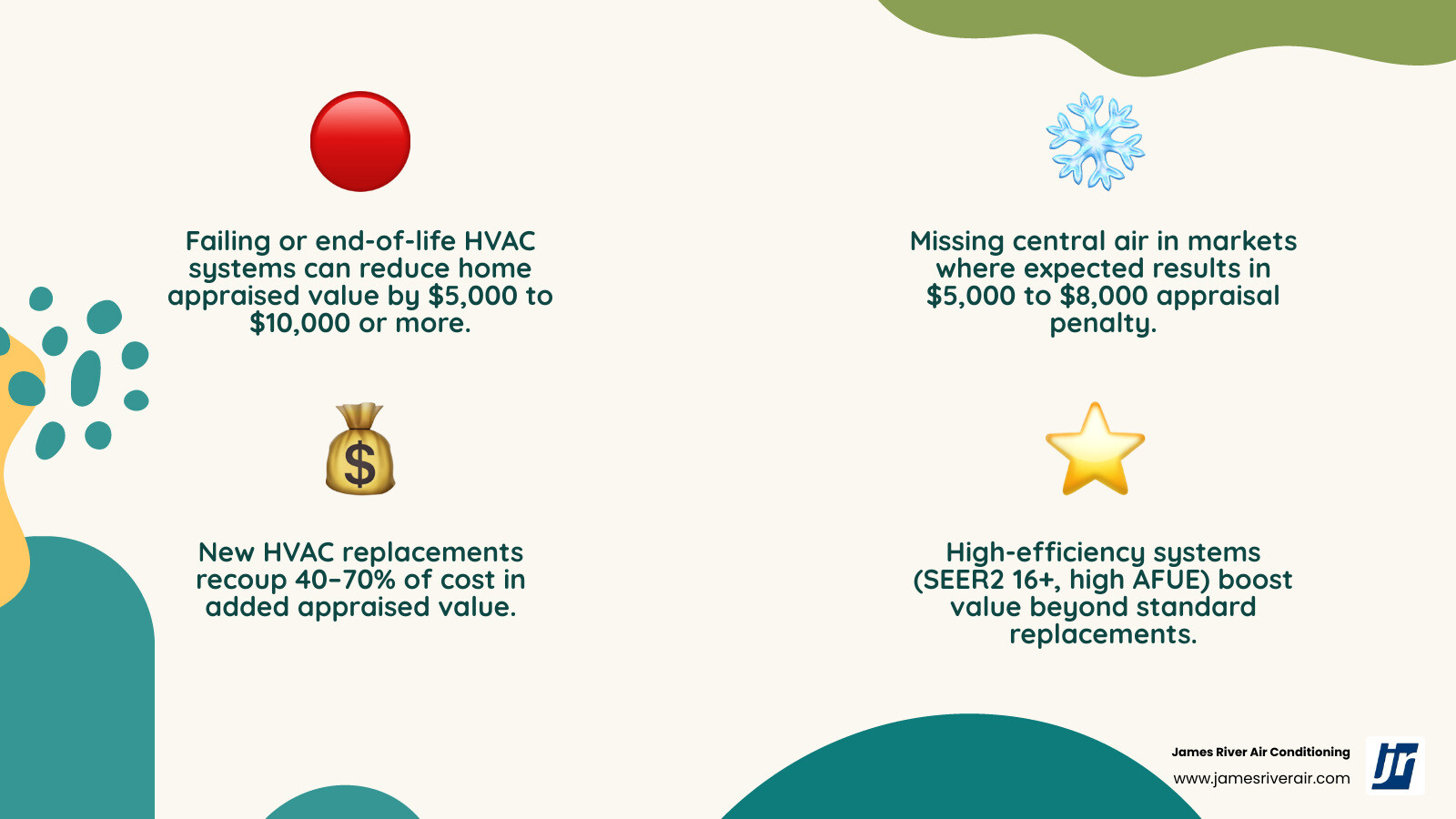
- Failing or end-of-life system: May reduce appraised value
- Missing central air in a market where buyers expect it: May lead to a lower valuation
- New or recently replaced system: Can help support appraised value
- High-efficiency system (SEER2 16+, high AFUE): May add value above a standard replacement
- Systems 15-20+ years old: Commonly flagged by appraisers as deferred maintenance
- Well-documented upgrades: Help appraisers credit improvements accurately
Appraisers don’t test your HVAC the way a technician would. They do a visual and functional check – looking at age, wear, cleanliness, and whether the system actually runs. A unit choked with weeds, streaked with rust, or clearly at the end of its life doesn’t just signal repair concerns. It can also suggest the home has not been maintained as carefully as it should be.
The good news: with the right preparation, your HVAC system can be an asset rather than a liability on appraisal day.
How HVAC Condition Affects Home Appraisals
HVAC affects appraisals in a few big ways: age, visible condition, basic operation, efficiency, safety, and remaining useful life. In plain English, appraisers want to know whether the system is doing its job now and whether a buyer or lender should expect a major replacement soon.
A heating and cooling system matters because it is not a decorative upgrade. It is a core house system, right up there with the roof, plumbing, and electrical. If it looks neglected or fails to operate, that can lower marketability and trigger concerns about deferred maintenance.
Why how hvac condition affects home appraisals is such a big deal
For homeowners in Richmond and surrounding Central Virginia communities, HVAC is tied directly to:
- Habitability
- Buyer comfort and confidence
- Lender risk
- Comparable sales
- Protected home equity
Virginia weather is not shy. We get humid summers, cold winter stretches, and shoulder seasons that can swing back and forth. A home that cannot cool properly in July or heat reliably in January is harder to market and riskier from a lending standpoint.
That is why how HVAC condition affects home appraisals is more than a maintenance issue. It can influence:
- Whether your home compares well against nearby listings
- Whether the appraiser rates the overall property condition more favorably
- How much equity is recognized for a refinance or HELOC
- Whether buyers see the home as move-in ready or as a project
What appraisers actually look for during an HVAC check
Appraisers are not performing a deep mechanical inspection, but they are paying attention. During a typical visit, they may look for:
- Manufacturer labels showing age and model information
- Whether the thermostat responds
- Whether the system turns on and appears to heat or cool
- Visible airflow or signs the system is operating normally
- Rust, corrosion, staining, or damaged panels
- Excessive noise or vibration
- Condition of the outdoor condenser
- Whether central air is present
- Signs of neglect, like clogged filters, debris, or weeds around the unit
- General adequacy for the size and type of home
They may also note if the equipment appears older, unusually worn, or tied to outdated refrigerant. One of the biggest red flags is an older air conditioner that uses R-22 refrigerant. Since R-22 has been phased out, repairs can become more difficult and expensive, which hurts buyer appeal and can influence value.

The HVAC Red Flags That Commonly Pull Value Down
Some HVAC issues are minor. Others practically wave a flag that says, “Replacement may be needed soon.”
The most common appraisal red flags include:
- Equipment over 15 to 20 years old
- A broken AC or failing furnace
- Systems using R-22 refrigerant
- Dirty filters and obvious neglect
- Leaky ductwork
- Uneven temperatures between rooms
- Loud startup or shutdown noise
- Corrosion, rust, or water staining
- An outdoor condenser buried in weeds or blocked by debris
- Missing central air where it is considered standard
A failing or end-of-life HVAC system can reduce appraised value and make buyers more cautious. That does not mean every older system receives the same adjustment, but it does show how seriously appraisers and buyers treat a weak HVAC system.
How old is too old for an HVAC system in an appraisal?
Age matters, but age alone is not the whole story.
A useful way to think about it:
- Under 10 years old: usually a positive or neutral feature
- Around 10 to 15 years old: starts getting more scrutiny
- Around 15 to 20 years old: often seen as nearing end of life
- Over 20 years old: commonly viewed as a liability unless exceptionally maintained
A well-maintained older system can still fare better than a neglected newer one. Service history matters. Clean equipment matters. Operation matters. But once a system gets into that 15 to 20 year range, appraisers often see it as deferred maintenance because a buyer may need to replace it soon.
How hvac condition affects home appraisals when the system is failing or outdated
When a system is clearly failing, the issue is not just comfort. It becomes a value problem.
A weak HVAC system can affect the appraisal through:
- Lower overall condition rating
- Downward adjustments against comparable homes with stronger systems
- Reduced buyer demand
- Deferred maintenance concerns
- Functional obsolescence
If your home lacks central air in a market where buyers expect it, that can also create a noticeable penalty.
That is especially important in Central Virginia, where buyers expect reliable cooling. Window units may technically cool a room, but they do not usually compete with whole-home comfort in the appraisal conversation.
Here is a simple comparison:
| System type | Likely appraisal impression |
|---|---|
| Well-maintained older HVAC | May be viewed as aging but serviceable, especially with maintenance records |
| Neglected newer HVAC | Can still raise concerns due to dirt, noise, corrosion, or poor operation |
| 15 to 20+ year-old failing system | Often treated as deferred maintenance with likely replacement soon |
| No central air where expected | Can be seen as functional obsolescence and hurt marketability |
Regional differences: why HVAC matters more in some markets
HVAC expectations are local. What matters in Richmond, Glen Allen, Midlothian, or Mechanicsville may not matter the same way in every climate.
For our part of Virginia, a few local realities shape appraisals:
- Humid summers make central cooling a practical expectation
- Heat pumps are common and familiar to buyers
- Energy efficiency matters because utility costs affect affordability
- Comparable homes often already have central heating and cooling
So while appraisers always consider local comps, the broad principle is simple: the more essential HVAC is to everyday comfort in your market, the more it tends to matter during appraisal.
What Adds Value: New Systems, Efficiency Ratings, and Smart Upgrades
Not every HVAC conversation is about avoiding penalties. The right improvements can also help support value.
The upgrades that tend to help most are:
- New HVAC systems
- High-efficiency equipment
- Heat pumps with strong HSPF2 ratings
- Furnaces with high AFUE ratings
- Air conditioners with solid SEER2 ratings
- ENERGY STAR qualified equipment
- Smart thermostats
- Zoned comfort systems
- Ductless mini-splits where appropriate
- Added central air in homes that previously lacked it
How much a new or high-efficiency HVAC system can help
In most cases, a new HVAC system does not return dollar-for-dollar value on an appraisal. But it often protects value and improves marketability at the same time.
A new or recently replaced HVAC system can help support appraised value, and high-efficiency equipment may strengthen buyer appeal even further. In many cases, the biggest benefit is preventing the drop in value that can come with an obviously failing system.
Do SEER2, AFUE, and HSPF2 matter to appraisers?
Yes, especially when they are documented clearly.
These ratings help communicate efficiency:
- SEER2: cooling efficiency for air conditioners and heat pumps
- AFUE: furnace efficiency
- HSPF2: heating efficiency for heat pumps
An appraiser may not build a value opinion from the rating alone, but these numbers support the case that your system is newer, more efficient, and cheaper to operate than older alternatives. That can improve buyer appeal and make your home compare better against similar homes with upgraded equipment.
If your equipment is high efficiency, do not make the appraiser guess. Share model numbers, installation paperwork, and efficiency information.
Is missing central air a penalty in markets where buyers expect it?
Usually, yes.
In Central Virginia, central air is generally expected in many neighborhoods and price points. If a home relies on window units, baseboard heat, or patchwork comfort solutions while nearby comparable homes offer central HVAC, the appraiser may reflect that difference in the value conclusion.
Ductless mini-splits can help in some homes, especially additions, older layouts, or areas where ductwork is challenging. But whether they close the gap with full central air depends on the property and the local comps.
How to Prepare Your HVAC System Before an Appraisal, Refinance, or HELOC
If you have an appraisal coming up, this is not the moment to pretend the condenser hidden behind a jungle of weeds is “rustic landscaping.”
A little preparation can go a long way.
Before the appraiser arrives:
- Replace dirty filters
- Clear debris around outdoor equipment
- Make sure the thermostat works properly
- Check that the system runs in the current mode
- Clean visible dust and dirt from vents and equipment surfaces
- Gather service records and installation paperwork
- Fix small obvious issues if they affect operation or appearance
- Make sure access to indoor and outdoor equipment is easy
The documents homeowners should hand to the appraiser
Documentation helps appraisers give proper credit for improvements. We recommend preparing a simple HVAC folder with:
- Installation invoice
- Permit copy, if applicable
- Warranty information
- Model and serial numbers
- Efficiency ratings such as SEER2, AFUE, or HSPF2
- Maintenance records
- Tune-up or inspection reports
- Notes on any duct sealing or airflow improvements
- Proof of smart thermostat or zoning upgrades
If you want a good starting point for upkeep, our HVAC maintenance checklist for Mid-Atlantic homeowners can help you organize what has been done and what still needs attention.
Should you repair, service, or replace before the appraisal?
It depends on the system’s age, condition, and your timeline.
A good rule of thumb:
- Service the system if it is generally healthy but needs cleaning, documentation, or minor corrections
- Repair it if a fix will restore normal operation and the system still has useful life
- Consider replacement if it is 15 to 20+ years old, uses R-22 refrigerant, or is showing repeated failure signs
If you are selling soon, refinancing, or applying for a HELOC, replacing a clearly failing end-of-life system can protect far more value than ignoring it and hoping nobody notices. Spoiler: they notice.
Routine upkeep also helps support the story that the system has been cared for. You can learn more about why regular service matters in Why Your AC Wants You to Sign a Maintenance Contract and Don’t Wait for the Smoke to Schedule Your HVAC Tune-Up.
How HVAC condition affects home appraisals for HELOC limits and loan approvals
For HELOCs and refinances, the appraisal affects recognized equity. And equity affects how much borrowing room you may have.
That means a weak HVAC system can indirectly reduce:
- Available equity
- HELOC limit
- Refinance flexibility
A failing HVAC system may not automatically cause a HELOC denial on its own, but it can lower the appraised value enough to change the outcome. It can also create issues for certain loan types or lender property standards if heat or cooling is non-functional.
In general:
- Functional, documented systems help support value
- Old but working systems may still be acceptable, though less favorable
- Non-functional heating is a serious concern
- Broken cooling can be a major drawback in our market
- Deferred maintenance can make lenders more cautious
Common Questions Homeowners Ask About HVAC and Appraisals
Can an old HVAC system hurt my home appraisal?
Yes. Once a system reaches the end of its useful life, usually around 15 to 25 years depending on type and care, it can hurt the appraisal. Appraisers often treat it as deferred maintenance because a buyer will likely face replacement soon.
That said, a well-maintained older system is usually viewed more favorably than a newer neglected one. If your system is older, do everything you can to show that it works properly and has been professionally maintained.
Is a smart thermostat worth installing before an appraisal?
Usually, yes, as long as you keep expectations realistic.
A smart thermostat probably will not transform the appraisal by itself, but it can improve marketability and support the perception that the home is updated and energy conscious. It is one of those smaller touches that says, “This house has not been stuck in 2009.”
How can I prove my HVAC upgrade adds value to an appraiser?
Do not rely on memory or a quick verbal explanation during the walkthrough. Hand over documentation.
The best proof includes:
- Installation receipts
- Model numbers
- Efficiency ratings
- Permit paperwork
- Warranty details
- Maintenance records
- ENERGY STAR information, if applicable
The more specific and organized the documentation, the easier it is for the appraiser to recognize the improvement.
Is getting the system serviced before the appraisal worth it?
Yes, especially if the system has not been checked recently.
A pre-appraisal service visit can help you:
- Confirm the system is operating normally
- Catch minor issues before they become obvious red flags
- Improve appearance and cleanliness
- Strengthen your maintenance records
If you are unsure whether your system is showing its age, our guide on 7 Signs Your HVAC System Is Having a Mid Life Crisis is a helpful gut check. And if your filter has become part of the home’s archaeology, Stop Guessing and Start Changing Your HVAC Filter on Time is worth a read too.
Conclusion
When it comes to how HVAC condition affects home appraisals, the takeaway is simple: your heating and cooling system can either help protect your equity or chip away at it.
Appraisers look at age, condition, operation, efficiency, and whether the system feels like an asset or a looming replacement. A failing system can pull value down. A clean, documented, efficient system can support a stronger appraisal and better buyer confidence.
For homeowners in Richmond and the surrounding communities we serve, the best strategy is straightforward:
- Keep the system maintained
- Address visible red flags early
- Save your paperwork
- Replace truly failing end-of-life equipment before it hurts your valuation
At James River Air Conditioning, we have been helping Virginia homeowners care for the systems that keep their homes comfortable for more than 57 years. If you want to protect your home value before a sale, refinance, or HELOC, now is a smart time to get your HVAC system evaluated.
For more help with upgrades and replacement options, explore our residential installation services.
