
In Depth Guide to What Happens If You Don’t Change Your Air Filter
Concerned about the air quality in my house. What happens if you don’t change your air filter in Richmond?
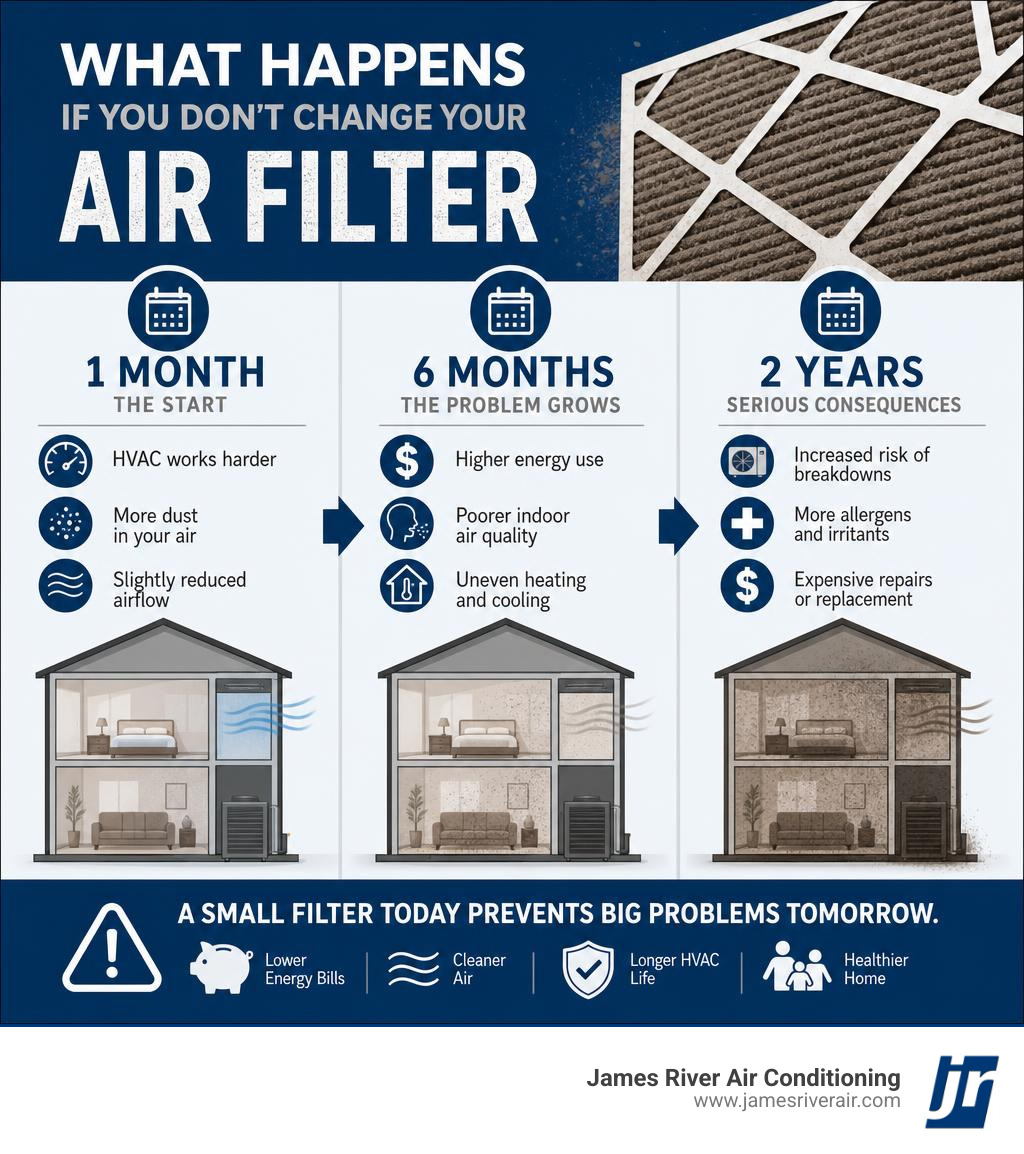
What happens if you don’t change your air filter is a question every homeowner should know the answer to — because the consequences show up faster than most people expect. Here’s a quick summary:
- Higher energy bills – A clogged filter forces your HVAC system to work harder, increasing energy use by 5% to 15% or more
- Poor indoor air quality – Dust, pollen, pet dander, and mold spores recirculate through your home instead of being captured
- Uneven heating and cooling – Restricted airflow means some rooms get too hot or too cold
- HVAC system damage – Dirty filters are the leading cause of HVAC system failure, including frozen coils and burned-out motors
- Health problems – Worsened allergies, asthma flare-ups, and respiratory irritation become more likely over time
- Expensive repairs or full system replacement – Neglecting a simple filter replacement can lead to major system failures and costly repairs
Most homeowners don’t think about their air filter until something goes wrong. By then, the damage is often already done. Indoor air is already 2 to 5 times more polluted than outdoor air on average — and a clogged filter makes that problem significantly worse. In Richmond, Virginia, where humidity and seasonal pollen add extra strain on HVAC systems, staying on top of filter changes matters even more.
What happens if you dont change your air filter terms made easy:
What Happens If You Don’t Change Your Air Filter Regularly?
At its core, your HVAC system is designed to breathe. It pulls air from your living spaces, conditions it (heats or cools it), and pushes it back out. The air filter sits at the entry point of this cycle, acting as a protective shield.
When you neglect this simple component, the filter transforms from a helpful sieve into a solid brick of dust, hair, lint, and microscopic debris. This creates massive resistance, known in the industry as static pressure. Your system has to fight incredibly hard just to pull air through this blockage, resulting in severe restricted airflow and immense system strain.
As the system works overtime to compensate, its energy consumption skyrockets. Understanding the mechanics of this process is the first step toward protecting your home. To keep your system running smoothly, you need to Stop Guessing and Start Changing Your HVAC Filter on Time.
Immediate Performance Drops and Weak Airflow
One of the first things you will notice when a filter is clogged is a sudden drop in comfort. You might feel like the air coming out of your registers is weak or barely moving. This restricted airflow leads directly to uneven temperatures throughout your home.
You may find that your living room is freezing while your upstairs bedroom feels like a sauna. Because the system cannot circulate air properly, stagnant air pockets form, making your home feel stuffy and uncomfortable. Behind the scenes, your blower motor is straining under the pressure, running longer and hotter than it was ever engineered to do.
Spikes in Your Monthly Energy Bills
When your system has to work twice as hard to push air through a dirty filter, it stays on much longer to reach the temperature set on your thermostat. This extended runtime directly translates to a massive spike in your monthly utility bills.
Many homeowners are shocked to find their energy costs jump significantly during peak summer or winter months, only to discover a completely black, clogged filter was the sole culprit. Furthermore, in homes with heat pumps, restricted airflow can trick the system into activating auxiliary heat (or emergency heat), which uses highly energy-intensive electrical resistance coils to warm your home. To avoid these unnecessary costs, check out these 5 Tips to Show Your HVAC System Love.
The Domino Effect of HVAC System Damage and Health Risks

Skipping a filter replacement might seem like a minor oversight, but it triggers a destructive chain reaction throughout your entire HVAC system. What begins as a dusty piece of cardboard can quickly escalate into catastrophic component wear, drastically shortening your system’s overall lifespan. While modern systems are built to last 15 to 20 years, neglected maintenance can cut that life expectancy in half. Investing a little time in clean filters is one of the most important Benefits of Regular HVAC Maintenance.
Frozen Evaporator Coils and Compressor Failure
During the hot, humid summer months in Virginia, your air conditioner relies on a delicate balance of airflow and refrigerant to cool your home. The cold refrigerant flowing through your indoor evaporator coil needs warm air passing over it to transfer heat.
When a dirty filter blocks that warm air, the temperature around the coils drops below freezing. Moisture in the air quickly condenses and freezes on the coils, turning your indoor unit into a solid block of ice.
This ice completely blocks heat transfer. Even worse, the lack of heat can cause liquid refrigerant to flood back down the line to your outdoor compressor. This is known as “liquid slugging,” and it will instantly destroy your compressor—the very heart of your AC system. Preventing this major disaster is exactly Why Your AC Wants You to Sign a Maintenance Contract.
Furnace Overheating and Cracked Heat Exchangers
In the winter, a clogged filter poses an entirely different, and potentially dangerous, threat to your furnace. Without sufficient airflow to carry heat away from the furnace’s heat exchanger, internal temperatures will rapidly climb.
Modern furnaces are equipped with safety limit switches designed to shut the system down when it overheats—a process called short cycling. However, repeatedly heating up to extreme temperatures and rapidly cooling down causes the metal of your heat exchanger to expand and contract violently.
Over time, this thermal stress leads to cracked heat exchangers. A cracked heat exchanger is not only a system-killing failure, but it also creates a direct path for deadly carbon monoxide gas to leak into your home’s breathing air.
Worsened Allergies, Asthma, and Respiratory Issues
Your HVAC system acts as the lungs of your home. When the air filter is completely saturated, it can no longer hold any more particles. In fact, under the strong pull of the blower fan, accumulated dust, pet dander, pollen, and mold spores can actually bypass the filter entirely or be forced back out into your ductwork to recirculate through your home.
In tightly sealed modern homes, these pollutants build up to high concentrations. This can lead to noticeable health issues, including:
- Frequent headaches, dizziness, and fatigue
- Irritated eyes, nose, and throat
- Severe allergy and asthma flare-ups
- Disrupted sleep patterns and snoring
In fact, medical studies have shown that high levels of indoor airborne toxins can even impact blood chemistry, leading to elevated heart rates and blood pressure. Choosing high-quality filters is essential for protecting your family’s health. You can explore the best options for your home in our guide on MERV-elous Choices for Your Home Air Filter.
Best Practices for Maintaining and Replacing Your Filters
Keeping your HVAC system healthy doesn’t have to be complicated. By establishing a consistent maintenance routine, you can prevent major breakdowns, keep your energy bills low, and breathe cleaner air.
To help keep your entire home in top shape, we recommend keeping The Ultimate HVAC Maintenance Checklist for Mid-Atlantic Homeowners handy.
When shopping for filters, it helps to understand the common types available:
- Fiberglass Filters: Extremely basic filters designed primarily to keep large debris out of your system. They must be changed every 30 days and offer minimal air purification.
- Pleated Filters: Made from cotton or synthetic folds, these provide much more surface area to capture dust, pollen, and pet dander. They typically last 60 to 90 days.
- High-Efficiency Media Filters: Thick, canister-style filters (usually 4 to 5 inches deep) that provide incredible filtration without restricting airflow. These can often last 6 to 12 months.
- HEPA Filters: The gold standard for air purity, capturing 99.97% of particles down to 0.3 microns. Standard residential HVAC systems usually require professional modification to run a true HEPA filter due to airflow resistance.
How Often to Change Your Filter Based on Your Household
There is no one-size-fits-all answer to how often you should swap out your air filter. A single person living in a clean apartment will have vastly different filtration needs than a family with three dogs in a suburban home.
| Household Profile | Recommended Replacement Interval |
|---|---|
| Single occupant / Vacation home (No pets) | Every 6 to 12 months |
| Average suburban home (No pets) | Every 90 days |
| Home with one pet (Cat or Dog) | Every 60 days |
| Multiple pets / Family members with allergies or asthma | Every 20 to 45 days |
| Homes with indoor smokers or active nearby construction | Every 30 days |
What happens if you dont change your air filter in your car?
Just like your home comfort system, your vehicle has air filters that require regular attention. Your car features two primary filters: the engine air filter and the cabin air filter.
If you neglect your engine air filter, your car’s engine will struggle to breathe. This restriction directly impacts engine performance, leading to sluggish acceleration, engine misfires, and a noticeable 5% to 15% drop in fuel economy.
Over time, a heavily clogged engine filter can allow dirt to bypass the seals, fouling your Mass Airflow (MAF) sensor and triggering a “Check Engine” light. In extreme cases, debris passing through can cause permanent internal engine wear.
Similarly, a neglected cabin air filter will restrict airflow from your vehicle’s heating and AC vents, leading to weak defrosting, stale or musty odors, and an accumulation of dust on your dashboard.
What happens if you dont change your air filter in your furnace?
In Richmond, winters can bring freezing temperatures that put your furnace to the test. If you don’t change your furnace filter, the heat trapped inside the unit can trigger safety shutdowns, leaving you without heat in the dead of winter.
Additionally, the blower motor will continuously run at maximum capacity to pull air, leading to premature motor burnout. To avoid being left in the cold with a sudden heating emergency, Don’t Wait for the Smoke to Schedule Your HVAC Tune-Up.
Frequently Asked Questions About Air Filter Neglect
Can a dirty air filter cause my AC to stop blowing cold air?
Yes, absolutely. When a dirty air filter restricts airflow, the evaporator coils inside your indoor unit will drop below freezing, causing condensation to turn to ice. Once the coils are encased in ice, heat transfer stops entirely, and your system will begin blowing warm air or stop blowing air altogether. If you notice this happening, shut your system off immediately to let it thaw and prevent compressor damage.
Can I run my HVAC system without a filter for a day?
We strongly advise against running your HVAC system without a filter, even for a single day. Without a filter, dust, pet hair, and airborne debris are pulled directly into the delicate internal components of your system. This debris will quickly coat your evaporator coils and blower motor, drastically reducing efficiency and creating a breeding ground for mold. It is far better to leave the system off for a few hours while you run to the store for a replacement.
What are the first warning signs that my filter needs to be replaced?
The most common warning signs include:
- A visible layer of gray or black dust on the filter surface
- A rapid increase in dust settling on your furniture and countertops
- Musty, dusty, or stale odors whenever the heating or cooling kicks on
- Unexplained spikes in your monthly energy bills
- Strange whistling or straining noises coming from your return vents
Conclusion
Taking care of your air filter is the easiest and most efficient way to protect your home’s comfort, keep your utility bills low, and ensure your family breathes clean, healthy air. Neglecting this simple task can turn a minor, simple chore into a major, stressful headache.
At James River Air Conditioning, we have been serving homeowners across Richmond, Virginia, and surrounding areas—including Midlothian, Glen Allen, Henrico, Chesterfield, and Mechanicsville—for over 57 years. Our team of experienced professionals is dedicated to keeping your home safe and comfortable year-round.
If you suspect your system has suffered from filter neglect, or if you want to ensure your heating and cooling equipment is operating at peak efficiency, we are here to help. Read our guide to learn more: A Practical Guide to Annual HVAC Maintenance: Is It Worth It?.
Ready to take control of your home’s air quality and comfort? Schedule an Indoor Air Quality Assessment with us today!
