
What Happens If You Skip HVAC Maintenance: 7 Key Consequences
Why Skipping HVAC Maintenance Always Costs You More in the End
What happens if you skip HVAC maintenance is something too many Richmond homeowners discover at the worst possible moment — on the hottest afternoon in July or the coldest night in January, when their system stops working and help is hard to reach.
Here’s a quick summary of the key consequences:
- Higher energy bills — dirty filters and coils force your system to work harder, raising energy use by 10–25%
- More frequent breakdowns — small, fixable issues compound into expensive emergency repairs
- Poor indoor air quality — dust, mold, and allergens build up without regular cleaning
- Carbon monoxide risk — a cracked heat exchanger can go undetected without annual inspection
- Voided manufacturer warranty — most brands require documented annual service to honor parts claims
- Shorter system lifespan — a neglected unit may fail in 8–10 years instead of lasting 15–20
- Unpredictable costs — reactive repairs are almost always more expensive than preventive tune-ups
The tricky part? None of this happens overnight. HVAC systems decline slowly and quietly. Most homeowners don’t notice anything is wrong until the damage is already done — and the repair bill reflects it.
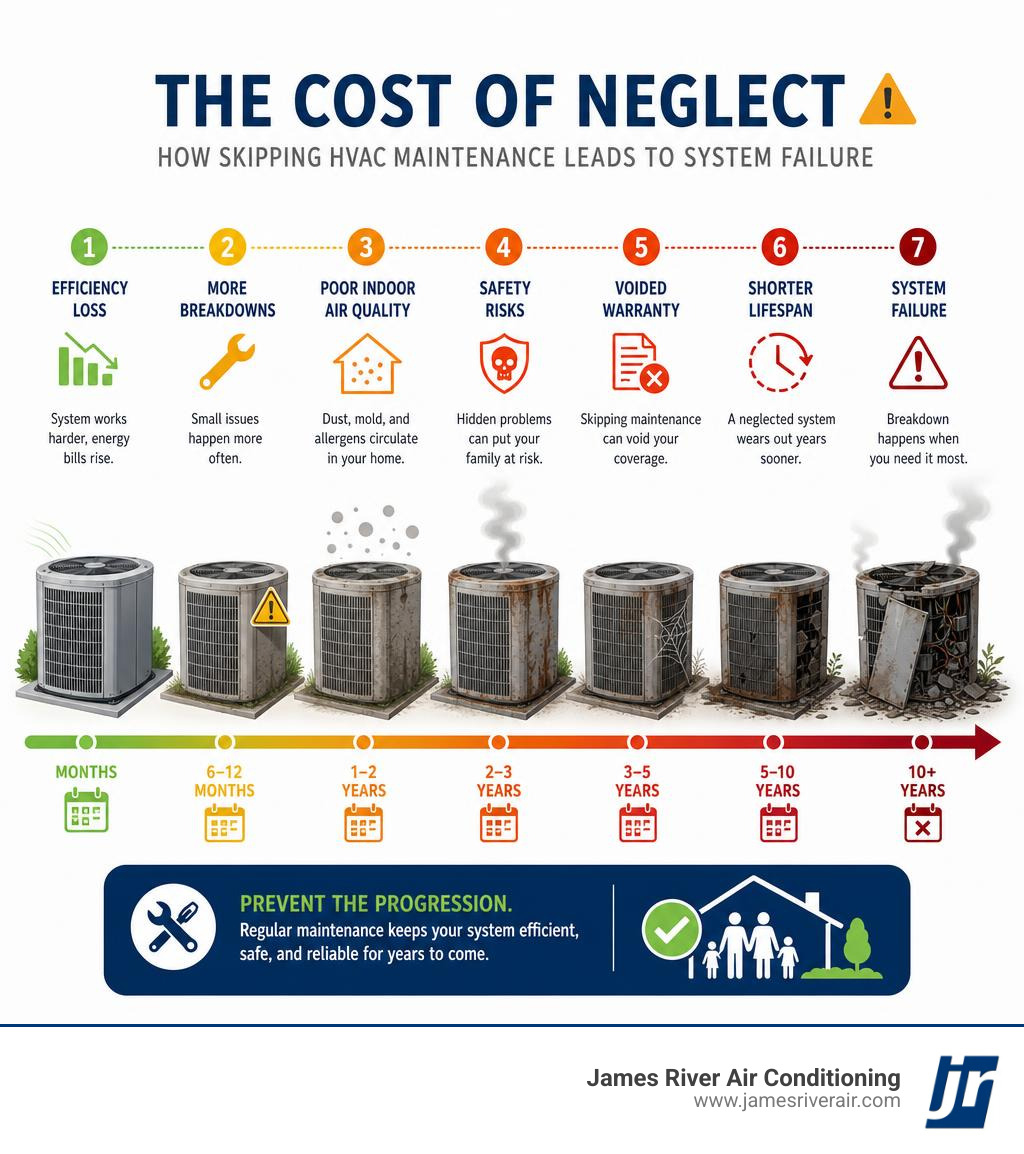
Simple guide to what happens if you skip hvac maintenance:
The Real Risks: What Happens If You Skip HVAC Maintenance
When your heating and cooling system is running quietly in the background, it is easy to adopt an “if it isn’t broke, don’t fix it” mentality. However, skipping professional care sets off a slow, invisible decline. Think of your heating and air conditioning equipment like a vehicle: you wouldn’t dream of driving a car 100,000 miles without changing the oil, checking the brakes, or replacing the filters. Yet, a neglected HVAC system often runs for thousands of hours under similar, high-stress conditions.
As components slowly wear down, your system has to work significantly harder to keep your home comfortable. This gradual wear goes unnoticed during mild spring or autumn days, but when extreme weather hits Richmond, the system is suddenly pushed to its absolute limits.
This is when the shift from preventive to reactive service occurs. Instead of scheduling a low-stress, convenient tune-up on your own terms, you are forced to make an emergency call during peak summer heat or freezing winter cold when service schedules are packed and stress levels are high. Investing in routine care ensures your system stays ahead of the curve, keeping your home comfortable year-round. Discover more about how consistent care keeps your home running smoothly by reading about the Benefits of Regular HVAC Maintenance.
1. Skyrocketing Energy Bills and Efficiency Loss
One of the very first changes homeowners experience when they skip routine maintenance is a quiet, steady increase in their monthly utility bills. You might not notice it during the first month or two, but an unmaintained air conditioner or heat pump loses roughly 5% of its operating efficiency every single year it goes without professional service.
This efficiency loss is primarily caused by airflow restriction. When dust, pet dander, and pollen accumulate on your system’s air filter, the blower motor must work twice as hard to pull air through the home. This restricted airflow leads to longer run cycles. Because the system has to run for extended periods to reach the temperature set on your thermostat, your electricity consumption climbs dramatically.
To keep your system running efficiently and protect your wallet, it is vital to keep up with simple, routine tasks. Learn how to stay on top of your filter replacement schedule by reading our guide to Stop Guessing and Start Changing Your HVAC Filter on Time.
The Impact of Dirty Coils on System Efficiency
While changing your filter is an excellent first step, dust and debris still manage to bypass the filter over time, settling directly onto your system’s indoor evaporator coils and outdoor condenser coils.
Your HVAC system relies on these coils to facilitate heat transfer. In the summer, the indoor evaporator coil absorbs heat from your indoor air, and the outdoor condenser coil releases it outside. When these coils are blanketed in a layer of grime, it acts as an insulator, blocking the heat transfer process.
This means your system has to consume significantly more energy to achieve the same cooling effect. Over time, dirty coils force the entire system to run hot, placing extreme thermal stress on internal components. You can show your heating and cooling equipment some much-needed attention by exploring these 5 Tips to Show Your HVAC System Love.
2. Frequent Breakdowns and Costly Emergency Repairs
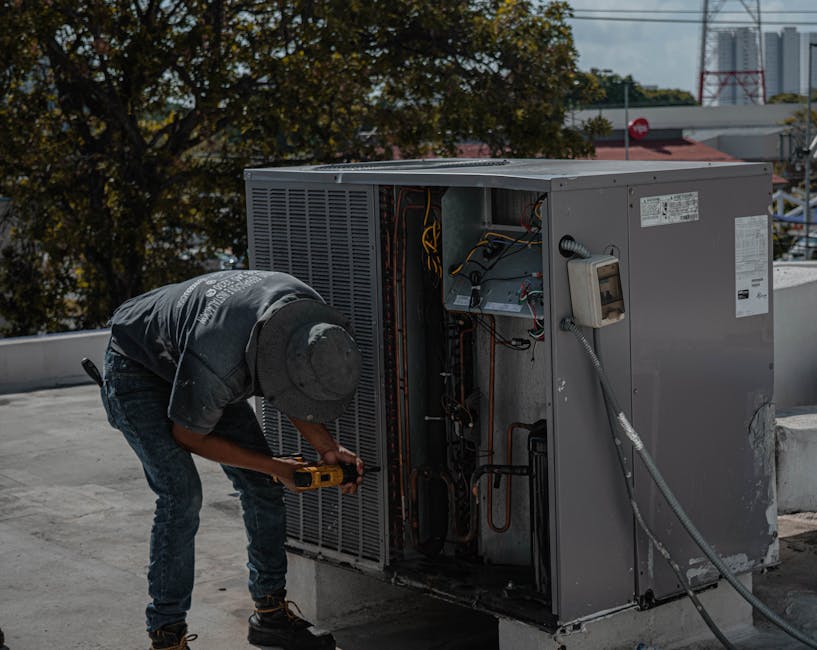
When routine maintenance is deferred, minor operational issues quickly escalate into major mechanical failures. Industry statistics show that over 80% of summer emergency air conditioning calls in Virginia are for completely preventable problems that a technician would have caught during a standard spring tune-up.
Without regular cleaning and calibration, your system will eventually experience a cascade of failures. For example, restricted airflow from a dirty filter or a dirty evaporator coil can cause the temperature of the coil to drop below freezing. This leads to ice forming along the refrigerant lines, eventually resulting in frozen coils.
If left unaddressed, a frozen coil can cause liquid refrigerant to flood back into the compressor. The compressor is the heart of your air conditioning system; if it suffers liquid slugging or overheats due to high pressure, it can fail entirely. Replacing a compressor is one of the most expensive repairs in the industry, and it often occurs alongside preventable electrical failures, such as burnt contactors or failed relays. Rather than waiting for a complete system breakdown to catch your attention, read our advice on why you shouldn’t Don’t Wait for the Smoke to Schedule Your HVAC Tune-Up.
How Small Issues Compound into Major Failures
In HVAC, small problems rarely stay small. Instead, they trigger cascade failures throughout the system.
Consider a simple, inexpensive component like a capacitor. The capacitor delivers the electrical surge required to start up your system’s motors. Over time, exposure to high heat and electrical load causes the capacitor’s performance to degrade. If a technician inspects your system during a routine tune-up, they can easily identify a weak capacitor and replace it in minutes.
If skipped, however, a weak capacitor will force the blower motor or compressor to pull excessive electrical current to start up. This extra load causes the motor windings to overheat, eventually burning out the blower motor entirely. What could have been a simple, low-cost component replacement suddenly becomes a major, high-stress repair. You can learn how to spot these compounding issues early by reviewing the 7 Signs Your HVAC System Is Having a Mid-Life Crisis.
3. Poor Indoor Air Quality and Health Hazards
Your HVAC system does much more than simply regulate the temperature inside your home; it also acts as the primary respiratory system for your living space. Every time your heating or cooling system runs, it circulates air through your ductwork, pulling in airborne particles and redistributing them throughout your home.
When you skip regular maintenance, your system becomes a breeding ground for indoor air pollution. Dust accumulation in the blower compartment and ductwork provides a perfect environment for dust mites to thrive. Furthermore, because air conditioners pull moisture out of the air, the dark, damp environment inside the indoor cabinet can easily foster mold growth and bacteria if the condensate drain pan and coils are not regularly cleaned and sanitized.
This buildup of allergens can lead to persistent respiratory issues, dry throat, itchy eyes, and worsened symptoms for anyone in your household living with asthma or allergies.
Beyond allergies, there is an even more serious safety hazard associated with neglecting your heating system: the risk of carbon monoxide leaks. During a professional fall furnace inspection, technicians carefully inspect the heat exchanger for any microscopic cracks. A cracked heat exchanger can allow toxic combustion gases, including carbon monoxide, to leak directly into your home’s airflow. Because carbon monoxide is odorless and colorless, this is a life-threatening hazard that can only be reliably prevented through regular, professional testing. Keep your family safe and healthy by utilizing The Ultimate HVAC Maintenance Checklist for Mid-Atlantic Homeowners.
4. Voided Warranties and Premature System Failure
Purchasing a modern heating and cooling system is a significant investment in your home’s long-term comfort and value. However, neglecting the system after installation can drastically shorten its operational lifespan and strip away your financial safety net when you need it most.
| System Status | Average Lifespan | Energy Efficiency | Emergency Repair Risk | Warranty Protection |
|---|---|---|---|---|
| Well-Maintained | 15–20 Years | High (Maintained) | Very Low | Fully Protected |
| Neglected | 8–10 Years | Drops 5% Per Year | High | Voided |
When an HVAC system is forced to run under constant strain due to dirty components, restricted airflow, or improper calibration, the physical wear on the equipment accelerates. This premature wear leads to early equipment failure, forcing homeowners to replace their entire system years ahead of schedule. In fact, industry data shows that 40% of all HVAC replacements happen earlier than necessary simply due to a lack of routine maintenance. You can read more about how system strain impacts longevity by exploring How Improperly Sized Systems Shorten Equipment Life.
Voided Warranties: What Happens If You Skip HVAC Maintenance
Many homeowners assume that if a major component like a compressor or heat exchanger fails within the first ten years, the manufacturer’s parts warranty will cover the replacement. However, there is a major catch hidden in the fine print of almost every manufacturer warranty from brands like Carrier, Trane, and Lennox.
Manufacturers require documented proof of regular, professional annual maintenance to keep your warranty valid. If you experience a major component failure in year six, but you cannot provide service records showing that the system was maintained annually by a licensed professional, the manufacturer can legally deny your warranty claim.
This leaves you entirely responsible for the cost of expensive replacement parts. Signing up for a maintenance plan is the easiest way to keep your system compliant with these warranty terms. Find out how to protect your investment by reading Why Your AC Wants You to Sign a Maintenance Contract.
Decreased Lifespan: What Happens If You Skip HVAC Maintenance
A well-maintained heating and cooling system should easily last between 15 and 20 years. However, when routine maintenance is skipped, that expected lifespan is often cut in half, with many neglected units failing completely between 8 and 10 years of service.
The constant stress of running with dirty coils, weak electrical components, and clogged filters causes the system’s critical parts to wear down rapidly. When you reach this stage, you are faced with a difficult decision: do you continue pouring money into expensive repairs for an aging, inefficient system, or do you invest in a complete system replacement?
This is what industry experts call the “HVAC crossroads.” Navigating this decision requires careful consideration of your system’s age, repair history, and overall efficiency. Learn how to evaluate your options by reading The HVAC Crossroads: How to Decide Between Repair and Replacement.
Frequently Asked Questions about HVAC Maintenance
How often should HVAC systems be maintained?
For optimal performance, safety, and efficiency, your HVAC system should be professionally serviced at least twice a year.
We recommend scheduling a spring cooling tune-up to prepare your air conditioner for the humid summer months, and a fall heating tune-up to ensure your furnace or heat pump is ready for winter’s freezing temperatures. If you rely on a heat pump system, biannual maintenance is especially critical because these systems run year-round to provide both heating and cooling. To learn more about the value of seasonal tune-ups, check out A Practical Guide to Annual HVAC Maintenance Is It Worth It?.
What are the warning signs that my HVAC system has been neglected?
If your system has gone without professional maintenance for a while, it will usually start dropping hints before it breaks down completely. Common warning signs of neglect include:
- Weak airflow coming from your supply vents, which often indicates a severely clogged filter or a failing blower motor.
- Strange noises such as squealing, grinding, rattling, or banging, which suggest loose belts, dry bearings, or failing electrical contactors.
- Uneven temperatures and hot or cold spots throughout your home, indicating that the system is struggling to distribute air effectively.
- A sudden spike in utility bills without a corresponding change in the outdoor weather, which points to a major drop in operating efficiency.
What should I do if I have already skipped maintenance for several years?
If you have skipped maintenance for several years, don’t panic—but don’t continue to delay, either. The best course of action is to schedule a comprehensive professional inspection as soon as possible.
A licensed technician can perform a thorough “catch-up” service, cleaning dirty coils, clearing out clogged condensate drains, checking electrical connections, testing safety controls, and evaluating your system’s overall health. This visit will establish a baseline for your system, allowing you to address any minor issues before they turn into major, expensive failures.
Conclusion
At the end of the day, skipping HVAC maintenance is not a money-saving strategy—it is simply delaying a much larger, more expensive bill down the road. From rising energy costs and poor indoor air quality to voided warranties and premature system failure, the consequences of neglect are clear, predictable, and entirely preventable.
For over 57 years, James River Air Conditioning has been Richmond, Virginia’s trusted partner for home comfort. Our team of highly trained, friendly professionals is dedicated to delivering world-class service with an entrepreneurial spirit across Richmond, Henrico, Chesterfield, Midlothian, Glen Allen, Hanover, and the surrounding areas. Don’t wait for your system to let you down when you need it most. Protect your home, your family, and your wallet by scheduling your professional service today.
