

Why Storm Preparedness for Central Virginia Homeowners Should Start Before Hurricane Season
Storm preparedness for Central Virginia homeowners is one of the most important steps you can take to protect your family, your property, and your home systems before a storm ever forms in the Atlantic.
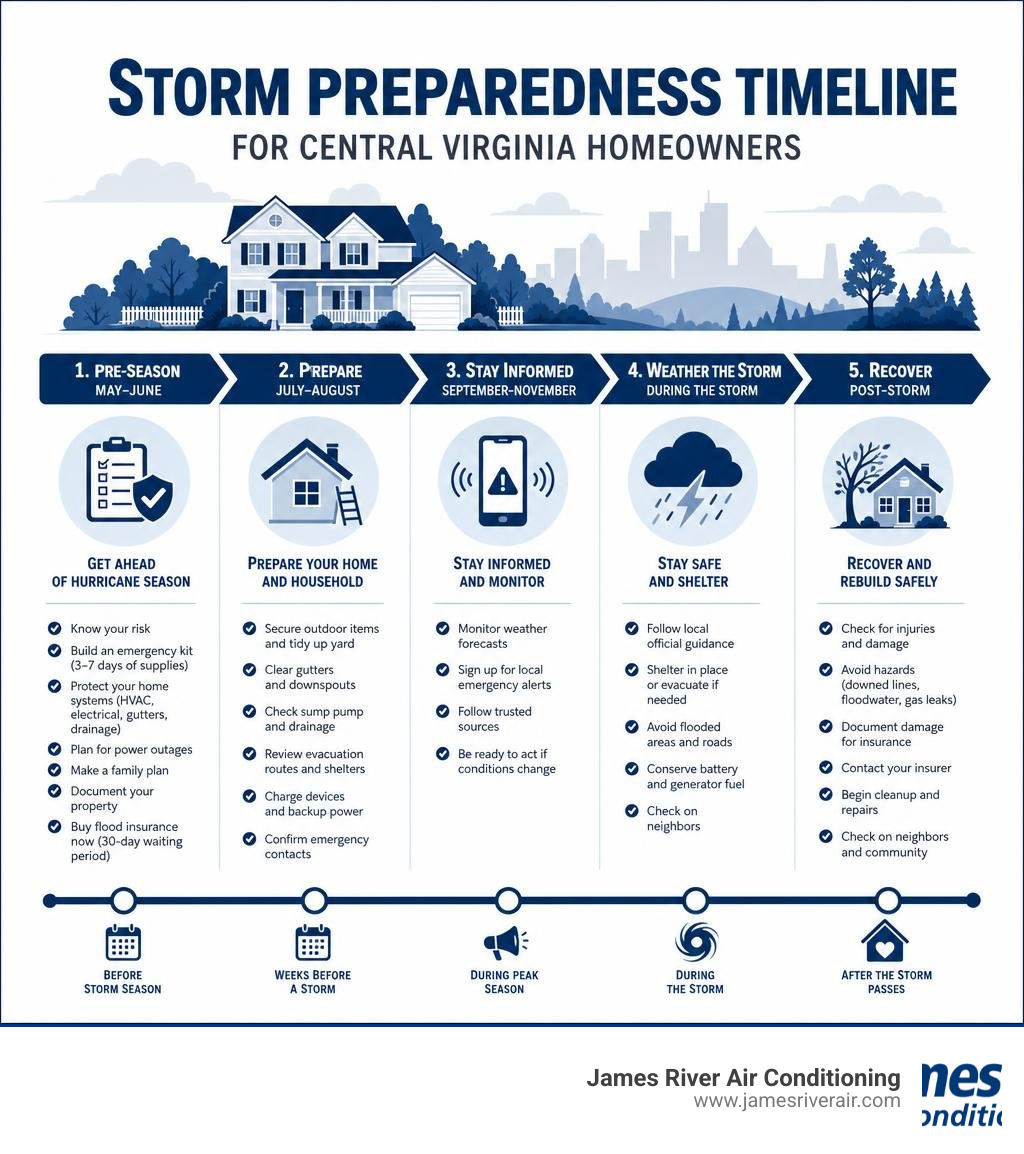
Here is a quick overview of what you need to do:
- Know your risk – Check if your home is in a flood plain using FEMA’s Map Portal and sign up for local emergency alerts.
- Build an emergency kit – Stock at least 3 to 7 days of water, food, medications, and supplies.
- Protect your home systems – Secure your HVAC, check your electrical panel, clean gutters, and inspect drainage.
- Plan for power outages – Have a generator ready and know how utility restoration works.
- Make a family plan – Decide in advance whether to evacuate or shelter in place, and establish an out-of-town contact.
- Document your property – Photograph your home inside and out before storm season for insurance purposes.
- Buy flood insurance now – Standard homeowners insurance does not cover flood damage, and new policies take 30 days to take effect.
Central Virginia may sit well inland from the coast, but that does not mean it is out of reach. As Tropical Storm Helene showed in 2024, powerful tropical systems can push straight-line winds, localized tornadoes, and catastrophic flooding deep into counties like Henrico, Chesterfield, and Hanover. Hurricane season officially runs from June 1 through November 30 each year, with peak activity hitting in early-to-mid September — giving homeowners a clear window to prepare.
The stakes are real. Inland flooding, not wind, is the leading cause of hurricane-related deaths in the United States. Just six inches of fast-moving water can knock a person off their feet. After a major disaster, outside help may take up to 72 hours to reach your neighborhood. That means the preparations you make today are the ones that will carry your household through the worst of it.
This guide walks Central Virginia homeowners through every step — from protecting HVAC and plumbing systems to building an emergency kit and planning your evacuation route.
Storm preparedness for central virginia homeowners terms to learn:
- how freeze thaw cycles affect your plumbing
- how hot humid summers and cold winters stress your hvac
- how seasonal extremes affect your crawl space
Understanding Regional Weather Risks and Storm Preparedness for Central Virginia Homeowners
As we navigate the warm summer months of July 2026, it is vital to remember that our local weather can shift dramatically. While our region enjoys beautiful, sun-drenched summers, we also face the reality of severe tropical activity. Preparing your home requires a clear understanding of the specific meteorological threats that target the Richmond metro area and surrounding counties.
Central Virginia’s unique geography places us far enough inland to avoid the initial brunt of coastal storm surges, but close enough to experience severe residual impacts. When a tropical system moves inland, it interacts with our rolling terrain and clay-heavy soils, often intensifying rainfall and trapping moisture. To learn more about how our regional climate puts stress on your property throughout the year, check out our guide on Surviving the Seasons: How Virginia’s Climate Impacts Your Home Systems.
Key Timeline and Risks of Hurricane Season
The Atlantic hurricane season spans from June 1 through November 30, with historical data showing that our highest risk for significant tropical weather occurs between mid-August and mid-October. During this peak window, the warm waters of the Atlantic basin act as fuel for tropical cyclones.
When these storms make landfall, they are rated on the Saffir-Simpson scale based on sustained wind speeds:
- Category 1 (74–95 mph): Can cause minor structural damage, snap older tree branches, and cause isolated power outages.
- Category 2 (96–110 mph): Often results in extensive roof and siding damage, uproots shallow trees, and triggers widespread power outages.
- Category 3 to 5 (111 mph or higher): Deemed major hurricanes capable of devastating or catastrophic structural damage.
In places like Glen Allen, Mechanicsville, and Powhatan, our primary concerns are the “triple threat” of tropical systems: straight-line winds, localized tornadoes spawned in the outer bands of the storm, and severe inland flooding. To better understand how our regional weather patterns interact with your home’s structural integrity, read about The Commonwealth Climate vs Your House: What You Need to Know.
Inland Flooding and Storm Surge Threats
It is a common misconception that storm damage is solely a coastal issue. In reality, inland flooding is historically the leading cause of hurricane-related deaths in the United States. Our regional clay soils do not absorb water quickly, meaning heavy, sustained downpours can rapidly turn streets, yards, and crawl spaces into swift-moving waterways.
Just six inches of fast-flowing water is enough to knock an adult off their feet, and two feet of water can easily float a mid-sized car. If you live near local bodies of water like the James River, Chickahominy River, or Swift Creek, you must know your home’s elevation.
Homeowners should use the FEMA Map Portal to check if their property sits within a designated 100-year flood plain. Additionally, the Virginia Department of Emergency Management (VDEM) utilizes the “Know Your Zone” system to organize tiered evacuation plans. While this primarily applies to coastal localities, residents in low-lying areas of Chesterfield, Henrico, and Hanover should monitor their local zones closely.
Step-by-Step Home System Protection Checklist
When a severe storm is forecasted, taking fast, proactive steps to secure your property can save you thousands of dollars in repairs. By focusing on your home’s core systems—including heating, cooling, electrical, and plumbing—you can minimize structural vulnerabilities. For a detailed breakdown of how to prepare your home’s mechanical systems, consult our Step-by-Step Guide to HVAC, Plumbing and Electrical Tips for Central Virginia.
Securing HVAC and Electrical Systems for Storm Preparedness for Central Virginia Homeowners
Your heating and cooling systems are highly vulnerable during severe weather. High winds can turn loose yard items into dangerous projectiles, while electrical grid instability can cause devastating power surges.
- Install Surge Protection: Extreme winds and falling branches frequently cause power lines to touch or snap, sending high-voltage surges through your electrical panel. Installing whole-house surge protection safeguards your sensitive HVAC electronics, appliances, and home systems from frying.
- Secure the Outdoor Condenser: Ensure your outdoor heat pump or air conditioning condenser is bolted securely to its concrete pad. Clear a ten-foot radius around the unit, removing loose yard toys, patio furniture, and garden ornaments that could be blown into the delicate aluminum fins.
- Turn Off the Power Before Landfall: If a major storm is imminent and power fluctuations begin, turn off your HVAC system at the thermostat and shut off the main breaker. This prevents the compressor from trying to restart repeatedly during rapid power cycling.
- Unplug Sensitive Appliances: Unplug computers, televisions, microwave ovens, and chargers to protect them from surge damage when the utility grid is eventually restored.
For more information on configuring your systems to handle our regional weather extremes, explore the Best HVAC and Plumbing Setup for Mid-Atlantic Weather: Ultimate Guide.
Plumbing, Crawl Spaces, and Drainage Preparation
Water damage from heavy rainfall can compromise your foundation and ruin your belongings. Taking time to inspect and clear your home’s drainage systems is critical before storm season peaks.
- Clean Gutters and Downspouts: Ensure your gutters are completely free of leaves, twigs, and pine needles. Downspouts should extend at least five to six feet away from your foundation to prevent water from pooling around your basement or crawl space walls.
- Test Your Sump Pump: If your home has a basement or crawl space, your sump pump is your primary line of defense. Pour a bucket of water into the sump pit to ensure the float switch activates and the pump successfully expels water away from the house. Ensure your pump has a battery backup system in case the primary electrical grid fails.
- Inspect Crawl Space Drainage: Standing water in a crawl space can lead to mold, wood rot, and structural sagging. Keeping your crawl space dry is a year-round job that becomes critical during tropical storms.
To learn more about keeping these hidden areas of your home safe, read our articles on A Comprehensive Guide to Seasonal Crawl Space Risks and The Ultimate Guide to Seasonal Extremes and Crawl Space Plumbing.
Creating Your Family Emergency Kit and Evacuation Plan
During a major weather event, local emergency services can become overwhelmed. Roads may be blocked by fallen trees, and utility networks could go dark. Preparing your household to be entirely self-sufficient for at least 72 hours is a cornerstone of responsible storm preparedness for Central Virginia homeowners.
Essential Supplies for Storm Preparedness for Central Virginia Homeowners
Your emergency supply kit should be assembled in easily transportable, watertight containers and kept in an accessible location. Ensure your kit contains the following essentials:
- Water Storage: Store at least one gallon of water per person (and pet) per day. For a family of four, this means keeping a minimum of 12 gallons of clean drinking water on hand for a basic 3-day supply.
- Non-Perishable Food: Stock a 3-to-7-day supply of canned meats, fruits, vegetables, protein bars, and dry cereals. Do not forget a manual can opener!
- NOAA Weather Radio: Keep a battery-powered or hand-crank National Oceanic and Atmospheric Administration (NOAA) weather radio in your kit to receive real-time emergency broadcasts even when cellular networks fail.
- First Aid Kit & Medications: Include sterile bandages, antiseptics, pain relievers, and a minimum of a 15-day supply of all prescription medications.
- Cash Reserves: Automated teller machines (ATMs) and credit card readers will not work if the power is out. Keep a reserve of small bills on hand.
- Pet and Specialty Supplies: Stock extra pet food, leashes, crates, baby formula, diapers, and any specialty items required for elderly family members or individuals with disabilities.
Evacuation vs. Sheltering in Place
One of the most critical decisions you will make during a major storm is whether to stay in your home or evacuate.
- When to Evacuate: Always follow official evacuation orders immediately. If you live in a mobile home, prefabricated structure, or a low-lying, flood-prone area, plan to leave early. Major evacuation routes out of the region include Route 17 and Interstate 64. If you plan to use these highways, time your departure to avoid heavy congestion and drive during daylight hours.
- When to Shelter in Place: If local authorities advise sheltering in place, identify a “safe room” in your home. This should be an interior room on the lowest floor of your house with no windows, such as a central bathroom, closet, or hallway.
- Communication Rules: During a disaster, cellular networks often become congested. Keep phone calls brief, or rely on text messaging, which uses less bandwidth and is far more likely to get through to family and your designated out-of-town emergency contact.
Preparing for Power Outages and Generator Safety
Power outages are almost guaranteed during a major storm in Central Virginia. High winds can easily down overhead power lines, and saturated soils can cause entire utility poles to topple. To ensure your home remains comfortable and safe during extended grid failures, proactive power planning is essential. For insights on how your home maintenance needs shift as we transition through different weather seasons, see Why Your Home Maintenance Schedule Changes with the Seasons.
Standby vs. Portable Generators
If you want to maintain seamless electrical power during a storm, you have two primary options: an automatic standby generator or a portable generator.
- Standby Generators: These units are permanently installed outside your home and run on natural gas or liquid propane. They feature an automatic transfer switch that constantly monitors utility power. Within seconds of an outage, the system automatically starts up and transfers your home’s electrical load to the generator, keeping your HVAC, refrigeration, and medical devices running without interruption.
- Portable Generators: While more affordable, portable generators require manual setup and must only be operated outdoors, at least 20 feet away from windows, doors, and vents. Never run a portable generator inside a home, garage, or crawl space. Carbon monoxide poisoning is a silent, deadly hazard that claims lives every year during post-storm recoveries.
- Connection Safety: Never attempt to connect a portable generator directly to your home’s electrical outlets (a dangerous practice known as “backfeeding”). Always use heavy-duty, outdoor-rated extension cords, or have a licensed professional install a manual transfer switch.
Understanding the Utility Power Restoration Sequence
When the power goes out, utility companies (such as Dominion Energy or local electric cooperatives) follow a highly structured, logical sequence to restore power safely and efficiently. Understanding this sequence can help manage your expectations during an extended outage:
- High-Voltage Transmission Lines: These massive lines carry power from generating plants to local substations. They serve tens of thousands of customers and are always repaired first.
- Distribution Substations: Substations step down high-voltage electricity so it can travel safely down local streets. If a substation is damaged, thousands of homes remain dark.
- Main Distribution (Feeder) Lines: These are the primary lines you see running along major roads. Repairing these lines restores power to large neighborhoods, schools, and commercial areas.
- Lateral Tap Lines: These lines branch off main feeder lines into specific streets and subdivisions.
- Individual Service Lines: These are the final lines running from the utility pole transformer to your individual home. If your neighbor has power but you do not, the issue is likely a damaged service line or a tripped individual home breaker.
Note: Homeowners are responsible for repairing any damage to their home’s service mast (the metal pole attached to the roof or side of the house) before the utility company can safely reconnect the service line.
Frequently Asked Questions About Central Virginia Storms
Does standard homeowners insurance cover flood damage?
No. Standard homeowners insurance policies do not cover damage caused by rising surface water or flooding. To protect your property, you must purchase a separate flood insurance policy through the National Flood Insurance Program (NFIP) or a private insurer.
That there is a strict 30-day waiting period before a new flood insurance policy takes effect. Do not wait until a named storm is heading up the East Coast to buy coverage. Additionally, take time before storm season to document your belongings. Walk through your home and take high-resolution photos and videos of your electronics, furniture, appliances, and home systems to simplify any future claims.
How long does food stay safe in the refrigerator during a power outage?
According to food safety guidelines, a closed refrigerator will keep food cold and safe for up to 4 hours during a power outage. A full, closed freezer will maintain its temperature for about 48 hours (or 24 hours if it is only half full).
To extend this window, freeze plastic milk jugs filled with water ahead of the storm to act as large ice blocks. If the power goes out, avoid opening your refrigerator or freezer doors unless absolutely necessary. Once power is restored, inspect your food carefully. Remember the golden rule of food safety: When in doubt, throw it out.
What are the highest-risk trees for wind damage in Central Virginia?
Our regional clay soils can become highly saturated during heavy rains, loosening the root systems of even the largest trees. Certain tree species are structurally weaker and pose a higher risk of splitting or falling during high-wind events:
- Bradford Pear: Known for tight, upright branching patterns and weak wood, these trees frequently split down the middle during moderate gusts.
- Silver Maple: This fast-growing species produces brittle wood that is highly prone to dropping large limbs.
- Sweetgum and Willow Oak: These species can develop heavy, lopsided canopies that act like sails in high winds, making them vulnerable to root heave in wet soils.
Look for warning signs on your property, such as dead wood, hanging branches (often called “widow-makers”), deep trunk cracks, or fungal growth around the base of the tree. Homeowners should hire a professional arborist to perform structural pruning and crown thinning before hurricane season begins.
Conclusion
Proactive home maintenance and emergency readiness are the best ways to protect your family and your property from the unpredictable nature of severe weather. By taking the time to secure your HVAC system, test your drainage, build an emergency kit, and establish a clear family plan, you can face any storm with confidence.
If you are looking to upgrade your home’s storm resilience, or if you need professional assistance checking your systems before severe weather strikes, we are here to help. Whether you need to install whole-home surge protection, service your sump pump, or discuss reliable backup power options, our team is ready to assist.
Ensure your home systems are fully prepared to weather any storm. Explore our comprehensive Residential Services or contact us today to schedule a professional inspection.
