
Step-by-Step Guide to HVAC Plumbing and Electrical Tips for Central Virginia
Why HVAC, Plumbing, and Electrical Maintenance Matters in Central Virginia
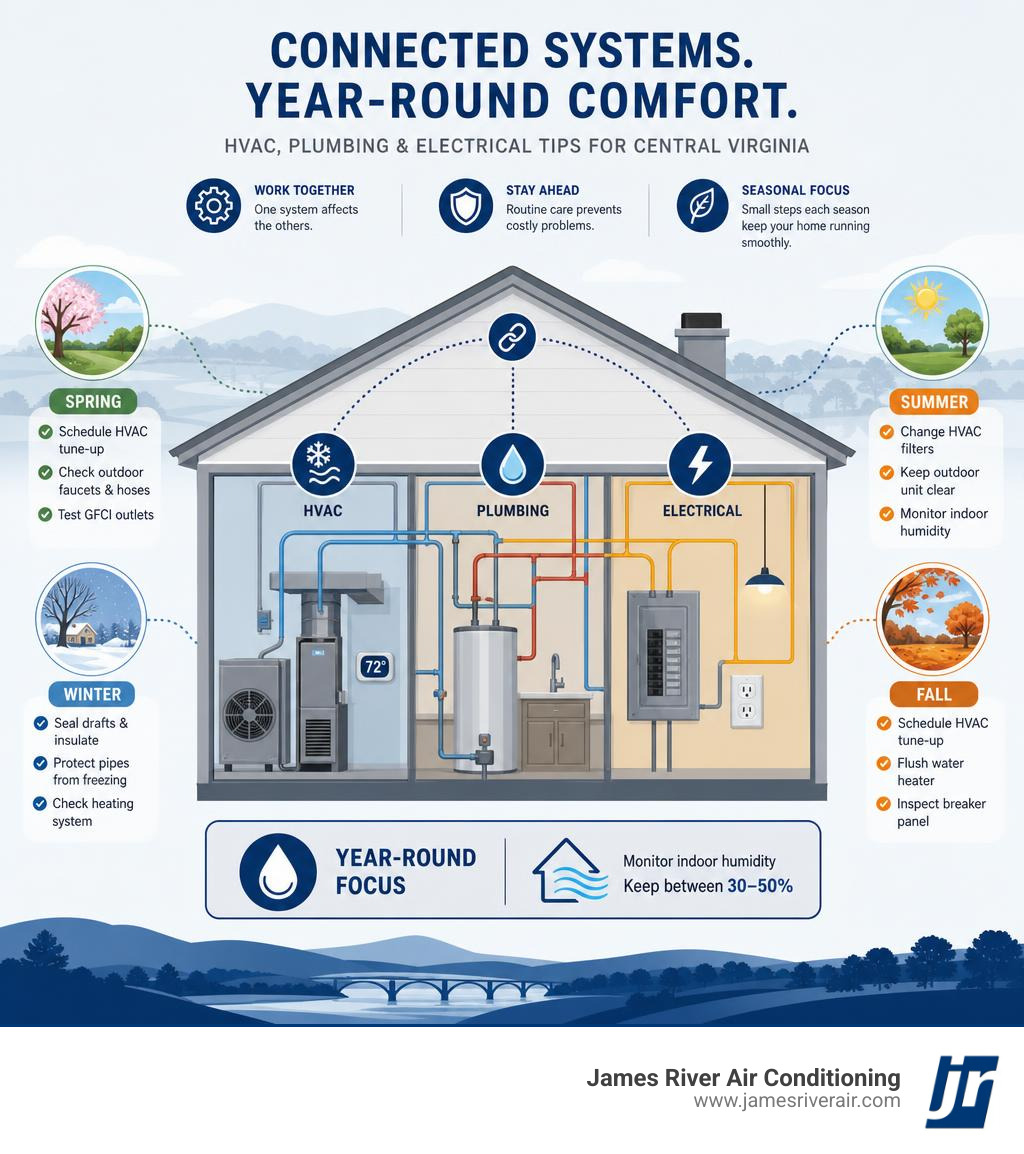
If you’re looking for hvac plumbing and electrical tips for central virginia, here’s a quick overview of the most important actions you can take right now:
Top Central Virginia Home System Tips at a Glance:
| System | Key Action | Why It Matters |
|---|---|---|
| HVAC | Change filters monthly; schedule spring and fall tune-ups | Heating and cooling account for nearly half of home energy use |
| Plumbing | Flush water heater annually; check outdoor faucets before winter | Prevents leaks, freezing, and low water pressure |
| Electrical | Test GFCI outlets; inspect breaker panel yearly | Prevents fire hazards and outages |
| All Systems | Monitor indoor humidity (keep between 30-50%) | Central Virginia’s mixed-humid climate stresses every system year-round |
Living in Central Virginia means dealing with weather that can swing from frost to heat in the same week. One April morning you might wake up needing heat. By afternoon, you’re reaching for the AC. That kind of constant back-and-forth puts serious stress on your home’s HVAC, plumbing, and electrical systems — often in ways you won’t notice until something breaks down.
Central Virginia sits in what’s known as IECC Climate Zone 4A — a mixed-humid region. That means hot, sticky summers and cold snaps in winter, with unpredictable shoulder seasons in between. According to climate data, the amount of electricity needed to keep a Virginia home cool has increased by roughly one-third since 1970. Air leakage alone accounts for 25 to 40 percent of the energy used for heating and cooling in a typical home.
The good news? Most of the biggest problems are preventable with the right maintenance habits.
Hvac plumbing and electrical tips for central virginia terms you need:
- how central virginia climate affects your home systems
- how four season weather creates maintenance demands
Essential HVAC Plumbing and Electrical Tips for Central Virginia
To keep your home running smoothly through freezing winters and muggy summers, you need to understand how the Piedmont region’s climate impacts your property. In towns like Ashland, Midlothian, and Chesterfield, our houses face a unique set of meteorological trials.
Central Virginia falls squarely into Climate Zone 4A (mixed-humid). This classification means we experience a nearly equal distribution of heating and cooling days throughout the year. The rapid transition between these seasons—often called the “shoulder seasons”—is incredibly demanding on home systems. Your heat pump or furnace might run in the morning, only for your air conditioner to kick on by 3:00 PM to combat the rising afternoon humidity. To understand how these rapid shifts impact your home’s infrastructure, check out our guide on The Commonwealth Climate vs. Your House: What You Need to Know.
Climate-Specific HVAC Plumbing and Electrical Tips for Central Virginia
Managing the “steam room” effect of Virginia’s summers requires a coordinated approach. High outdoor humidity doesn’t just make you feel sticky; it actively attacks your crawlspace, drywall, and structural framing. Here are key climate-specific strategies:
- Implement Crawlspace Encapsulation: Many historic homes in Richmond and newer properties in Short Pump or Glen Allen suffer from high crawlspace humidity. Encapsulating your crawlspace and installing a dedicated dehumidifier prevents structural wood rot, keeps mold out of your ductwork, and reduces the workload on your air conditioner.
- Maintain Indoor Humidity Control: Keep your indoor relative humidity between 30% and 50%. If humidity climbs above 55%, you run the risk of mold growth inside your drywall and HVAC registers.
- Protect Outdoor Units from Debris: Our local pollen seasons are legendary, coating everything in a thick layer of yellow dust. This pollen, combined with falling leaves in autumn, can quickly clog your outdoor condenser coils, forcing your system to work twice as hard to reject heat.
- Coordinate Seasonal Transitions: To ensure you aren’t caught off guard by sudden weather shifts, read more about Why Your Home Maintenance Schedule Changes with the Seasons to align your home care tasks with the calendar.
Optimizing HVAC Efficiency and Lowering Energy Bills

Heating and cooling account for nearly half of a typical home’s energy usage. In Virginia, where winter cold snaps can be severe and summer heat waves persistent, keeping these costs manageable requires a proactive approach. Simple steps can yield significant savings, especially when air leakage accounts for up to 40% of your heating and cooling energy loss. You can start maximizing your savings by reading these 5 Tips to Show Your HVAC System Love.
Troubleshooting Why Your AC Unit Keeps Shutting Off
There is nothing worse than your air conditioning shutting down on a humid July afternoon in Henrico or Hanover. When an AC unit repeatedly shuts off shortly after starting, it is a phenomenon known as “short cycling.” This behavior wastes immense amounts of electricity and places severe mechanical stress on your compressor.
The most common causes of an AC unit shutting off include:
- Extremely Dirty Air Filters: A clogged filter chokes off airflow. This causes the evaporator coil to freeze over, which trips the system’s low-pressure safety switch and shuts the unit down. Homeowners can easily resolve this by checking their filters monthly. For a step-by-step approach, read our guide on how to Stop Guessing and Start Changing Your HVAC Filter on Time.
- Clogged Condensate Drain Lines: Your AC pulls gallons of water out of the humid Virginia air every day. If the drain line clogs with algae or debris, the water backs up into a secondary drain pan. This trips a safety float switch, immediately cutting power to the unit to prevent water damage to your ceiling. Clearing the line with a wet/dry vacuum or flushing it with vinegar can resolve this.
- Refrigerant Leaks: Low refrigerant levels cause pressure drops that trip safety switches. If you suspect a leak, this requires professional diagnostic tools to safely locate and repair.
Debunking Common HVAC Myths in Central Virginia
Many homeowners rely on outdated advice that actually raises their utility bills and damages their equipment. Let’s set the record straight on three major myths:
- Myth 1: A Bigger HVAC System is Always Better. Up to 90% of HVAC systems are improperly sized or installed. Installing an oversized system means it will cool your home too quickly without running long enough to remove moisture. You’ll end up with a cold, clammy house and short-cycling equipment.
- Myth 2: Turning Your Thermostat to 60 Degrees Cools the House Faster. Your air conditioner blows the same temperature air regardless of the setting. Cranking the thermostat down only ensures the system runs longer, wasting energy and potentially freezing up the coils.
- Myth 3: Ceiling Fans Cool the Air. Ceiling fans cool people, not rooms. They speed up sweat evaporation on your skin, creating a wind-chill effect. Turn fans off when you leave a room to save electricity.
Deciding to Repair or Replace Your HVAC System
Air conditioners typically last 10 to 15 years, while well-maintained furnaces can last 15 to 20 years. When an older system begins to struggle in Moseley or Powhatan, you face a tough financial decision.
A good rule of thumb is the “5,000 Rule”: multiply the age of your system by the cost of the repair. If the result exceeds $5,000, replacement is usually the smarter long-term investment. Modern high-efficiency systems can save you hundreds of dollars annually on cooling costs.
To guide your decision-making process, explore these helpful resources:
- The HVAC Crossroads: How to Decide Between Repair and Replacement
- Should I Repair or Replace My Furnace or AC Right Now?
- 7 Signs Your HVAC System Is Having a Mid-Life Crisis
| Decision Factor | Repair the System | Replace the System |
|---|---|---|
| System Age | Under 10 years old | Over 12–15 years old |
| Repair Cost | Minor, one-off fixes | Exceeds 50% of system value |
| Energy Efficiency | Utility bills remain stable | Bills are climbing; system uses old R-22 refrigerant |
| Comfort Levels | Consistent temperatures | Frequent hot and cold spots throughout the house |
Professional HVAC Maintenance for Cooling and Heating Seasons
Twice-yearly professional maintenance is the single best way to protect your investment. These visits should be scheduled in early spring (for cooling) and early fall (for heating).
During a cooling visit, a professional technician will:
- Wash the outdoor condenser coil from the inside out to remove pollen and dirt.
- Clear and flush the condensate drain line.
- Verify the refrigerant charge and inspect for line leaks.
- Test electrical contactors, capacitors, and tighten wire connections.
During a heating visit, the technician will focus on:
- Inspecting the heat exchanger for dangerous cracks that could leak carbon monoxide.
- Cleaning and adjusting the burner assembly and flame sensor.
- Checking the gas pressure and testing all limit safeties.
- Verifying proper venting and combustion airflow.
To understand the full scope of these essential visits, read The Ultimate HVAC Maintenance Checklist for Mid-Atlantic Homeowners. For further insights on why this investment pays off, review A Practical Guide to Annual HVAC Maintenance: Is It Worth It? and the long-term Benefits of Regular HVAC Maintenance.
Benefits of an HVAC Maintenance Plan in Charlottesville and Surrounding Areas
Enrolling in a structured maintenance plan, such as our Bow Tie Service Plan, takes the guesswork out of home care. These programs provide priority scheduling during peak seasonal rushes, exclusive savings on necessary repairs, and the peace of mind that comes from regular safety inspections. Protecting your home’s comfort system year-round is easy when you choose to Protect Your Castle with the Bow Tie Service Plan.
Proactive Plumbing and Electrical Maintenance Guidelines
Just like your heating and cooling systems, your plumbing and electrical networks require routine checkups to prevent sudden emergencies. From mineral scale in Petersburg to historic electrical wiring in Richmond, proactive care is key. If you live in Tuckahoe, you can dive deep into local best practices with The Ultimate Guide to Plumbing Maintenance Inspections in Tuckahoe, VA.
Easy Fixes for Low Water Pressure in Central Virginia
Low water pressure can make simple daily tasks incredibly frustrating. In Central Virginia, the most common culprit is mineral buildup—specifically calcium and magnesium from hard water, which is common in Chesterfield and Hanover counties.
- Clean Clogged Aerators: If low pressure only affects a single faucet, unscrew the small aerator nozzle at the tip of the spout. Soak it in white vinegar for an hour to dissolve mineral scale, rinse, and reinstall.
- Check the Pressure Reducing Valve (PRV): If your entire house has low pressure, your PRV may be failing. This bell-shaped brass valve, usually located near your main water shutoff, regulates the incoming water pressure from the municipal supply. A licensed plumber can adjust or replace this valve to restore safe, steady pressure.
- Flush the Water Heater: Sediment buildup at the bottom of your water heater tank can restrict hot water flow. Flushing your tank annually keeps hot water pressure strong and extends the life of your appliance. Discover more localized plumbing care secrets in Chester’s Secret to Smooth Pipes: Proactive Plumbing Maintenance.
Your Essential Fall Plumbing Checklist
Preparing your plumbing for freezing winter temperatures is a non-negotiable task for Virginia homeowners. A single burst pipe can cause thousands of dollars in water damage.
For comprehensive advice on protecting your plumbing, check out Give Your Plumbing a Tune-Up for Longevity in Moseley & Midlothian and The Secret to a Happy Home: Comprehensive Plumbing Maintenance in Petersburg.
Your Essential Fall Plumbing Checklist:
- Disconnect Outdoor Hoses: Leaving a garden hose attached to an outdoor spigot traps water inside the faucet. When temperatures drop, this water freezes, expands, and splits the pipe inside your wall.
- Install Insulated Faucet Covers: Place insulated foam domes over all exterior hose bibbs.
- Flush Your Water Heater: Drain and flush the tank to remove sediment and verify that the temperature and pressure relief valve works correctly.
- Test Your Sump Pump: Pour five gallons of water into your sump basin to ensure the float switch activates the pump and drains the water quickly before winter storm seasons begin.
Key Items on an Electrical Safety Checklist
Your electrical system is the silent engine of your home. Because wires are hidden behind drywall, hazards can develop unnoticed. Keeping your family safe requires regular visual inspections.
- Test GFCI Outlets Monthly: Ground Fault Circuit Interrupters (GFCIs) are required in areas where water is present, such as kitchens, bathrooms, and outdoor spaces. Press the “Test” button to ensure they cut power instantly, then press “Reset.”
- Verify AFCI Protection: Arc Fault Circuit Interrupters (AFCIs) detect dangerous electrical arcing (sparking) behind walls, which is a leading cause of home fires. Modern panels use AFCI breakers to protect bedroom and living areas.
- Look for Loose or Damaged Wiring: If you hear buzzing from an outlet, notice flickering lights, or feel warmth coming from a switch plate, turn off the breaker immediately. These are classic signs of loose wire connections or failing contacts that present an immediate fire hazard.
For a deeper dive into professional electrical upkeep, read Richmond’s Best Electrical Maintenance Services: A Comprehensive Guide and learn what to expect from a premier service provider in Beyond the Basics: What to Look for in Richmond’s Electrical Services.
Implementing HVAC Plumbing and Electrical Tips for Central Virginia Year-Round
A healthy home is one where all systems work in harmony. For example, a clogged condensate drain from your air conditioner (a plumbing issue) can drip onto your furnace control board, causing a major electrical short circuit. By taking a holistic, multi-trade approach to maintenance, you protect your property value and ensure long-term safety. Discover how high-performing home systems influence your property’s overall value by reading The Appraiser’s Checklist: Why Your HVAC System Matters More Than You Think.
Frequently Asked Questions about Central Virginia Home Maintenance
What is the ideal indoor humidity for a Central Virginia home?
The ideal indoor humidity level is between 30% and 50%. Keeping your home within this range prevents mold growth, protects hardwood flooring from cupping or gapping, and helps your air conditioner run more efficiently during muggy summer months.
How often should I replace my HVAC air filters?
In most Central Virginia homes, you should replace your air filter every 60 to 90 days. However, if you have multiple shedding pets, family members with severe allergies, or live in a high-pollen area like Glen Allen, check the filter every 30 days. If you hold the filter up to a light and cannot see light through it, it is time for a replacement.
Why is my energy bill suddenly so high?
If your utility bills spike without a change in your daily habits, it usually points to a drop in system efficiency. Common causes include a heavily clogged air filter, a slow refrigerant leak, failing electrical capacitors, or leaky ductwork. In fact, typical residential duct systems lose 20% to 30% of their conditioned air through leaks and poor connections.
Conclusion
Taking care of your home’s HVAC, plumbing, and electrical systems doesn’t have to be overwhelming. By staying proactive, changing your filters, and scheduling professional maintenance before the extreme seasons arrive, you can keep your family safe and comfortable year-round.
At James River Air Conditioning, we have been serving Richmond and the surrounding Central Virginia communities for over 57 years. We are proud to deliver world-class service with an entrepreneurial spirit to our neighbors in Midlothian, Glen Allen, Henrico, Chesterfield, Hanover, and beyond. Whether you need an annual tune-up or a comprehensive home system upgrade, choosing a multi-trade provider you can trust makes all the difference. Learn more in The Ultimate Guide to Choosing a Multi-Trade Company You Can Trust.
Ready to protect your home and lower your energy bills? Schedule your Central Virginia home system evaluation today!
