

Why Central Virginia Homes Face Serious Mold Risk From HVAC Problems
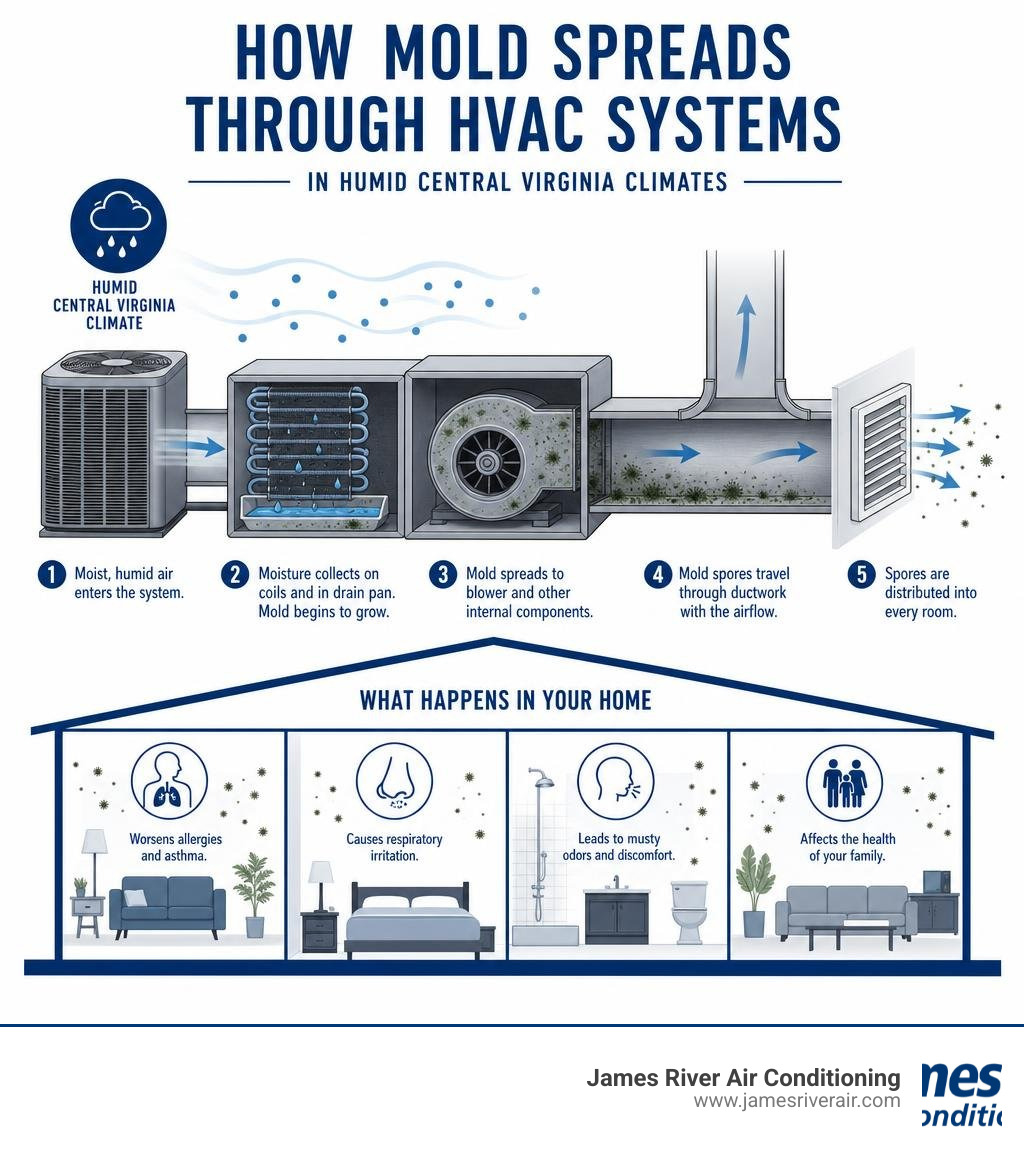
Mold risk from HVAC problems in Central Virginia is higher than most homeowners expect — and the region’s climate is a big reason why. Central Virginia sits in what building scientists classify as IECC Climate Zone 4A: a mixed-humid zone where summer humidity regularly climbs above 70% and the air feels more like a steam room than a breeze. When that moisture finds its way into your HVAC system — through condensation on coils, pooling in drain pans, or leaking into ductwork — mold can begin growing in as little as 24 to 48 hours.
Here’s a quick overview of the most common HVAC-related mold risks Central Virginia homeowners face:
| HVAC Problem | Mold Risk |
|---|---|
| Clogged condensate drain line | Standing water creates immediate mold conditions |
| Leaky ductwork | Pulls in humid crawl space or attic air |
| Oversized AC unit | Short cycles without fully dehumidifying |
| Dirty evaporator coils | Moisture collects and mold colonizes quickly |
| Clogged or wet air filters | Trapped moisture becomes a breeding ground |
| Poor ventilation | Stale, humid air lingers inside the system |
The problem doesn’t stay contained. Once mold takes hold inside an HVAC system, every time the system runs, it distributes spores into every room of your home. For families in Richmond, Charlottesville, and surrounding communities, that means potential health effects — worsened allergies, respiratory irritation, and greater risk for anyone with asthma or a weakened immune system.
This guide covers what causes mold to develop in Central Virginia HVAC systems, the warning signs to watch for, and what you can do to prevent it.
Mold Risk from HVAC Problems in Central Virginia

Living in Central Virginia means dealing with a climate of extremes. We experience freezing winter nights, beautiful but pollen-heavy spring days, and summer afternoons that feel thick enough to wear. Because we reside in Climate Zone 4A, our home comfort systems are subjected to a unique brand of seasonal stress.
Our HVAC systems do not just heat and cool our homes; they act as the primary defense against regional humidity. During a typical July or August in areas like Glen Allen, Midlothian, or Chesterfield, the outdoor relative humidity frequently spikes past 70%. When your air conditioner runs, it works double-time to pull that heavy moisture out of the air.
If your system is running efficiently, this moisture is safely collected and drained away. However, when mechanical issues arise, that condensation becomes a liability. Understanding Surviving the Seasons: How Virginia’s Climate Impacts Your Home Systems is the first step in recognizing how vulnerable our properties can be. The constant swing between damp cold and heavy heat creates a highly demanding environment for residential machinery. To dive deeper into how our local weather patterns test the limits of your home, check out our guide on The Commonwealth Climate vs. Your House: What You Need to Know.
How Does Climate Increase Mold Risk from HVAC Problems in Central Virginia?
In our mixed-humid climate, the outdoor dew point during the summer months is consistently high. When warm, moisture-laden air makes contact with the cold metal surfaces of your air conditioner’s evaporator coils, it behaves exactly like a cold can of soda on a hot day: it sweats.
Under normal circumstances, this moisture drips into a drain pan and flows out of your home. But if your air conditioner is struggling with airflow issues, duct leaks, or mechanical failures, that condensation pools inside dark, unventilated spaces. Mold spores, which are microscopic and always naturally present in the air, require only three things to thrive:
- Moisture (which our humid summers supply in abundance)
- Darkness (provided by the interior of your air handler and ductwork)
- An organic food source (such as the household dust, skin cells, and pet dander that naturally settle inside your system)
When these elements combine, mold colonies can establish themselves in less than two days. To learn more about this biological process and how to stop it, read The Ultimate Guide to Keeping Your Ducts and Lungs Mold-Free.
What Are the Warning Signs of Mold Risk from HVAC Problems in Central Virginia?
Because your HVAC system is largely hidden behind walls, in utility closets, or under floorboards, mold growth is rarely visible in its early stages. However, your system will drop clues when something is wrong. Homeowners should keep a lookout for these four major warning signs:
- Musty or Earthy Odors: If you notice a distinct, damp smell resembling wet cardboard or a dirty basement whenever your air conditioner kicks on, mold is likely growing on your coils or inside your ductwork.
- Visible Spotting on Vents: Dark green, black, or brown spots appearing around your supply registers or ceiling vents are a major red flag. Simply wiping them away won’t solve the problem, as the source is likely deeper inside the system.
- Unexplained Allergy Flares: If family members experience persistent sneezing, itchy eyes, coughing, or congestion that magically improves when they leave the house, your HVAC system may be actively circulating mold spores.
- Weak Airflow and Stale Air: When mold, dust, and debris clog your system’s internal components, airflow drops. This leaves your indoor air feeling heavy, sticky, and stagnant.
If your system is showing these symptoms alongside other performance issues, it might be experiencing deeper mechanical trouble. Explore the 7 Signs Your HVAC System is Having a Mid-Life Crisis to see if it is time for a professional intervention.
Common HVAC Issues That Trigger Mold Growth
While our climate provides the moisture, specific mechanical failures are what allow that moisture to pool and foster mold growth. Let’s look at the three most common culprits we encounter in Central Virginia homes.
Clogged Condensate Lines and Drain Pans
Your air conditioner’s evaporator coil produces gallons of water every single day as it dehumidifies your home. This water falls into a condensate drain pan and flows out of your home through a narrow PVC drain line.
Over time, dust, pollen, and algae can build up inside this drain line, creating a thick clog. When the line plugs up, the water has nowhere to go. It backs up into the drain pan, creating a stagnant pool of water directly beneath your air handler. In the dark, warm environment of your utility closet or attic, this standing water becomes an absolute paradise for mold.
Regular maintenance is the best way to keep these lines clear. To understand how routine professional visits prevent these messy, mold-inducing backups, read Why Your AC Wants You to Sign a Maintenance Contract.
Leaky Ductwork and Crawl Space Moisture
Many homes in Richmond, Hanover, and Powhatan are built over crawl spaces. These crawl spaces are notoriously damp environments, especially during our humid summers.
If your home’s ductwork runs through an unconditioned crawl space or attic and has leaks, gaps, or poor insulation, it creates a double-whammy mold risk:
- Air Infiltration: Leaky return ducts will pull cold, damp air from the crawl space directly into your HVAC system.
- Condensation: When cold air traveling through uninsulated metal ducts meets the hot, humid air of a crawl space, condensation forms on the outside of the ducts, which can rot floor joists and encourage mold growth that eventually seeps indoors.
Damp crawl spaces are one of the leading causes of indoor air quality struggles in Virginia. Learn how to spot trouble early by reviewing the Warning Signs Your Crawl Space is Impaired and discover how to Stop the Sog and Understand How Crawl Space Moisture Affects Your Home.
Improperly Sized Air Conditioning Units
When it comes to air conditioning, bigger is not always better. An oversized AC unit will cool your home incredibly quickly, but it will suffer from a problem called “short cycling.” This means the system turns on, rapidly lowers the temperature, and shuts off before it has completed a full cooling cycle.
Because dehumidification only happens during the latter half of a sustained cooling cycle, a short-cycling system leaves your home cold but incredibly clammy. This lingering humidity keeps indoor relative humidity levels well above the safe 60% threshold, turning your entire home—and the interior of your quiet, dark ductwork—into a breeding ground for mold. To learn more about how system sizing impacts your home’s health, read about How Improperly Sized Systems Shorten Equipment Life.
How to Prevent Mold in Your Central Virginia HVAC System
Fortunately, mold growth is entirely preventable. By controlling indoor moisture levels and keeping your system clean, you can eliminate the conditions mold needs to survive. The Environmental Protection Agency (EPA) recommends keeping indoor relative humidity between 30% and 50% to prevent mold growth.
In Central Virginia, achieving this target requires a combination of smart habits, proper filtration, and sometimes specialized equipment like whole-home dehumidifiers. If you suspect moisture is rising from beneath your home and bypassing your HVAC system, The Secret to Fresh Air is Hiding Under Your Floorboards explains how crawl space management plays a vital role in home health.
Regular Maintenance and Filter Replacement
Your air filter is your HVAC system’s first line of defense. It captures the dust, dander, and organic debris that mold uses as a food source. When a filter becomes clogged, airflow drops, causing the evaporator coils to get colder than normal—sometimes even freezing over. When that ice melts, it creates a massive influx of water that can easily overwhelm your drain pan.
We recommend changing your air filters every 30 to 90 days, depending on whether you have pets or allergy sufferers in the home. Upgrading to a high-quality filter can make a world of difference. Explore your options in MERV-elous Choices for Your Home Air Filter and learn how to keep on top of replacements with our guide on how to Stop Guessing and Start Changing Your HVAC Filter on Time.
Professional Inspections and Crawl Space Care
While changing your filter is an easy DIY task, cleaning evaporator coils, clearing condensate lines, and inspecting ductwork requires professional tools and expertise. An annual or biannual HVAC tune-up ensures that small moisture issues are caught and resolved before they turn into full-blown mold colonies.
Additionally, because so much of our indoor air originates in our crawl spaces, protecting this area is essential. Crawl space encapsulation—sealing the ground and walls with a heavy vapor barrier and installing a dedicated dehumidifier—is one of the most effective ways to protect your home’s air quality.
Make sure your home is prepared for the seasons by checking out The Ultimate HVAC Maintenance Checklist for Mid-Atlantic Homeowners and reading up on Why Crawl Space Maintenance is Essential for Virginia Homes and Beyond.
Frequently Asked Questions About HVAC Mold
Can I clean mold out of my air ducts myself?
We strongly advise against DIY duct cleaning for mold. Spraying household cleaners or bleach into your vents only treats the surface and can actually damage your ductwork. Even worse, agitating mold colonies without professional containment equipment (like negative air machines and HEPA vacuums) will release millions of spores into your air, spreading the contamination throughout your entire home.
If you suspect mold is present, it is best to leave remediation to licensed professionals who can safely isolate the system and address the root moisture issue. For tips on managing everyday air quality safely, check out How to Improve Indoor Air Quality at Home Without Turning Your House Into a Bubble.
What is the ideal humidity level for a Richmond home?
The sweet spot for indoor relative humidity in Central Virginia is between 30% and 50%.
- If humidity drops below 30%, you may experience dry skin, static electricity, and irritated sinuses.
- If humidity climbs above 50% (and especially above 60%), you enter the danger zone where mold, dust mites, and mildew thrive.
Keeping your system well-maintained is key to maintaining this balance. Learn more about how a healthy system manages your home’s climate in the Benefits of Regular HVAC Maintenance.
When should I replace my HVAC system due to mold?
If mold is caught early and is limited to non-porous metal components like your evaporator coils or metal drain pans, professional remediation and deep cleaning are usually highly effective.
However, if mold has deeply penetrated porous materials—such as fiberglass duct board, internal insulation, or flexible ductwork—remediation may not be possible. In these cases, or if your system is over 12 to 15 years old and struggling to control humidity, replacement is often the safest and most cost-effective path forward.
If you find yourself at this decision point, read our guide on The HVAC Crossroads: How to Decide Between Repair and Replacement and explore your immediate options in Should I Repair or Replace My Furnace or AC Right Now?.
Conclusion
Your home’s HVAC system is responsible for keeping your family comfortable, but when neglected, it can inadvertently become a source of moisture and mold. In Central Virginia’s demanding climate, staying proactive with regular maintenance, prompt repairs, and proper crawl space care is the key to protecting your property and your health.
For over 57 years, James River Air Conditioning has been the trusted name for home comfort in Richmond, Glen Allen, Midlothian, and surrounding communities. Our experienced team is dedicated to helping you breathe easier with comprehensive HVAC maintenance, crawl space solutions, and indoor air quality services.
Don’t let hidden moisture compromise your home. Schedule professional indoor air quality services with us today and let our family take care of yours.
