

Why Recognizing the Signs of Mold in Your HVAC System Could Protect Your Family’s Health
The signs of mold in your HVAC system are not always obvious — but catching them early can make a real difference for your home’s air quality and your family’s health.
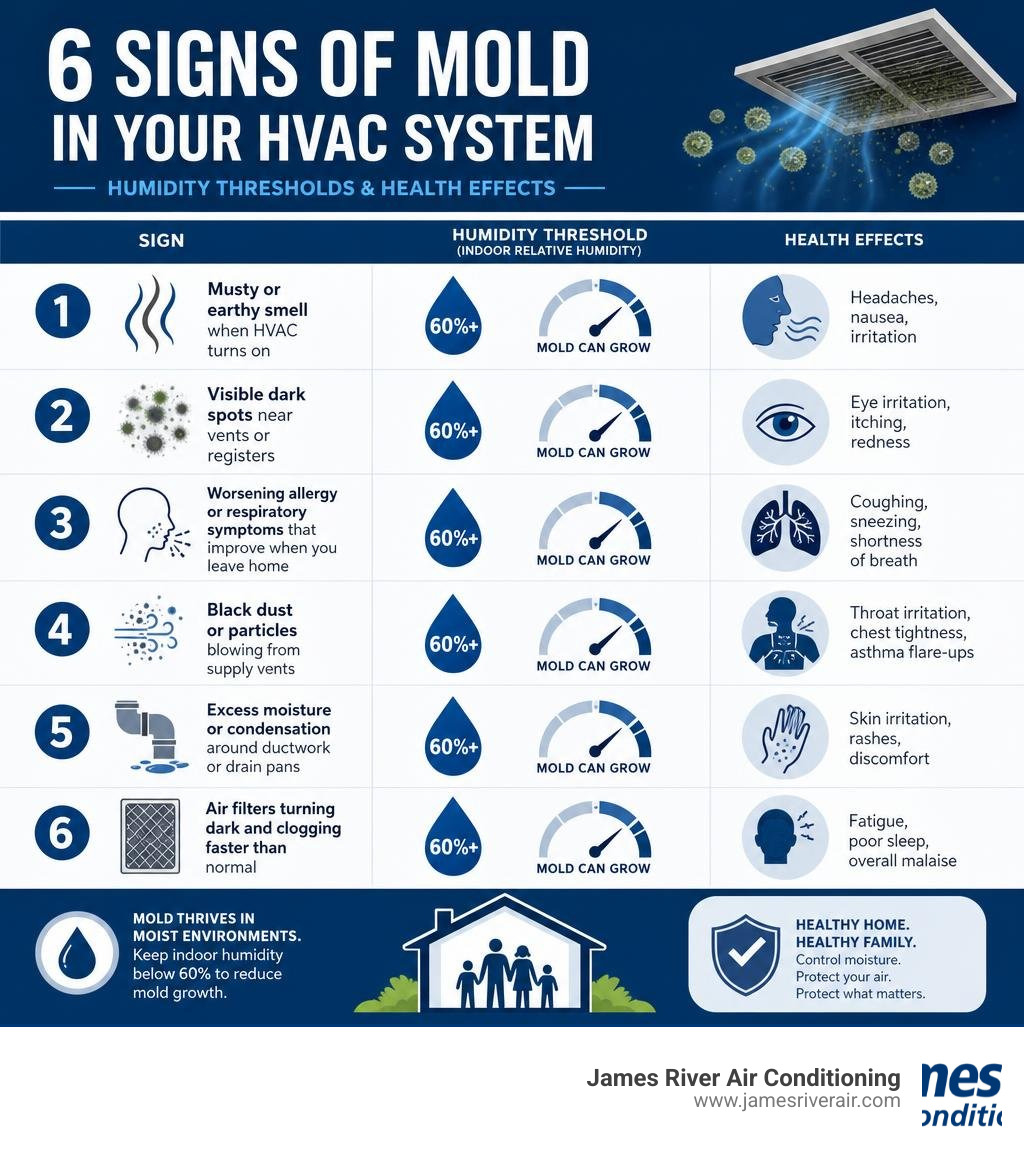
Here are the most common signs to look for right now:
- Musty or earthy smell when your HVAC turns on
- Visible dark spots — black, green, or gray — near vents or registers
- Worsening allergy or respiratory symptoms that improve when you leave home
- Black dust or particles blowing from supply vents
- Excess moisture or condensation around ductwork or drain pans
- Air filters turning dark and clogging faster than normal
If any of these sound familiar, you likely have a mold problem worth investigating.
Americans spend roughly 90% of their time indoors — and when mold takes hold inside an HVAC system, it gets pushed into every room every time the system runs. Your air conditioner doesn’t just cool the air; it can act as a distribution network for mold spores if moisture is left unchecked. Mold can begin growing in as little as 48 hours when moisture is present, and it thrives when indoor humidity climbs above 60%. For Richmond-area homeowners, where summers bring both heat and humidity, that risk is very real.
This guide walks you through six clear steps to identify mold in your system — and what to do about it.
Important signs of mold in your hvac system terms:
- how proper hvac maintenance prevents mold growth
- how your hvac system prevents mold in mid atlantic four season
Understanding the Signs of Mold in Your HVAC System
To effectively protect our homes, we must first understand why mold is drawn to our heating and cooling systems in the first place. Mold is a fungus that reproduces via microscopic spores. These spores are always floating in the air, both indoors and outdoors. On their own, dry spores are harmless. However, when they land on a surface that provides the perfect mix of moisture, warmth, and food, they germinate and colonize.
Our HVAC systems are uniquely vulnerable because they inherently create these ideal conditions:
- The Moisture Problem: During the cooling cycle, the evaporator coil gets incredibly cold. As warm, humid air from your home passes over this coil, water vapor condenses on the metal surfaces—much like condensation on a cold glass of sweet tea on a hot July afternoon in Henrico. This water is supposed to drain away, but standing water or high relative humidity (above 60%) inside the system turns the air handler into a breeding ground.
- The Food Source: Mold requires organic matter to feed on. While metal ducts and plastic components aren’t food, the layer of household dust, pet dander, and pollen that inevitably settles inside them is.
- Temperature Regulation: Mold grows best in temperatures between 60°F and 80°F. Since we keep our living spaces right in this sweet spot, the climate inside our ductwork is perpetually perfect for mold colonization.
When mold begins growing on evaporator coils, drip pans, or inside the supply ductwork, the continuous airflow from your blower motor shears off spores and microbial volatile organic compounds (mVOCs), carrying them directly into your breathing zone. To learn more about how regional weather patterns affect this delicate balance, read The Mid-Atlantic Survival Guide to HVAC Mold Prevention.
6 Critical Steps to Identify Mold in Your System
If you suspect your heating and air conditioning system is harboring unwanted biological growth, don’t panic. Identifying the issue is a straightforward process when you know what to look, smell, and feel for. We recommend taking a systematic approach to diagnostic home maintenance using these six critical steps.
Step 1: Detect Musty Odors and Early Signs of Mold in Your HVAC System
The nose is often your most reliable diagnostic tool. One of the earliest signs of mold in your hvac system is a persistent musty smell that is particularly strong when the system first kicks on.
This odor is not just “stale air.” It is caused by microbial volatile organic compounds (mVOCs) released by actively growing mold. Homeowners often describe this smell as earthy, resembling wet cardboard, rotting leaves, or a damp basement.
Pay close attention to how the smell behaves:
- If you only smell it in one room, the source might be localized to that specific room’s register boot or a damp spot on the floorboards.
- If the earthy odor wafts through the entire house the moment the blower motor starts running, the mold is likely growing inside the main air handler, the evaporator coil, or the primary supply plenum.
Step 2: Inspect for Visible Growth Around Vents and Registers
Once your nose alerts you to a potential issue, it is time for a visual inspection. Walk through your home and look closely at your supply registers (the vents that blow cold or warm air into your rooms).
Keep an eye out for these visual indicators:
- Dark Spots and Streaks: Look for black, green, or gray spots forming on the metal slats of the vent covers.
- Fuzzy or Powdery Patches: Active mold often has a textured, velvety, or powdery appearance.
- Discoloration on Surrounding Drywall: If the register boot (the metal box behind the vent cover) is insulated on the outside and gets too cold, condensation can form on the surrounding ceiling or wall drywall. This moisture leads to mold growth on the wall itself.
If you see dark, fuzzy spots, do not touch them with your bare hands. Instead, use a flashlight to peer through the slats. If you want a closer look, you can carefully unscrew the vent cover to inspect the register boot.
Step 3: Differentiate Between Normal Dust and Signs of Mold in Your HVAC System
It is incredibly common to mistake normal household dust for mold. Over time, static electricity causes dust and carpet fibers to cling to vent covers, creating dark, fuzzy-looking build-ups. However, cleaning away harmless dust is very different from dealing with active mold spores.
Here is how you can quickly tell the difference:
| Physical Characteristic | Normal Household Dust | Active Mold Growth |
|---|---|---|
| Color | Light gray, brown, or off-white. | Black, dark green, olive, or bright white spots. |
| Texture | Dry, fibrous, and easily crumbles or blows away. | Slimy, velvety, fuzzy, or powdery; clings tightly to surfaces. |
| Odor | Odorless or smells faintly of dry dirt. | Strong, pungent, musty, or earthy smell. |
| Wipe Test | Easily wipes away clean with a dry cloth. | Smears when wiped; leaves a stain and returns within days. |
| Pattern | Even, uniform coating across the vent slats. | Irregular, circular spots or branching patterns. |
If you notice that your vents are covered in thick gray dust, it may mean your filtration system is failing. To keep your air clean and protect your equipment, check out our Signs Your Air Filter Needs Changing: Comprehensive Guide.
Step 4: Monitor Unexplained Health Symptoms and Respiratory Issues
Sometimes, the most prominent signs of mold in your hvac system aren’t found on the walls or vents, but in how your family feels. Because your HVAC system circulates air throughout the entire home, airborne mold spores can quickly trigger physical symptoms.
Watch for the following health indicators:
- Persistent Allergy Symptoms: Sneezing, runny nose, itchy or watery eyes, and nasal congestion that seem to worsen when you are indoors but improve when you leave the house or spend time outdoors.
- Asthma and Respiratory Flare-ups: Unexplained wheezing, coughing, shortness of breath, or an increase in the frequency of asthma attacks.
- Neurological and Systemic Signs: Some individuals are sensitive to mycotoxins and mVOCs, experiencing headaches, dizziness, chronic fatigue, or brain fog when spending time in a mold-affected environment.
If multiple family members—or even your pets—develop these symptoms simultaneously without an obvious medical explanation, your indoor air quality is likely compromised. To explore how to keep your home’s air clean, read How to Improve Indoor Air Quality at Home Without Turning Your House Into a Bubble. Additionally, a modern, well-maintained system offers significant health advantages, which we outline in The Complete Guide to New HVAC Health Benefits.
Step 5: Check for Excess Moisture, Condensation, and Standing Water
Mold cannot survive without water. Therefore, searching for mold always means searching for moisture. There are several key areas where water can accumulate inside your system:
- The Condensate Drain Pan: Located directly under your evaporator coil, this pan collects the water dripped from the coils. If the drain line becomes clogged with algae or debris, the pan will fill with standing water, creating a perfect mold incubator.
- Leaky Ductwork: When uninsulated ducts run through unconditioned spaces like hot attics or damp crawl spaces, they sweat. This condensation pools inside the duct joints.
- Crawl Space Moisture: Many homes in Richmond, Midlothian, and Chesterfield have ductwork running through crawl spaces. High humidity under your floors will migrate into your ducts.
To understand how crawl space issues impact your air quality, read Stop the Sog and Understand How Crawl Space Moisture Affects Your Home. If you suspect your crawl space is the root cause, you’ll find valuable answers in The Foundation of Health: Why Professional Crawl Space Services Matter and The Secret to Fresh Air is Hiding Under Your Floorboards.
Step 6: Evaluate System Performance and Rapidly Clogging Filters
When mold colonizes your HVAC system, it doesn’t just affect your health—it degrades your system’s performance.
- Dirty, Dark Filters: If you pull out your air filter and find that it is damp, smells musty, or has turned a dark gray-black color within just a few weeks, mold spores are likely clogging the media.
- Reduced Airflow: Mold growth on the delicate aluminum fins of your evaporator coil can severely restrict airflow, forcing your system to run longer to cool your home.
- Spiking Utility Bills: A system choked by mold growth has to work twice as hard, leading to increased energy consumption and higher monthly bills.
Ignoring a dirty filter can trigger a cascade of system failures. To avoid these issues, consult our In-Depth Guide to What Happens If You Don’t Change Your Air Filter.
How to Address and Prevent HVAC Mold Growth
If your investigation confirms the signs of mold in your hvac system, taking swift, correct action is essential.
Here is how we recommend addressing and preventing mold growth:
- Follow the 10-Square-Foot Rule: The Environmental Protection Agency (EPA) states that if the mold-affected area is less than 10 square feet (roughly a 3-foot by 3-foot patch) on an easily accessible, non-porous surface, you can generally handle it yourself. You can clean hard surfaces like vent covers using a mixture of water and mild detergent or white vinegar while wearing protective gear (an N95 mask, gloves, and goggles).
- Leave the Ducts to the Professionals: If mold has established itself inside your ductwork or on your evaporator coils, DIY cleaning is highly discouraged. Scrubbing fiberglass duct board or insulated flex ducts can damage the material and release millions of spores into your air. Professional remediation using specialized HEPA vacuums and EPA-registered antimicrobial treatments is required.
- Control Indoor Humidity: Keep your home’s relative humidity between 30% and 50%. If your air conditioner is oversized, it may “short-cycle,” turning off before it has run long enough to properly dehumidify your home. Installing a whole-home dehumidifier can solve this issue permanently.
- Install UV-C Germicidal Lights: Installing a UV-C light system inside your air handler, aimed directly at the evaporator coil, destroys the DNA of mold spores and bacteria, preventing them from colonizing the coil.
- Schedule Regular Maintenance: Having a professional technician inspect and clean your system twice a year is the single best way to prevent mold from gaining a foothold.
For a complete guide to protecting your home’s ventilation, read The Ultimate Guide to Keeping Your Ducts and Lungs Mold-Free. To make sure you never miss a step, save a copy of The Ultimate HVAC Maintenance Checklist for Mid-Atlantic Homeowners.
Frequently Asked Questions About HVAC Mold
We receive many questions from homeowners in Richmond, Glen Allen, and Midlothian about managing mold. Here are answers to the most common inquiries:
Can I clean mold out of my air ducts myself?
We do not recommend attempting to clean mold out of your air ducts yourself. While you can safely clean surface mold off removable metal vent covers, cleaning the inside of ductwork requires specialized containment and negative-pressure HEPA equipment. DIY cleaning attempts often disturb the mold colonies, spreading spores throughout your home and worsening your indoor air quality.
How quickly can mold start growing in an HVAC system?
Mold can begin growing in as little as 24 to 48 hours once moisture is introduced to a food source (such as dust or organic debris). If your system experiences a clogged drain line that overflows, or if high humidity goes unaddressed during a hot Virginia summer, mold spores can germinate and begin colonizing your system in just two days.
Does running the air conditioner prevent or cause mold?
Running a properly sized air conditioner helps prevent mold by dehumidifying your indoor air. However, if the system is oversized, has restricted airflow, or suffers from a clogged condensate line, the cooling process can create excess condensation. This moisture can lead to mold growth if it is not draining properly.
Conclusion
Detecting the signs of mold in your hvac system early is the key to maintaining a healthy, comfortable, and energy-efficient home. By paying close attention to musty odors, visible spots around your vents, unexplained allergy symptoms, and excess moisture, you can address biological growth before it spreads.
For over 57 years, James River Air Conditioning has provided world-class heating, cooling, and air quality services to our neighbors in Richmond, Glen Allen, Midlothian, Henrico, Chesterfield, and the surrounding areas. If you suspect mold is lingering in your ductwork or air handler, let our experienced team perform a professional inspection and restore your home’s air quality.
Breathe easier with James River Air Conditioning Indoor Air Quality Services and schedule your inspection today!
